Bears and markhors
GENERAL INFO
A journey into wild Kashmir
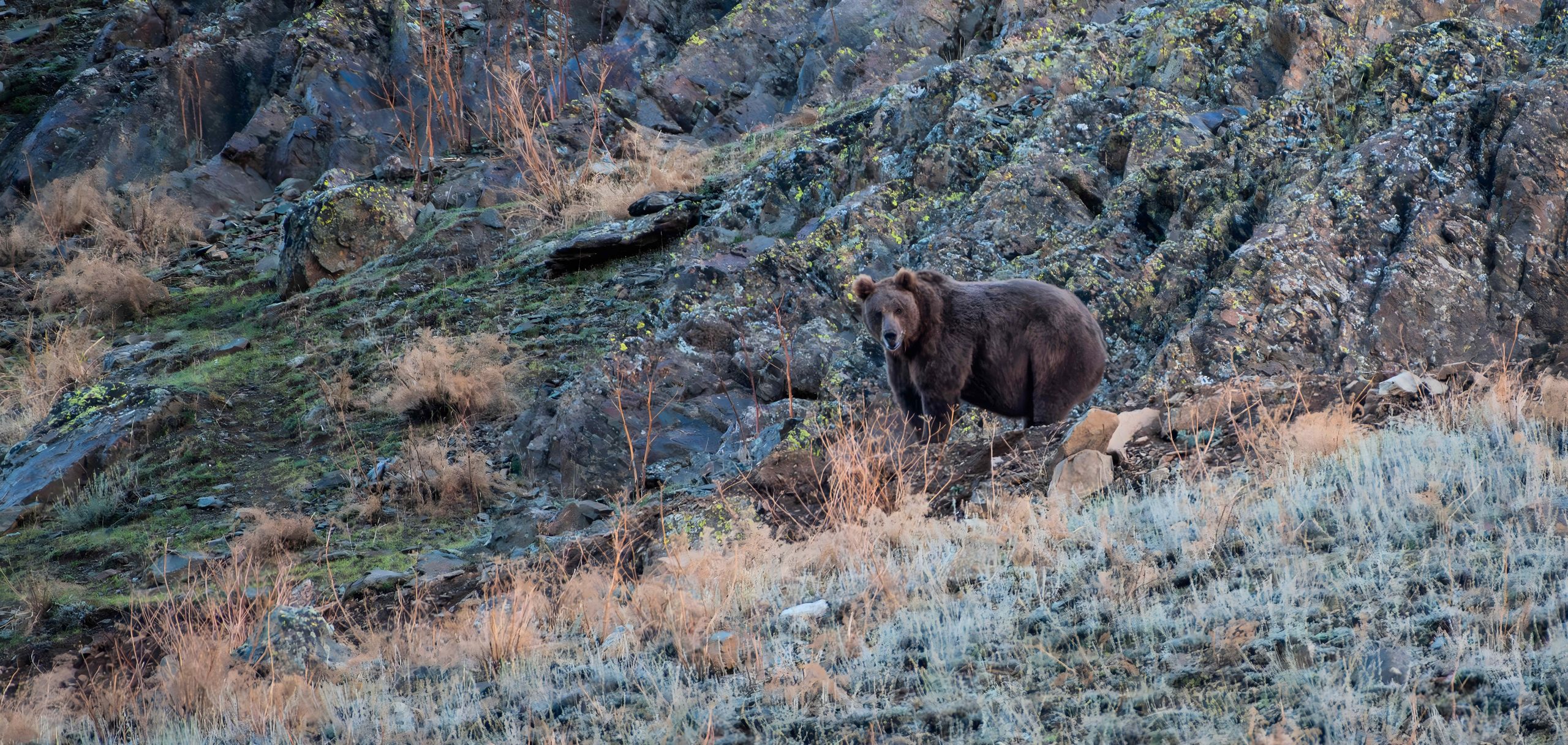
From the forested valleys of Dachigam to the remote Himalayan peaks of Kazinag and the high-altitude landscapes of Drass and Baltal–Thajwas, this journey offers a rare opportunity to experience some of the most spectacular wildlife habitats in the Himalayas. With patience, expert guidance, and a bit of luck, we may witness three remarkable species of the region’s most iconic mammals in their natural mountain home:Asiatic black bear, Himalayan brown bear and Kashmir markhor
The enchanting Kashmir valley
Set like a jewel within the mighty Himalayas, the Kashmir Valley is an oval-shaped plain encircled by a sweeping belt of forests and mountains. This remarkable landscape forms a mosaic of lush woodlands, fruit orchards, and fertile farmland where traditional villages and cultivated fields blend harmoniously with nature.
The valley is also one of the most important strongholds of the Asiatic black bear, with thriving populations distributed across sixteen protected areas and twenty forest districts. During our journey, we will immerse ourselves in this spectacular wilderness, exploring some of the most rewarding habitats for observing these remarkable animals.
-
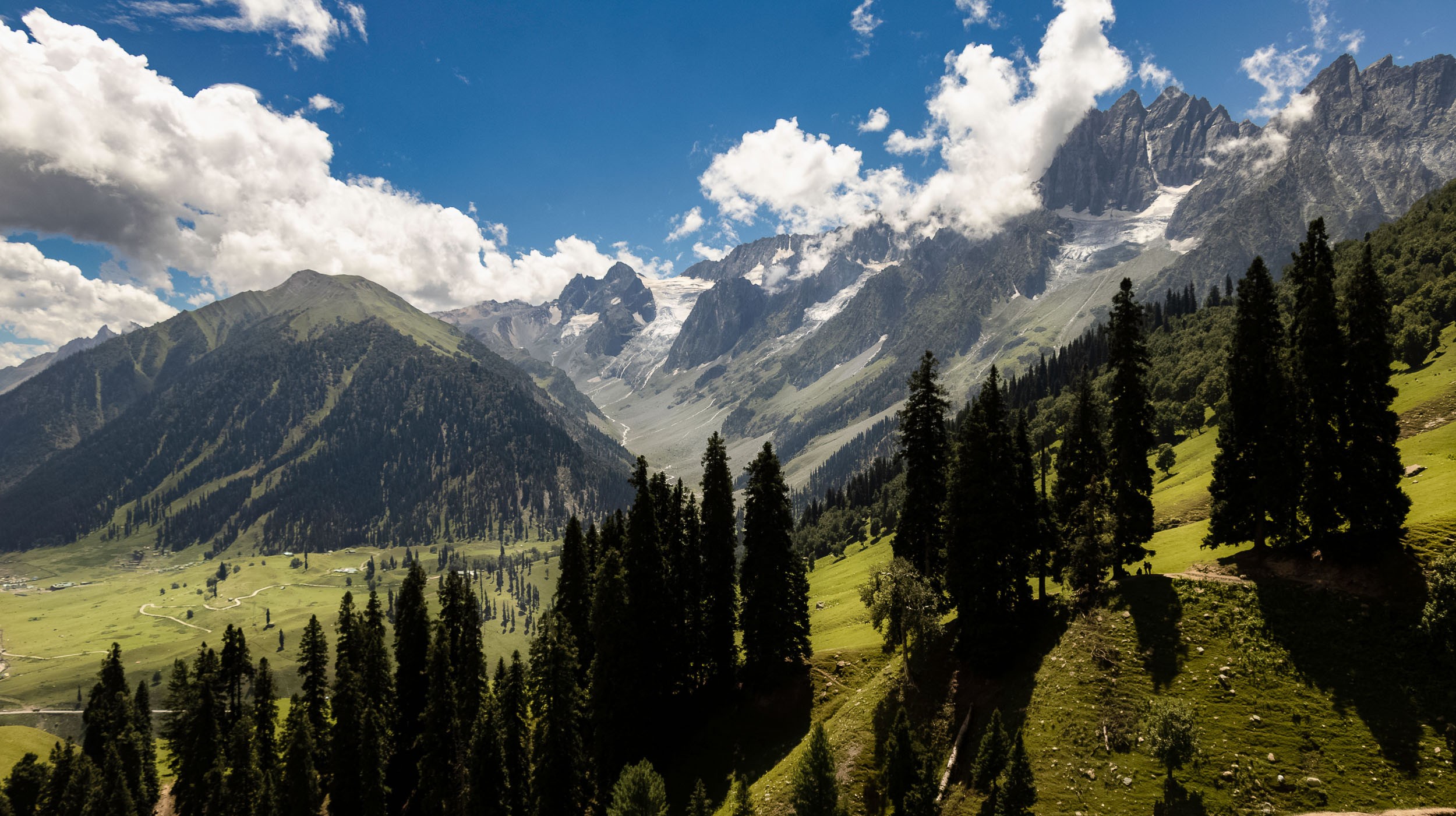
- The enchanting Kashmir valley
Dachigam National Park – Sanctuary of the Asiatic Black Bear
Only 22 kilometers from Srinagar lies Dachigam National Park, a breathtaking wilderness covering 141 square kilometers. Once the royal hunting reserve of the Maharaja, the area was declared a national park in 1981 to safeguard its extraordinary biodiversity and protect the pristine waters that supply Srinagar via the Dagwan River, which originates from the serene Marsar Lake.
Ranging in elevation from 1,600 to 4,200 meters, Dachigam presents a dramatic variety of landscapes. Gently sloping grasslands give way to steep rocky cliffs, alpine meadows, cascading waterfalls, and deep gullies cloaked in dense conifer forests interspersed with broadleaf trees.
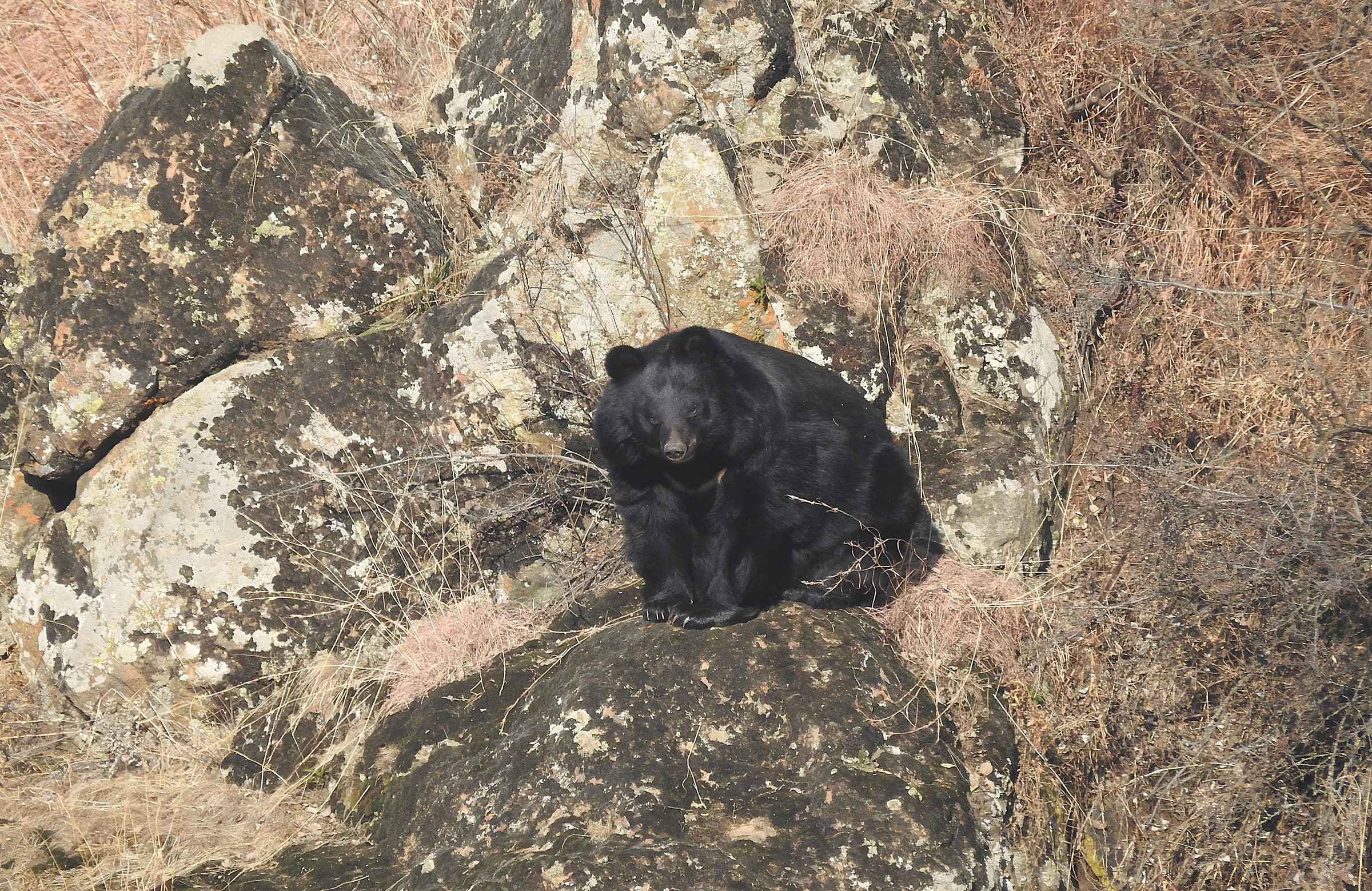
We will spend three days exploring this remarkable sanctuary—one of the safest refuges for the Asiatic black bear. Our visit takes place at a particularly favorable time of year. In autumn, just before hibernation, the bears enter a period of intense feeding known as hyperphagia. During this time they roam the lower forest scrub zones in search of fruits and acorns, building the fat reserves needed to survive the winter months. Their constant foraging makes them far easier to observe than during other seasons, increasing our chances of witnessing these powerful animals against Dachigam’s dramatic mountain backdrop.
-
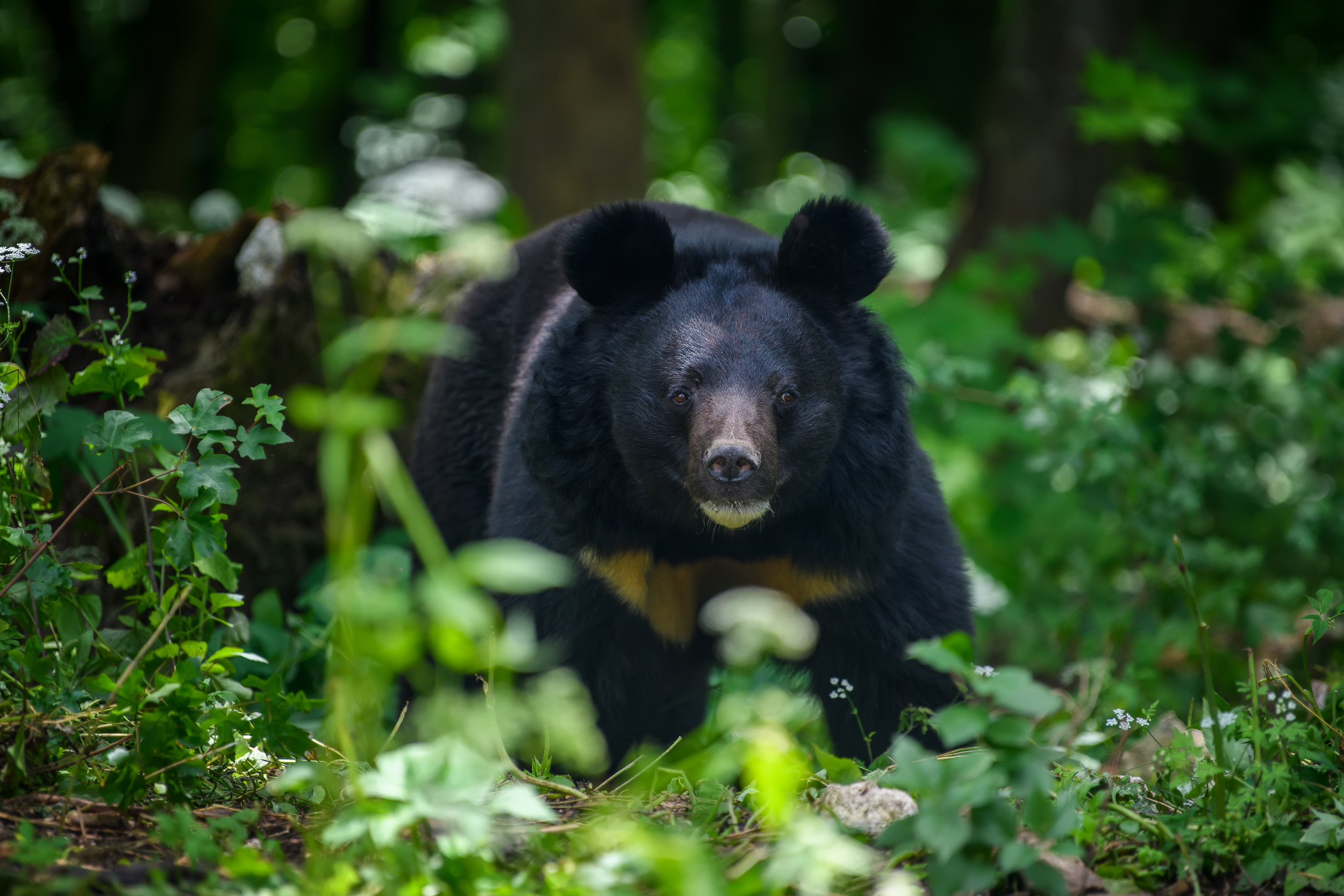
- Close Asiatic black bear (Ursus thibetanus)
Kazinag National Park – The Pristine Western Himalayas
In the remote western Himalayas lies the magnificent Kazinag National Park, an area celebrated for its pristine landscapes and extraordinary biodiversity. Towering peaks, dense forests, and the crystal-clear waters of the Kishanganga River combine to create one of the most spectacular wilderness settings in the region.
Kazinag shelters a wealth of wildlife, including several endangered species. Among them is the elegant hangul, or Kashmir stag, a rare and iconic deer found only in this part of the world. Even more remarkable, the rugged mountain slopes here support the only sustainable population in India of the legendary Kashmir markhor.
From a welcoming homestay that will serve as our base, we will set out on targeted walks to areas where mature male markhor descend to lower elevations during autumn. These magnificent wild goats are easily recognized by their towering spiraling horns. While adult males migrate seasonally, females, younger males, and juveniles remain loyal to the same habitat zones year-round.
With a little luck and patience, we may be rewarded with an intimate encounter with one of the world’s rarest and most spectacular wild goats—the magnificent markhor.
-
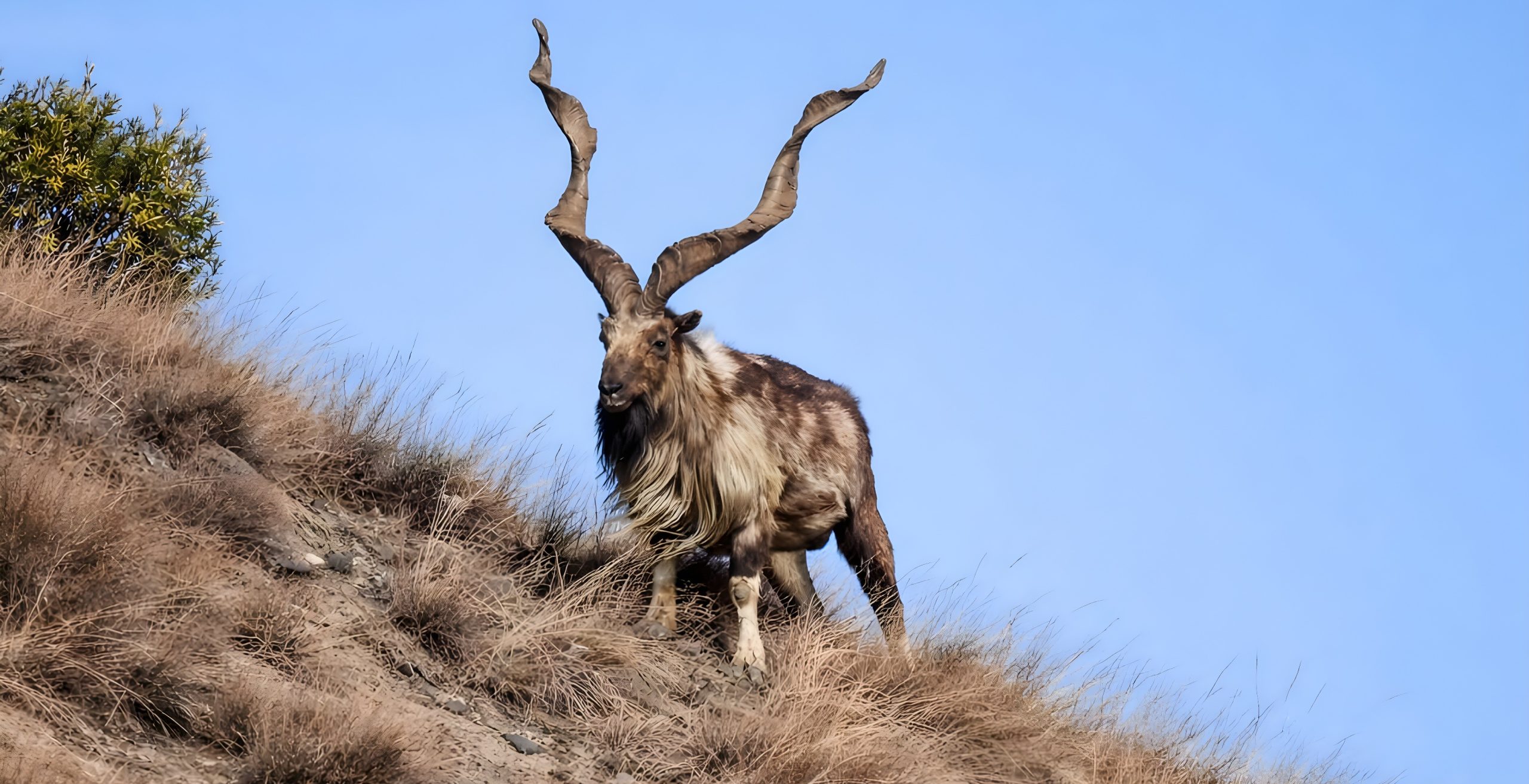
- The legendary Kashmir markhor
The Himalayan Brown Bears of Drass and Baltal–Thajwas Wildlife Sanctuary
Among the most ancient lineages of brown bears is the Himalayan brown bear (Ursus arctos isabellinus). Found in the rugged ranges of the Hindu Kush, Karakoram, and the western Himalayas, this impressive animal inhabits high-altitude environments ranging from about 3,000 to 5,500 meters above sea level. Alpine pastures, rocky slopes, and vast mountain valleys provide ideal habitat, yet populations remain small and scattered, making sightings exceptionally special.
The Drass region of Ladakh—often considered one of the areas with the highest concentrations of this rare bear—hosts a significant population. Here, the bears are frequently seen wandering through valleys as they forage for roots, berries, insects, and small animals. Opportunistic by nature, they may also visit garbage dumps or occasionally prey on livestock near villages.
Nearby lies the Baltal–Thajwas Wildlife Sanctuary, a landscape of enchanting diversity. Evergreen and conifer forests merge with alpine meadows, scrublands, and glacial terrain to form a truly wild environment. Because vehicles are prohibited within the sanctuary, wildlife has flourished undisturbed. In recent years, Himalayan brown bears have returned to the area—a powerful sign of the sanctuary’s thriving ecosystem.