Atmospheric report of the Spectacled bear spectacle
Introduction
EB5 founder Jan guided a nature trip focused on spectacled bears in January 2026 for Starlingtours. A few years ago, a prospect trip resulted in eight different Andean bears.
You can find an atmospheric report of this prospection trip, with text and photos, in an earlier blog post on this website
Though, this time we saw three times as many! Twenty-four instead of eight! Many other mammals also showed their best side. In between, everything was beautifully complemented by the birdlife of the subtropical rainforest and cloud forests, as well as the paramo habitat we found ourselves in.
Dates & rates plus general info of an identical tour in 2027 will soon be online on the English version of their website.
The first bear spectacle, part one of the atmospheric report of the Ecuador tour in 2026
One hundred and seventy kilometers north of Quito, we visit a remote valley where spectacled bears are observed. A local farmer, who made the smart decision to abandon his avocado cultivation in favor of ecotourism, has spent seventeen years building an impressive database of sightings of more than one hundred different spectacled bears in a valley about seven kilometers long.
Our stay includes an evening, a full day, and a morning. In that short time, we see fourteen different bears. Jan notes similarities with scanning for brown bears from viewpoints in Spain, with one important difference: the bears here are active all day. Moreover, you can descend into the gorge, allowing for much closer observations.
It feels almost otherworldly. Especially down in the steep valley, with a small river meandering through it, the scenery is simply idyllic. The bears regularly roost in trees covered in Spanish moss—an epiphytic flowering plant (Tillandsiaus neoides) found in tropical and subtropical regions. The plant is native to Mexico, Central and South America, the southern United States, and the Caribbean, among other places. Here in Ecuador, they primarily grow on fig trees. The bears use these trees not only for foraging but also for resting and sleeping.
-
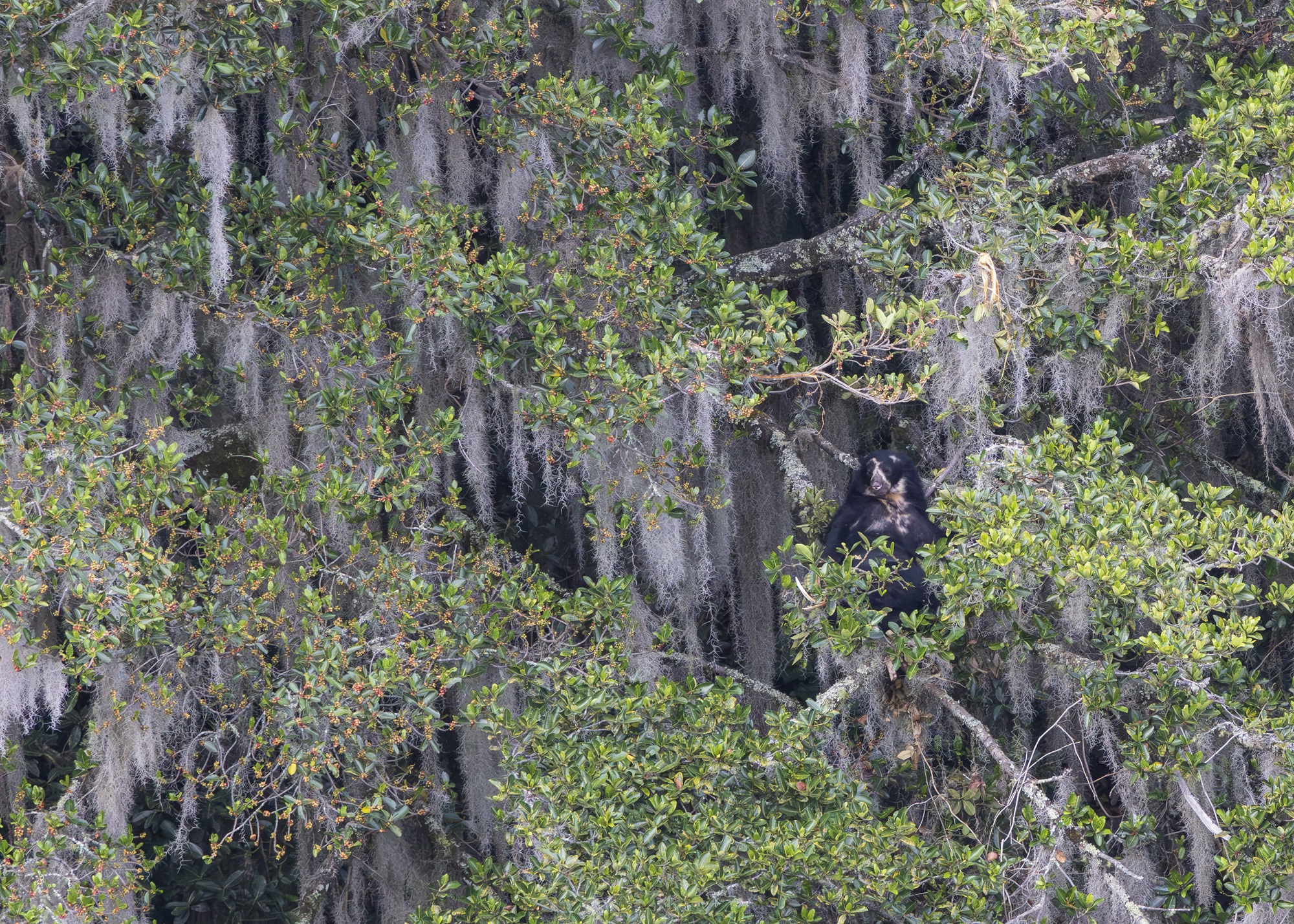
- Andean bear © Jan Kelchtermans
A close encounter with a mother bear and her cub in such a tree is almost a religious experience—a once-in-a-lifetime sight. On the first evening, we see an adult male bear, affectionately called Santiago by the locals. His slow, almost nonchalant behavior suggests he’s semi-domesticated, but nothing could be further from the truth. The abundance of food here simply explains the high density of bears. At the very bottom of the valley, we see a mother bear maneuvering along the opposite flank with her tiny cub. Every time the young one reaches its mother, it playfully bites her hind legs, as if expressing its displeasure at the perilous path they are forced to follow. At the end of the evening, they disappear together into a fig tree. A solitary bear makes only a brief appearance, as does another mother with two cubs who, deeper in the valley, are feasting on avocados hanging from the trees of a nearby plantation. Jan jokes that, back in Belgium, when we’re serving avocado at a family party with the aperitif, we’ll be able to say: “Mmm… delicious bear food!” While we’re watching bears, two Harris’s hawks watch us curiously. With their contrasting dark brown, chestnut brown, and white plumage and bright yellow legs, they are truly magnificent birds of prey.
On day two, we spend a full day at the bear farm. In the morning, we see the same bears as the day before: Santiago, a mother with her one cub, and another mother with her two cubs. This time, the two cubs are constantly visible in the fig trees a little further down the valley. When the mother bear with her one cub climbs an accessible fig tree, Daniello—the bear farmer—lets us know that it’s possible to descend into the valley. This gives us the opportunity to observe the female bear and her cub up close. The descent, a vertigo-inducing experience, culminates in a scene you can only dream of. It’s incredibly beautiful to witness! Everything is quickly photographed before the harsh daylight reaches the valley and the treetops.
-
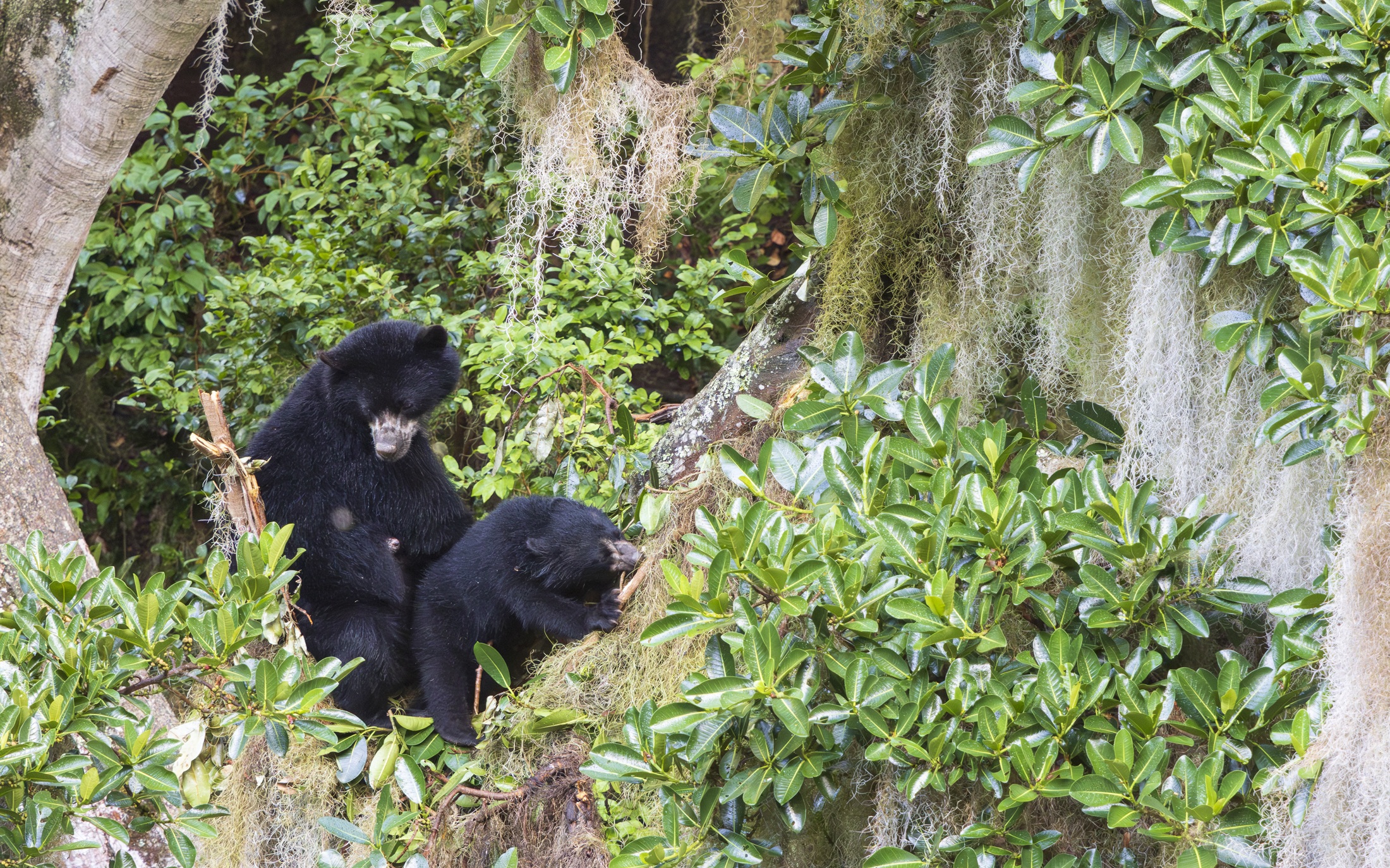
- Andean bear © Jan Kelchtermans
In the early afternoon, we resume our position at the vantage point. The mother bear with her two cubs is still present, as is Santiago. On the other side, a gang of three new individuals appears. Like true gangsters, the trio inspects the area around an abandoned hut, in the middle of a plantation of mandarin and avocado trees and surrounded by uncultivated fields. Just imagine yourself in that hide: the bears are walking past the door and windows, even checking out the compost heap—absolutely crazy! Later, when we descend back into the valley, we see two of the three “gang members” descending. Just when we expect them to be up close, the weather throws a wrench in the works. Thunder, lightning, and threatening clouds force us to leave the valley earlier than planned. Fortunately, the rain doesn’t really come down until we reach the minibus. But even that can’t spoil the fun: the bear observations we’ve had so far are more than satisfying.
We spend our last morning at the lookout one more time. This time, we observe the bears largely from the double crow’s nest that the bear farmer has built in a eucalyptus tree, right on the edge of our side of the gorge. Almost immediately, we spot more bears. New bears. Jan also sees parallels with bear spotting in Spain: where food – berries, chestnuts and acorns – is abundant, numerous Cantabrian brown bears gather. The same phenomenon occurs with grizzly bears in British Columbia, which congregate on the salmon rivers during spawning season.
-
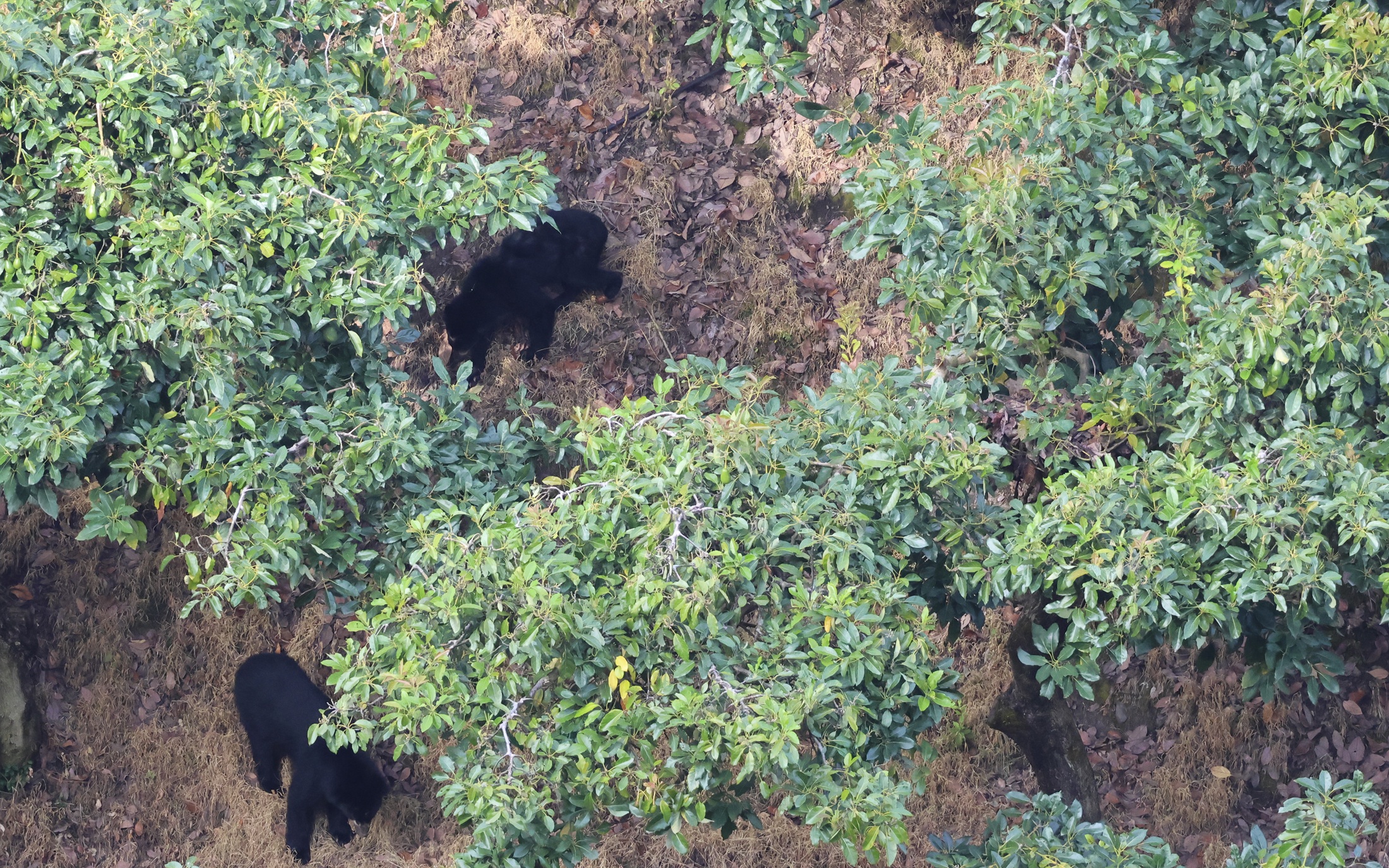
- Andean bear © Jan Kelchtermans
The four new bears we now see together are strolling peacefully around an avocado grove. Through the telescope, we see them devouring avocados with visible pleasure and remarkable precision. Magnificent! We can see a mother with a large cub, a subadult individual, and a plump female. Further down the valley, a fifth spectacled bear appears, crossing a bridge. A little later, we also see Santiago, as well as the familiar mother with her two cubs, who are still foraging in a fig tree. In total, we count nine bears. Nine! The corpulent female quickly retreats to another fig tree in the valley. There, she lies for a long time, strolling and sleeping in the sun, as only bears can do. Beautiful to watch. Meanwhile, the mother with the large cub seems to be losing interest in her offspring. From her repulsive behavior, we deduce that the young one will soon have to stand on its own two feet—or rather, in its own trees.
When the mother and her two young leave the fig tree, we decide to leave as well. After all, we still have to return to the lodging house to pick up our bags before driving on to the Pululahula crater. Time for new targets!
The Endangered Tapirus pinchaque — or “Sacha Huagra” in Quechua, part two of the atmospheric report of the Ecuador tour in 2026
Thursday, 29 January. At half past seven in the morning we drive into the Cayambe-Coca Reserve. We are accompanied by Mario, a local with an impressive knowledge of tapirs, and a park ranger. Via the access road behind the Papallacta hot springs, we first check the last pastures bordering the park. Where we saw a spectacled bear yesterday, the meadow is now empty.
-
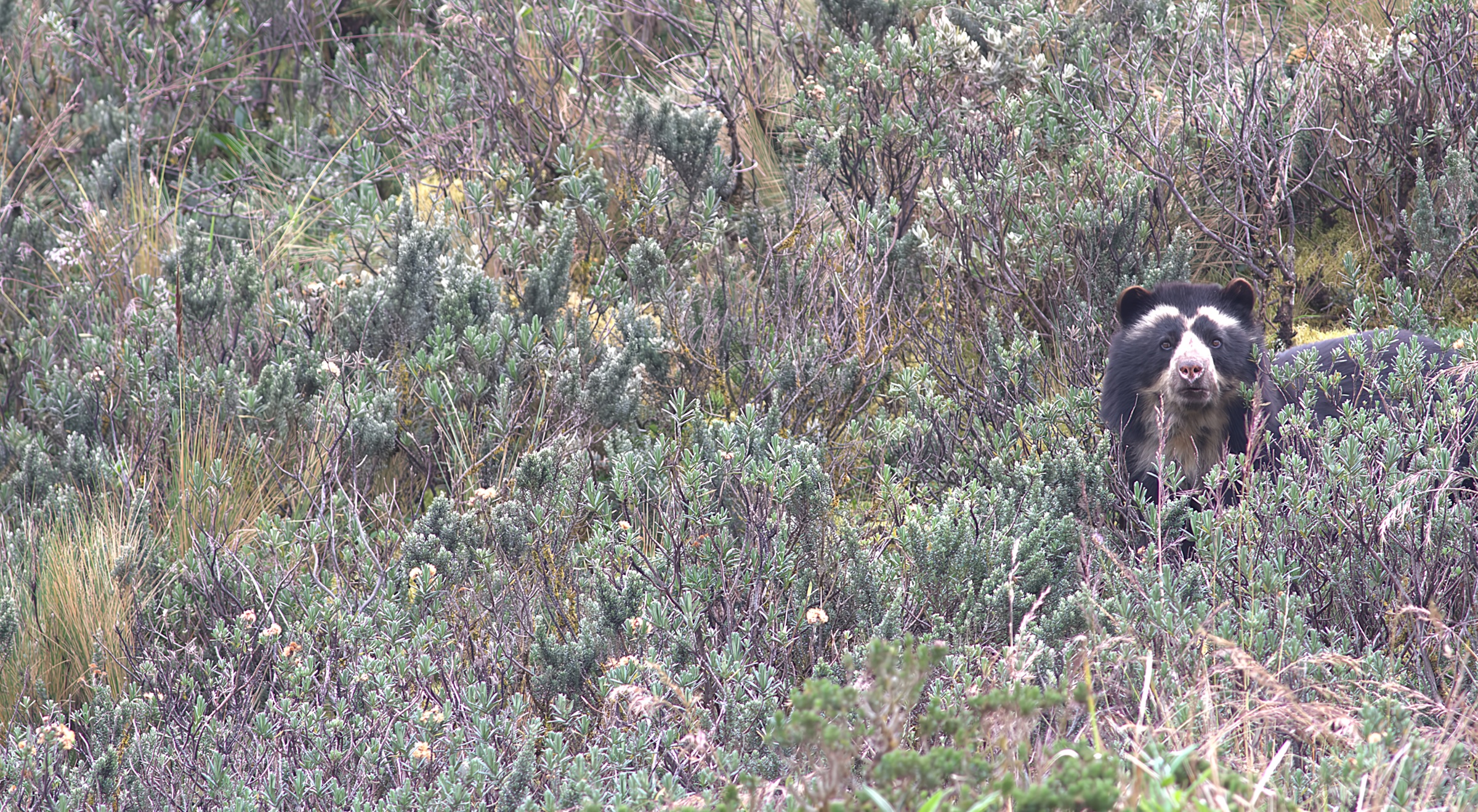
- Andean bear © Jan Kelchtermans
Still, this is a place where a mountain tapir is sometimes spotted — grazing among the cattle. It sounds unlikely, but the determined way Mario scans the field speaks volumes. A little farther on, we do the same at a location where guide Jan came face to face with a mountain tapir during a survey in January 2022. Here too, however, there is no sign: no trails, no footprints in the mud. The landscape, on the other hand, remains utterly impressive and breathtakingly beautiful.
-
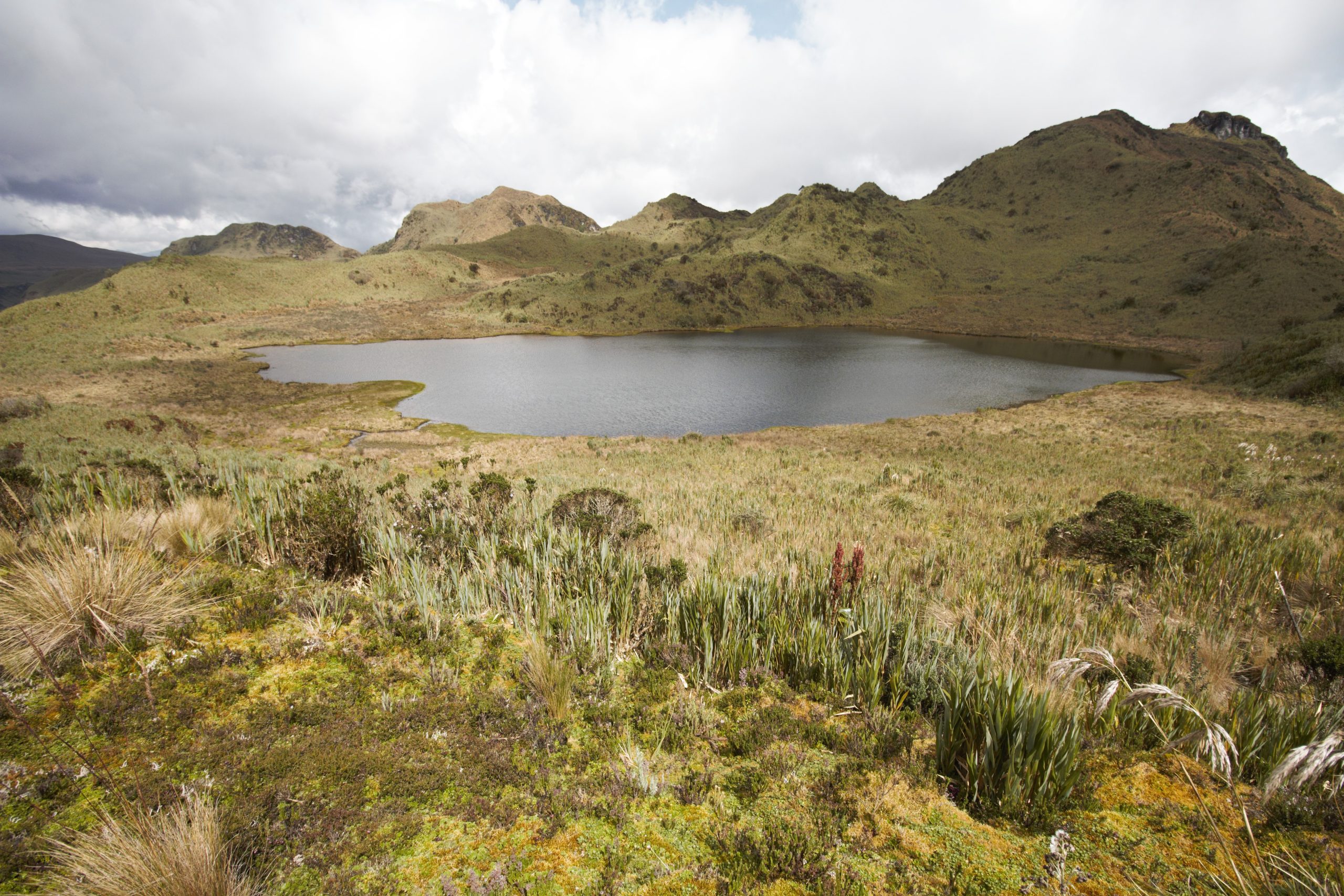
- Cayembe Coca N P © Jan Kelchtermans
At the second checkpoint we hand over our details to the park ranger starting his workday. From here on, we are completely dependent on Mario. He leads us from one potential tapir location to another. To reach one of the first viewpoints, we leave the winding gravel road. Mario goes first, hacking his way through the páramo vegetation with his machete. He is clearly better adapted to the altitude and the steep slopes. For us, it is mainly a matter of following and persevering. Once at the top, we are confronted — besides the thin air — with a second discomfort: mosquitoes. Jan thought such a thing was only possible during a Scandinavian summer. Clearly not.
We then systematically combed an entire area: the lake, the dam, and a lower-lying area where some cattle graze. The results remained meager. The sightings were disappointing. The landscape, however, was endless, and we were literally on the roof of the Andes. Yet, it seemed remarkably empty of large mammals. In terms of avifauna and smaller mammals, we found, albeit sporadically, species typical of the high altitude we were at: white-tailed deer, a black-chested buzzard-eagle, a few tapetis, a cinereous harrier, a variable hawk, tawny antpitta, stout-billed and chestnut-winged cinclodes, and a carunculated caracara. Two highlight species were a startled and flying away noble snipe and a male rainbow-bearded starfrontlet foraging on a flowering plant.
-
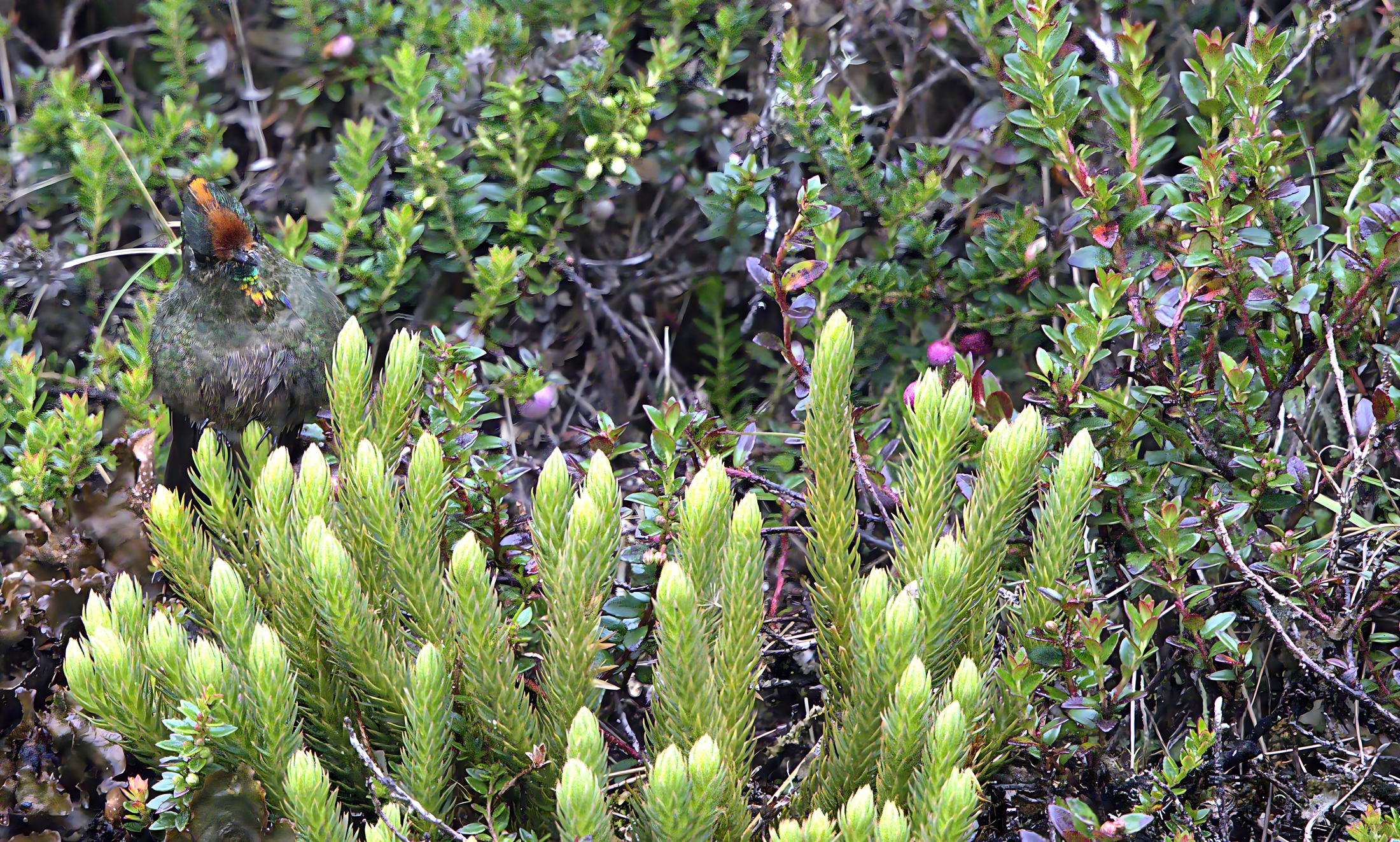
- Rainbow-bearded thornbill © Jan Kelchtermans
Mario, however, refuses to give up. Rain or no rain, he searches two more dense patches of Polylepis forest on foot. We drop him off and pick him up again farther down. Outside the park we check two more sites: an abandoned, overgrown road by a lake and a location right next to the highway. At the first, we join him; at the second, we do not. Four of the five participants climb over a gate and barbed wire; one person asks to be dropped off at the lodge to already enjoy the thermal baths. Understandable — there are more pleasant things than searching in mist and rain for an animal that neither shows itself nor makes a sound. Still, Mario and Luis persist. In dense fog and rain they scramble over rocks along the overgrown road, imitating the characteristic whistling sound of the mountain tapir. But once again, silence. No sighting, no response. We too begin to long for warm, steaming water. According to Mario, checking the final location will take only five minutes, so we wait in the minibus. Luis tries to reassure us: we still have tomorrow as well. No panic. When the five minutes have long since passed, Luis gets out to urge Mario to return — but he forgets his phone and stays away himself. A little later, his phone rings inside the vehicle. The driver, who is still inside, does not answer. Impatience grows.
Then suddenly Mario and Luis reappear. Mario is visibly excited: his whistling was answered! We immediately jump out of the vehicle and move uphill in a wide arc toward the sound. Through rocks and dense vegetation we split up: Luis goes straight ahead across the difficult terrain, while we follow Mario via a slightly more manageable route. Just before we arrive, Luis beckons us: “Guys, come here! The tapir is here!” But the final forty meters we still have to cover are not without risk. The adrenaline also makes it hard to stay calm. After some scrambling, helping hands and arms, we find ourselves standing on a ledge overlooking the slope where the tapir is. Because of its coloration and the low clouds, it is not immediately visible to everyone, but with a few pointers that is quickly resolved. Shortly afterward, the mist lifts as well. There he is! The mountain tapir! Calmly foraging on the slope. What an animal! And how incredible that every time Mario or Luis whistles, he turns his ears toward us — and whistles back?! A wild tapir responding! Phenomenal!
His way of feeding is fascinating too: how he uses his snout to grasp leaves and branches, pull them toward himself, and devour them. Occasionally he curls his upper lip and raises his snout — the typical flehmen response, a sensory behavior used to detect scents in the air. Even the group member who had already returned to the lodge is called back. He is ready when the bus arrives and can still observe and photograph the tapir — now lying down. Everyone is happy! What an apotheosis to the day!
-

- Antisano volcano © Jan Kelchtermans
The Birds and Mammals of Antisana, Chakana, and Tambo Condor – part three of the atmospheric report of the Ecuador tour in 2026
We visit these areas both at the beginning and end of the trip—and it never gets boring. Besides the spectacular views of snow-capped volcanoes, Antisana NP and the Chakana reserve offer impressive wildlife typical of the high Andes. It’s no coincidence that many of these birds and mammals bear “Andean” in their names and are often endemic. To name just a few: the Andean gull, Andean hillstar, Andean ibis, Andean coot, and, of course, the majestic Andean condor. Among the mammals, we think of the Andean fox, Andean bear, tapeti, and white-tailed deer.
An absolute highlight is the morning when four Andean condors circled above and right in front of us, soaring past several times. A moment never to be forgotten. Even before the condors take off, we’re treated to our fifteenth spectacled bear of the trip. We observe the animal both before and after lunch at two different locations, and its foraging behavior on a bromeliad is particularly fascinating. The Andean hillstars are also fantastically cooperative. They are present in the Chuquiragua bushes with orange flowers along the path to and from the cliff where the raptors roost. What a beautiful hummingbird species they are! Also noteworthy is a group of foraging carunculated caracaras that completely ignores the observers as they migrate across the open páramo. The birds scamper along the ground, brush past or even skim directly over the heads of the human obstacles with binoculars, lenses, and telescopes. Their colorful plumage, the white stripes on their black chests, and the striking orange face make this raptor unique. The species is found only here and in southern Colombia and therefore has a very limited range.
-
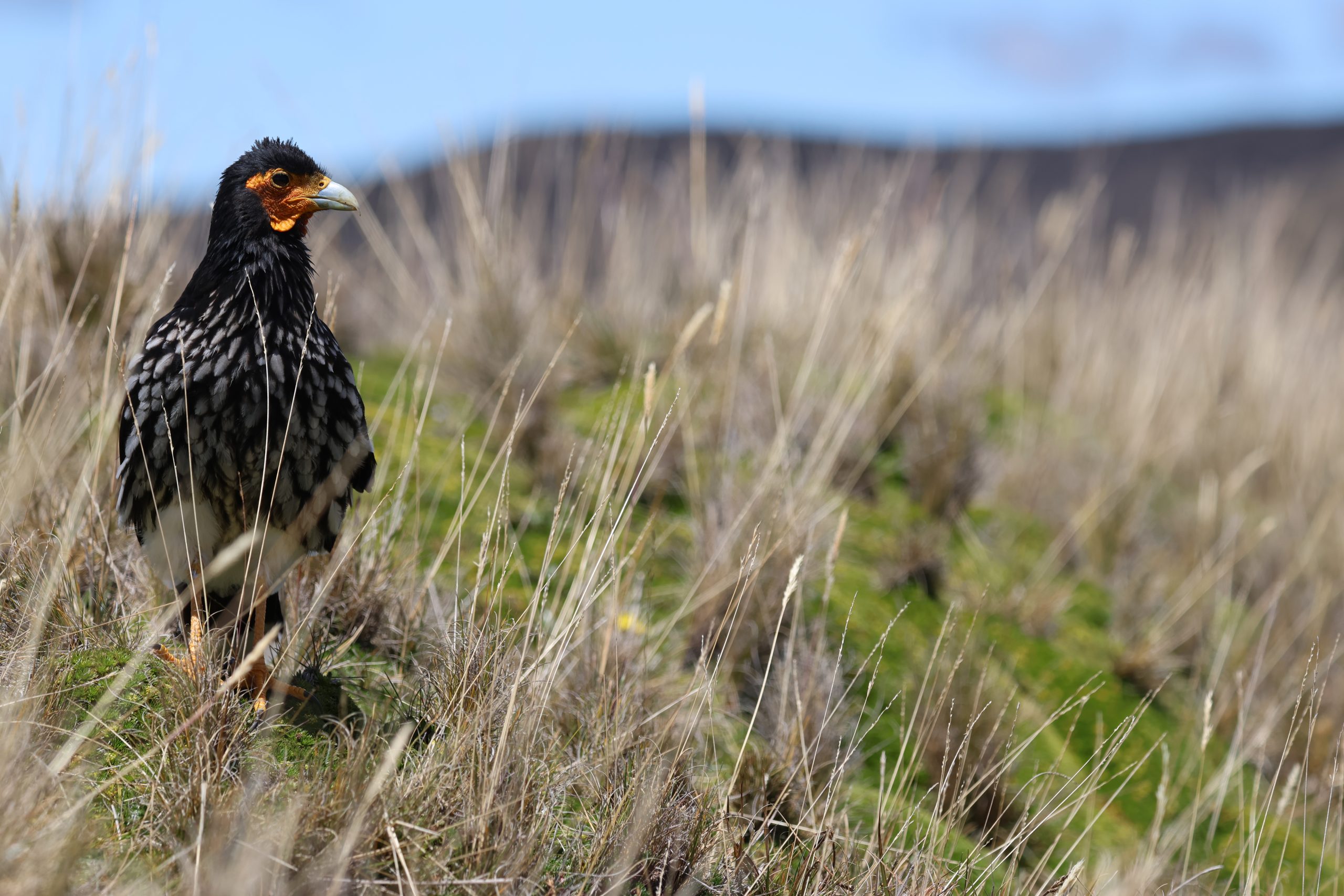
- Carunculated caracara © Jan Kelchtermans
-
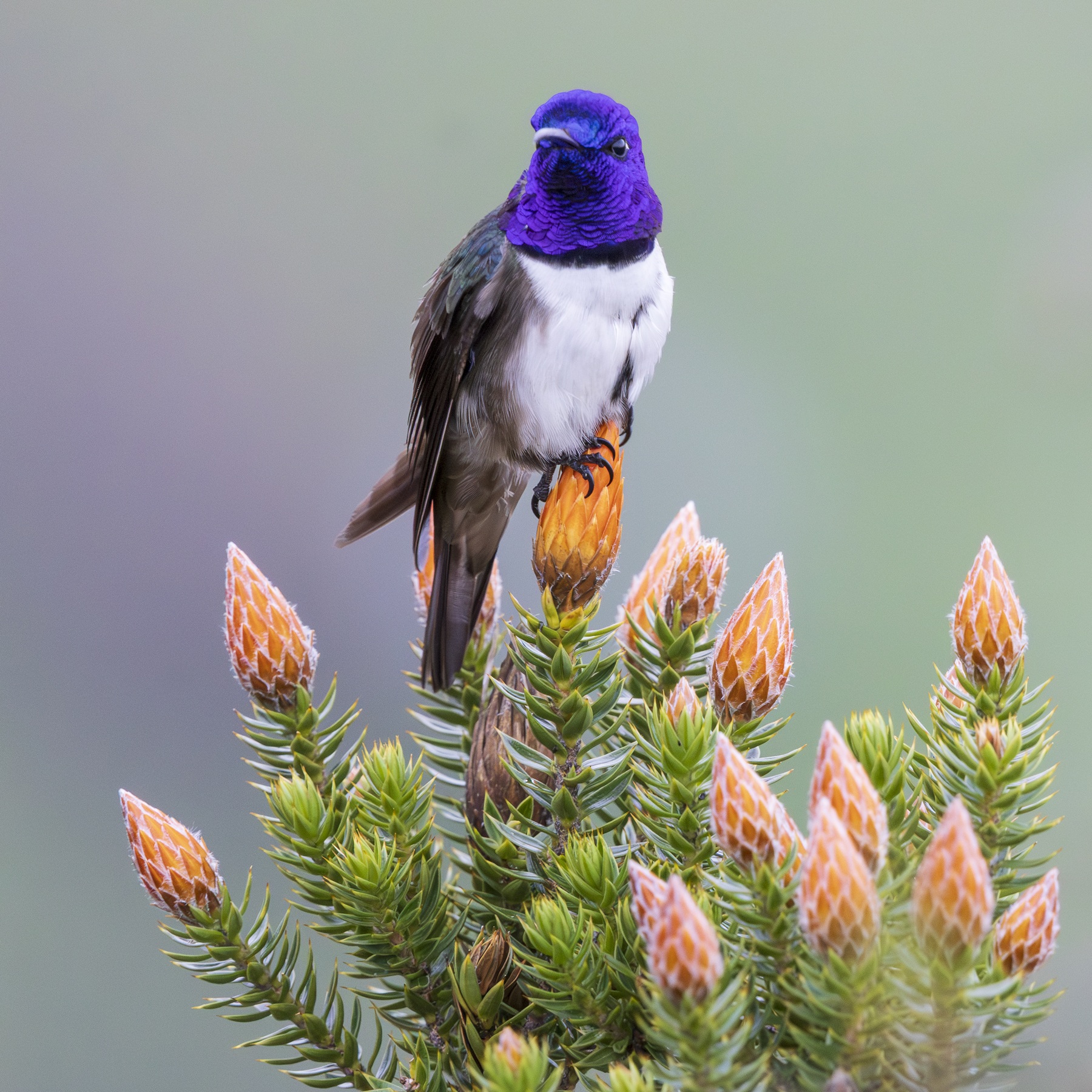
- Andean hillstar © Jan Kelchtermans
-
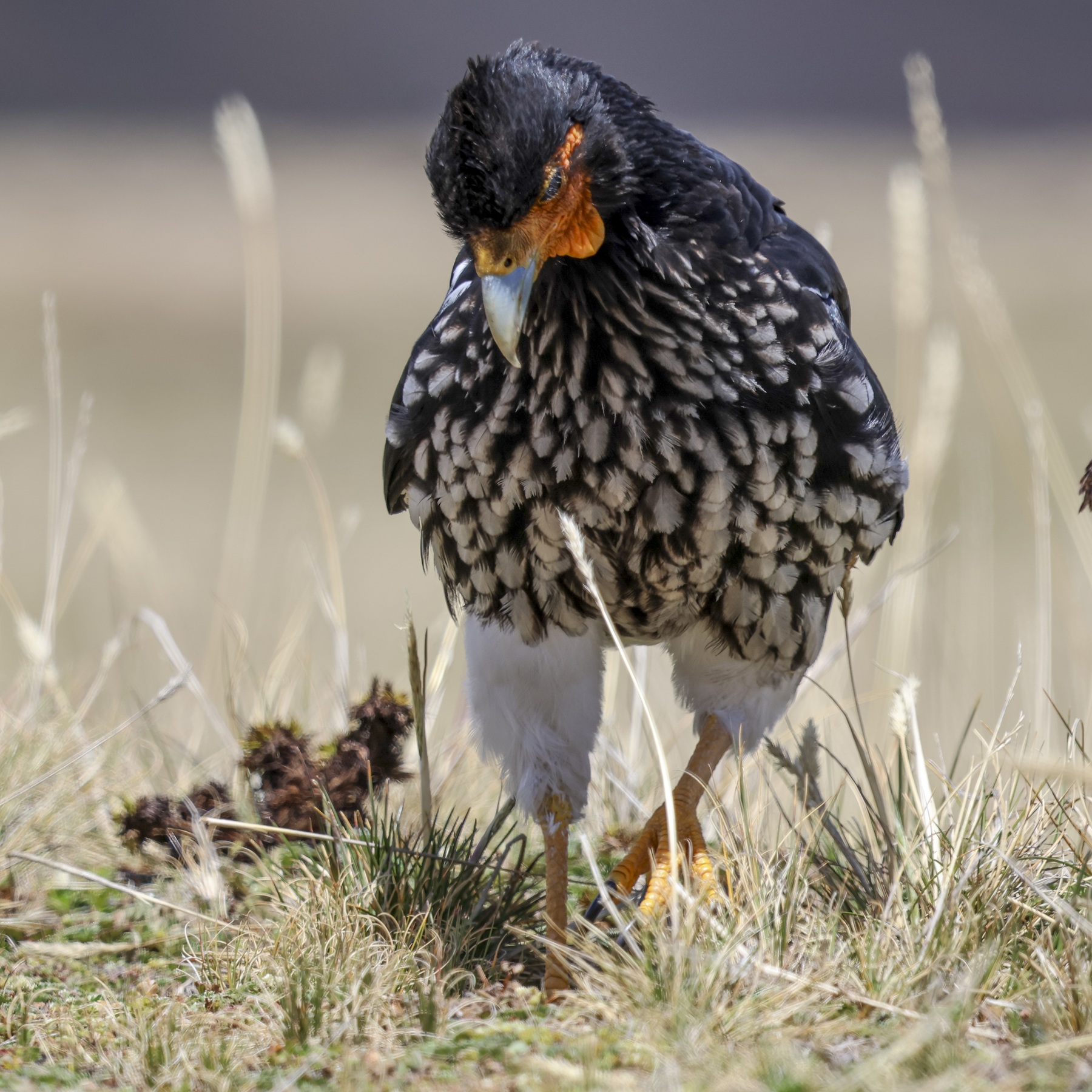
- Carunculated caracara © Jan Kelchtermans
-
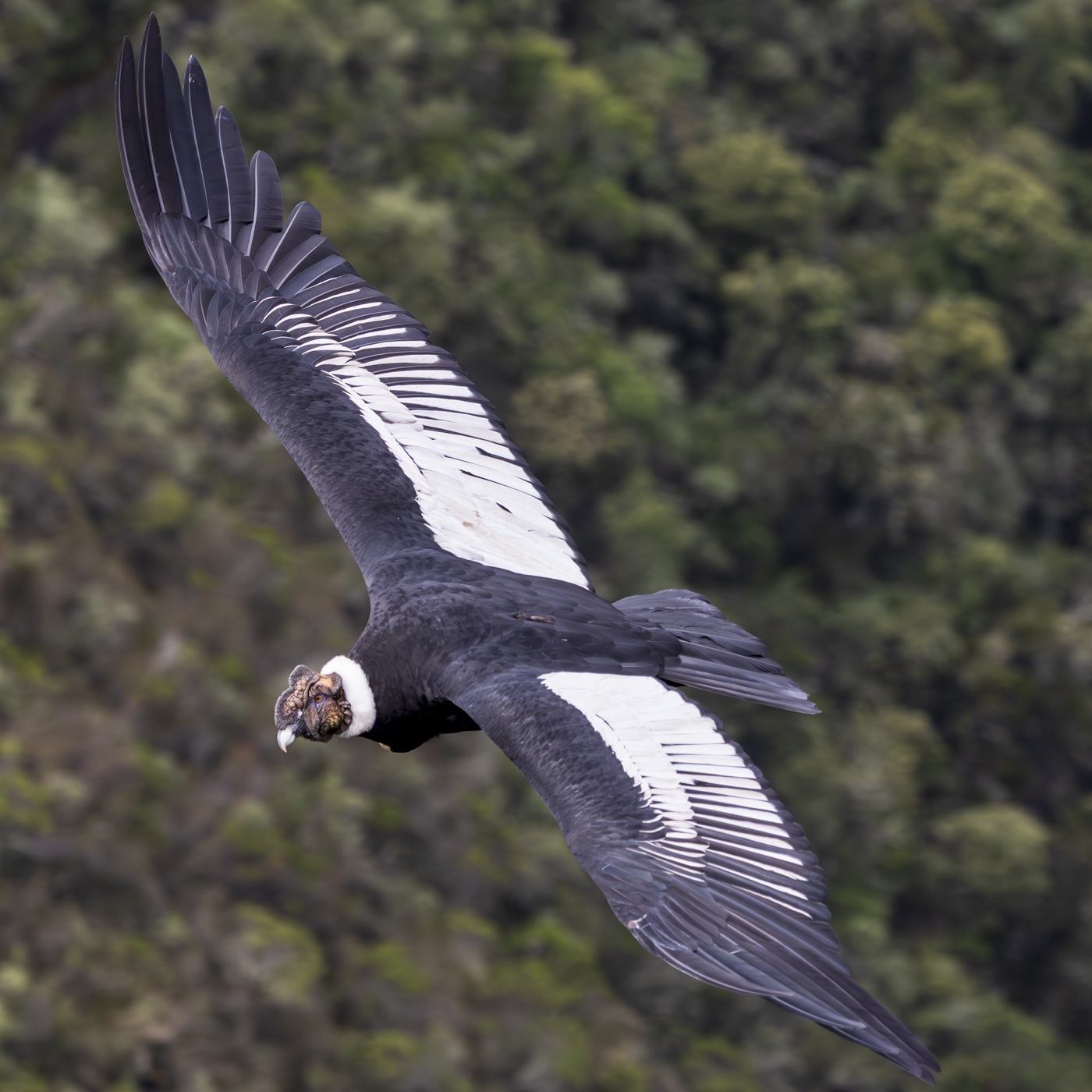
- Andean condor © Jan Kelchtermans
The Andean fox, or culpeo, is initially more difficult to spot. Only upon leaving Antisana do we locate the animal, hidden in a tuft of grass that clearly serves as a resting and hiding place. After taking a few photos as evidence, we leave the fox alone; coming closer would only cause disturbance. Tapeti and white-tailed deer are more common.
-
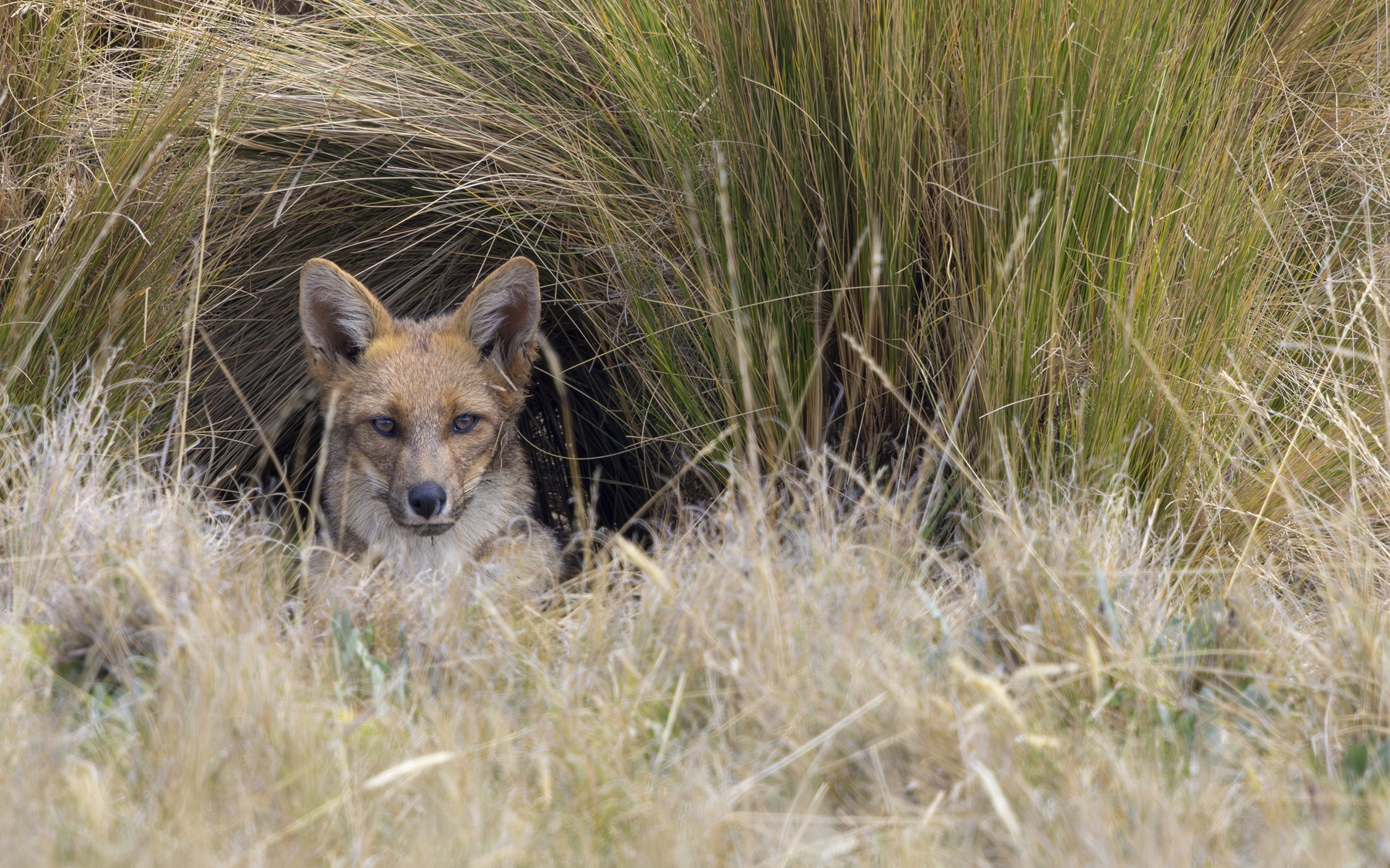
- Andean fox aka culpeo © Jan Kelchtermans
Another classic is a meal at the nearby Tambo Condor restaurant: a cozy, rustic spot with a panoramic view of the Chakana cliffs. While we enjoy a consistently delicious meal, the birdlife continues unabated. The feeders filled with sugar water provide sightings of giant hummingbird and great sapphirewing, the two largest hummingbird species in the world. Also the sword-billed hummingbird is sometimes present here.
-
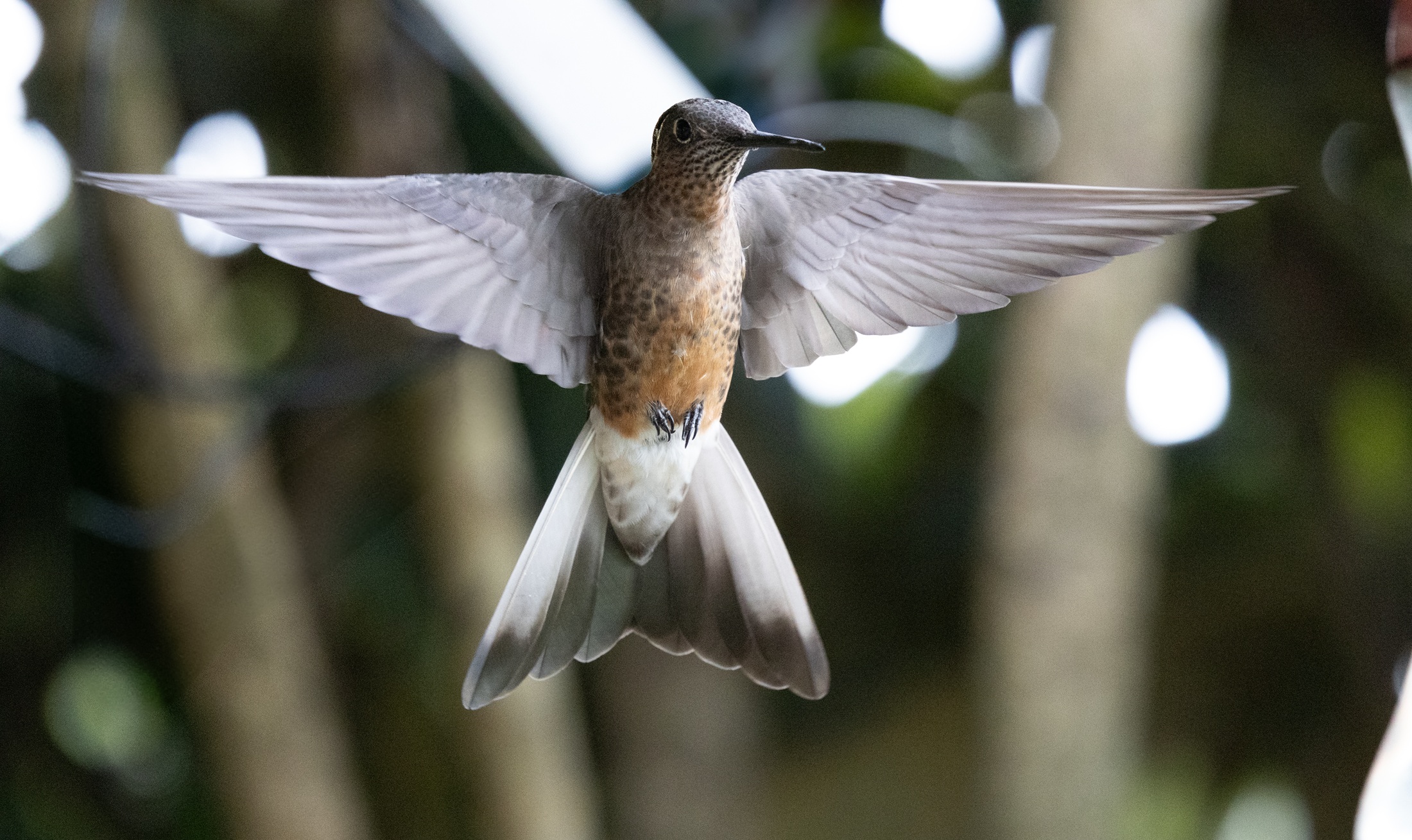
- Giant hummingbird © Jan Kelchtermans
-
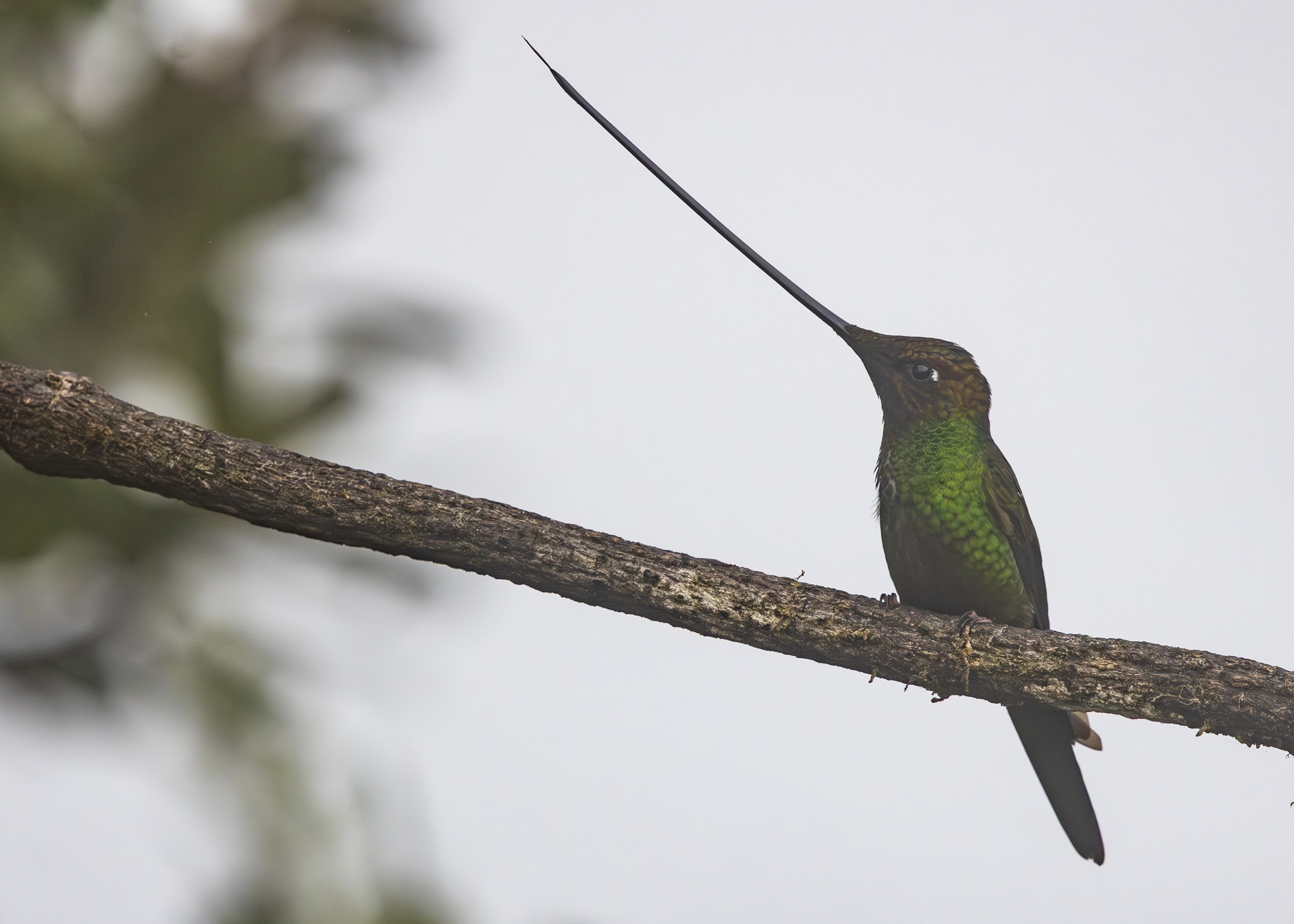
- Sword-billed hummingbird © Jan Kelchtermans
Other species that frequent the feeders and flowers include shining sunbeam, sparkling violetear, black-tailed trainbearer and tyrian metaltail. During our first of both coffee sessions, we were surprised by an Andean fox in the adjacent meadow. Yiehaaa!
Birding locations with the golden egg – part four of the atmospheric report of the Ecuador tour in 2026
Paz de las Aves
In 2007, guide Jan was given his first tour by Ángel Paz on his private estate near Nanegalito, a village in the western Andes. Despite the very small-scale ecotourism, Ángel and his brother were already well-known within the international hardcore birding scene. They were, and remain, pioneers in the hand-taming of birds that until then seemed elusive shadows of the Chocó region: antpittas, cotingas, tapaculos, and wood quails. In 2026, Paz de las Aves has undergone an impressive transformation. The location has expanded, offering catering and lodging, and today reaches a much wider audience. At the same time, it has grown into a fully-fledged family business. Yet, the essence remains untouched: the professionalism and authenticity of Paz de las Aves are still outstanding. It is and remains an absolute must-visit on any trip to Ecuador. This is all the more remarkable because the site was almost gone a few years ago due to a complex inheritance dispute. Thanks to global crowdfunding, supported by private individuals and eco-companies who care deeply about this place, this unique project was saved. Bottom-down up always works! You shouldn’t wait for the government!
-
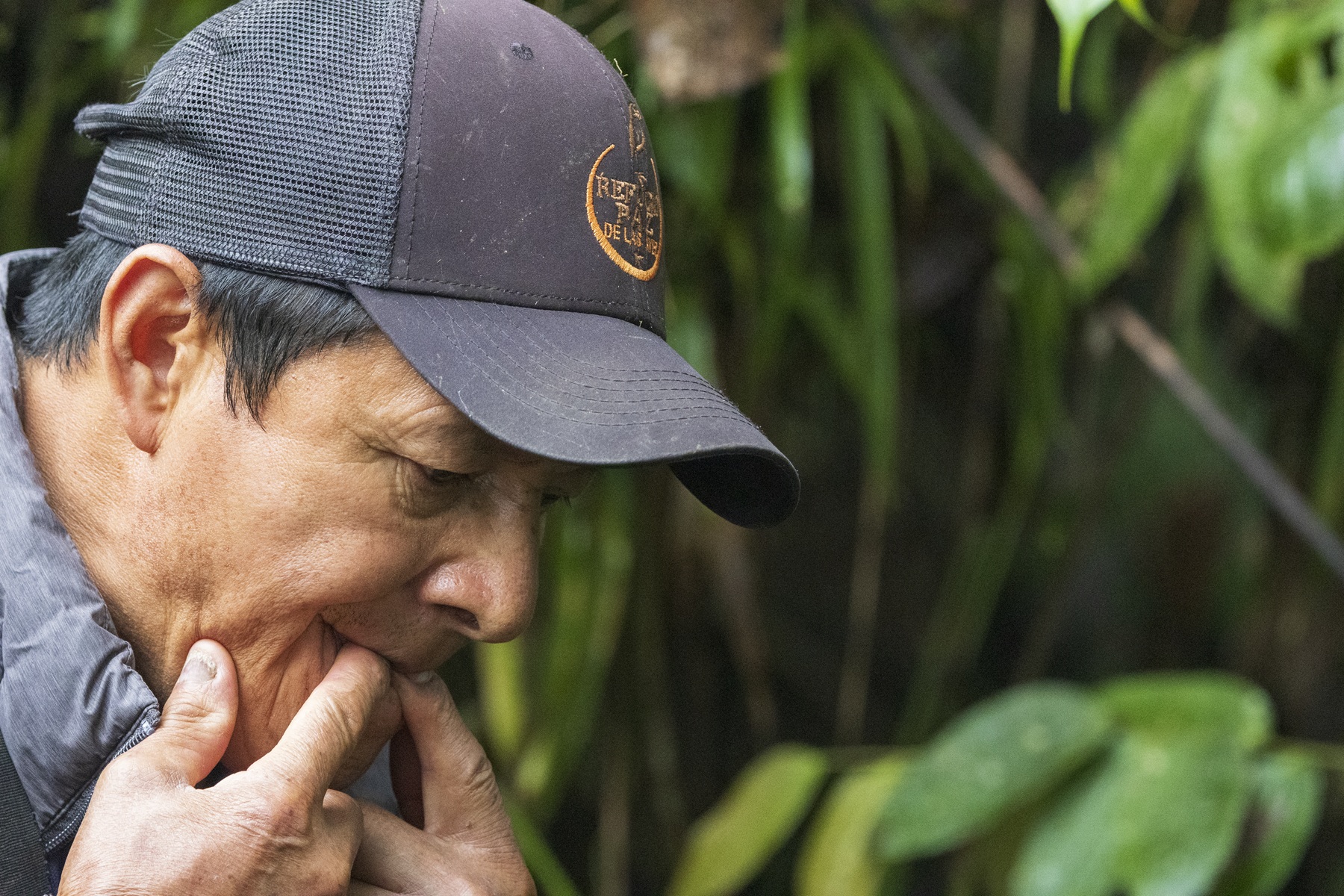
- Angel Paz © Jan Kelchtermans
It remains truly captivating to see how locals manage to conjure up the jewels of the cloud forest with nothing more than earthworms for people who are delighted, moved, and excited by rare Neotropical birds that normally hide from view. Simply fantastic! We were also able to experience this firsthand during our visit. An early start, of course. We arrived in the dark and, after parking the minibus, followed Luis and a member of the Paz family along a narrow path to a hide further away. Our target species: the Andean cock-of-the-rock. This iconic Andean bird lives in mid-altitude cloud forests and gathers at sunrise at leks (designated mating grounds) where males emit pig-like calls and try to impress females by jumping and dancing. Along the way, we stop briefly to tape a local owl, which yields surprisingly fast results. A rufescent screech-owl appears almost immediately, curious about the call of its supposed companion. The first bird species of the day is immediately photographed.
-
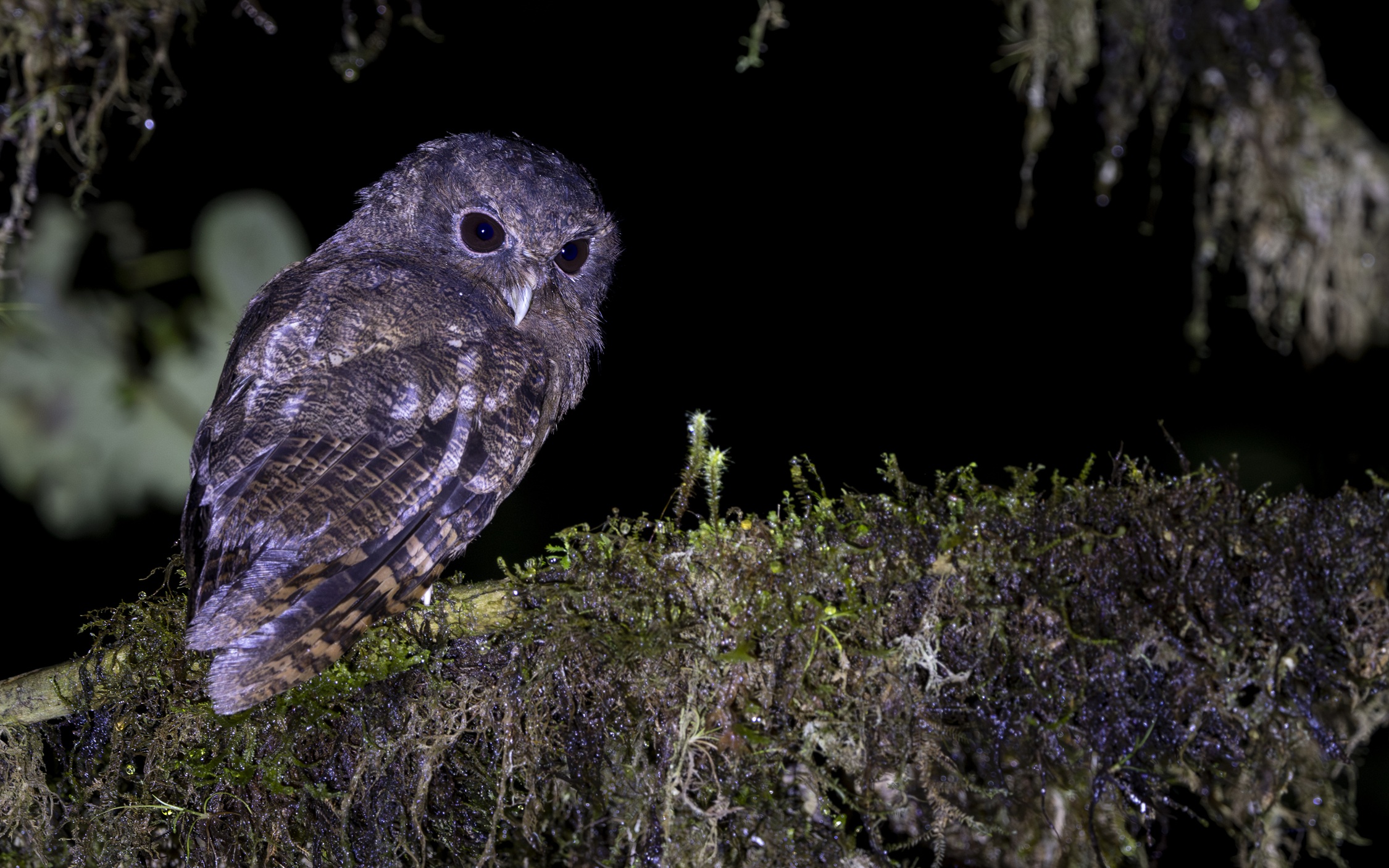
- Rufescent screechowl © Jan Kelchtermans
Back at the hide, we wait until exactly 6:14 a.m., when the first pig-like call echoes through the forest. Then, several male Andean cock-of-the-rocks appear, occasionally making for a beautiful sighting despite the low light and the distance. Mission one of the day: accomplished.
-
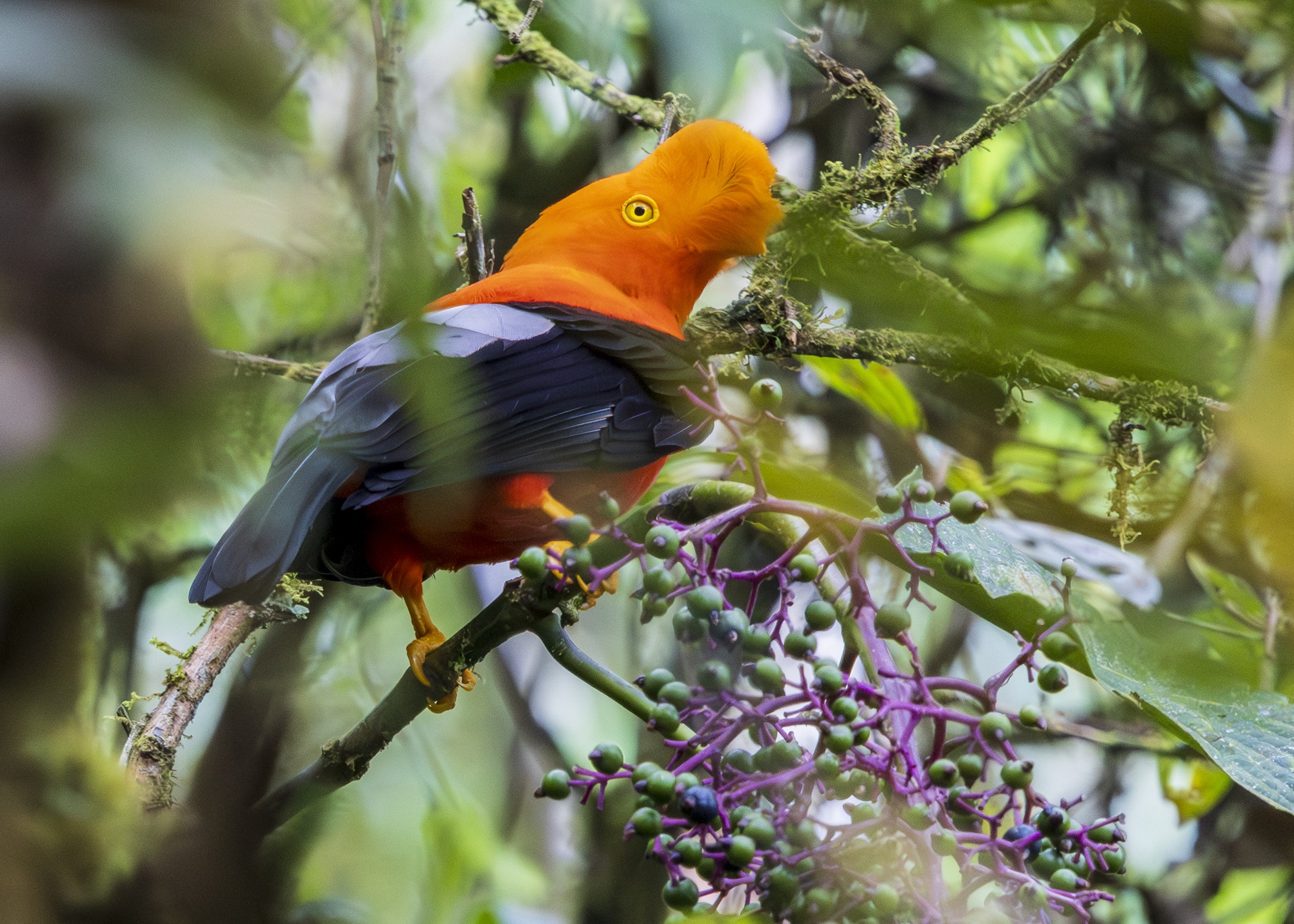
- Andean cock-of-the-rock © Jan Kelchtermans
On the way back, a difficult search follows for a calling pygmy owl hidden deep in the canopy of moss-covered trees. Ultimately, it’s Luis again who succeeds in locating the cloud forest pygmy owl: a needle in a haystack! The next challenge is making the bird visible to all group members—no easy feat.
-
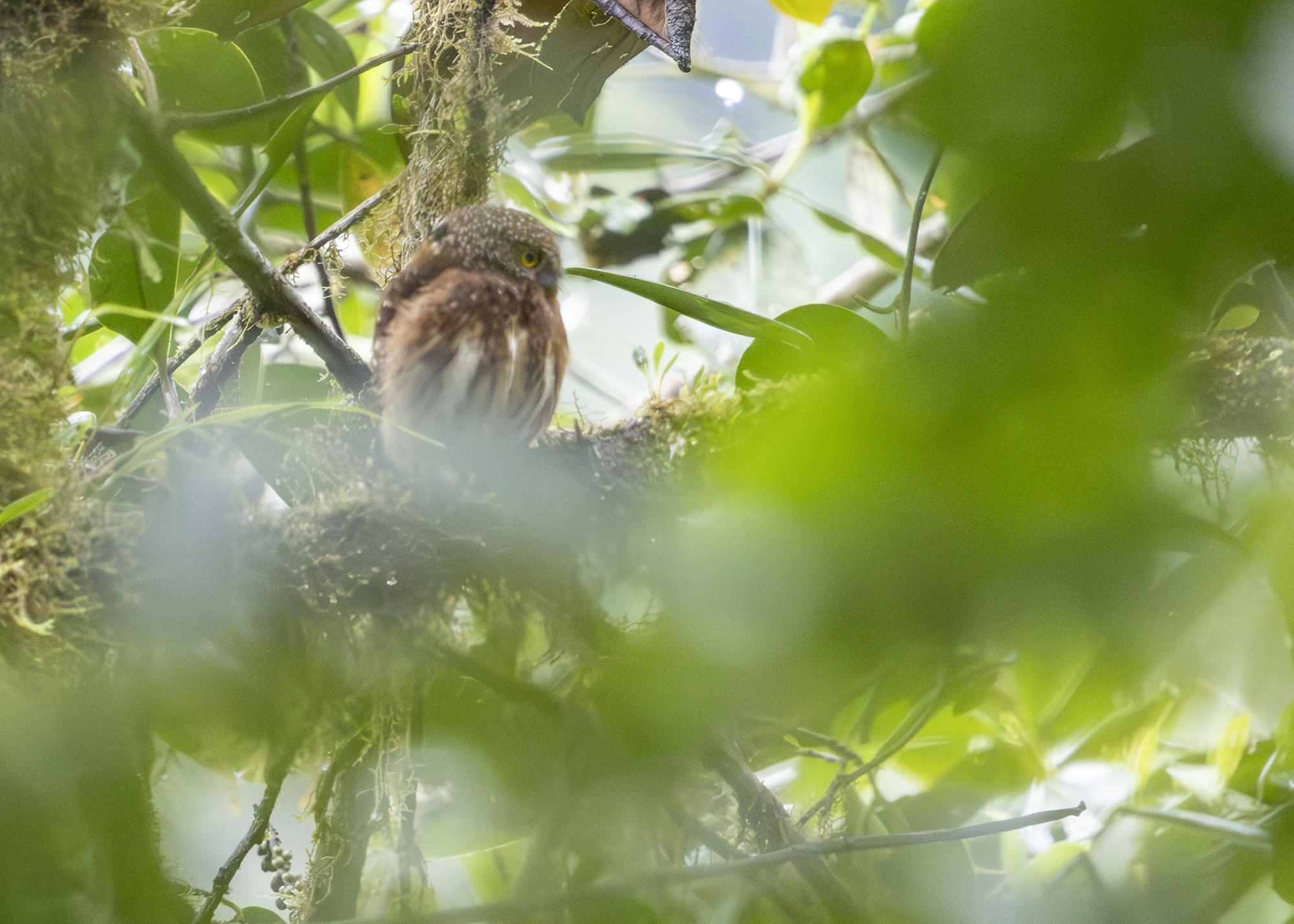
- Cloud-forest pygmy owl © Jan Kelchtermans
Before coffee and breakfast, we first stop at “Willy,” the nickname of a local yellow-breasted antpitta in a small wooded area along the road. But despite the earthworms, the repeated venga! venga! calls, and the antpitta’s perfectly imitated call, Willy doesn’t move. “No problem,” says Ángel, “we’ll switch to plan B later.” “First, coffee!”
After a hearty breakfast, we continue our Paz de las Aves adventure. And how! This time, two of Willy’s relatives reveal themselves hungry and curious at their offered breakfast. The earthworms disappear eagerly. The small waterfall in the macrovalley, where the pair of yellow-breasted antpittas resides, also makes for a beautiful photographic backdrop.
-
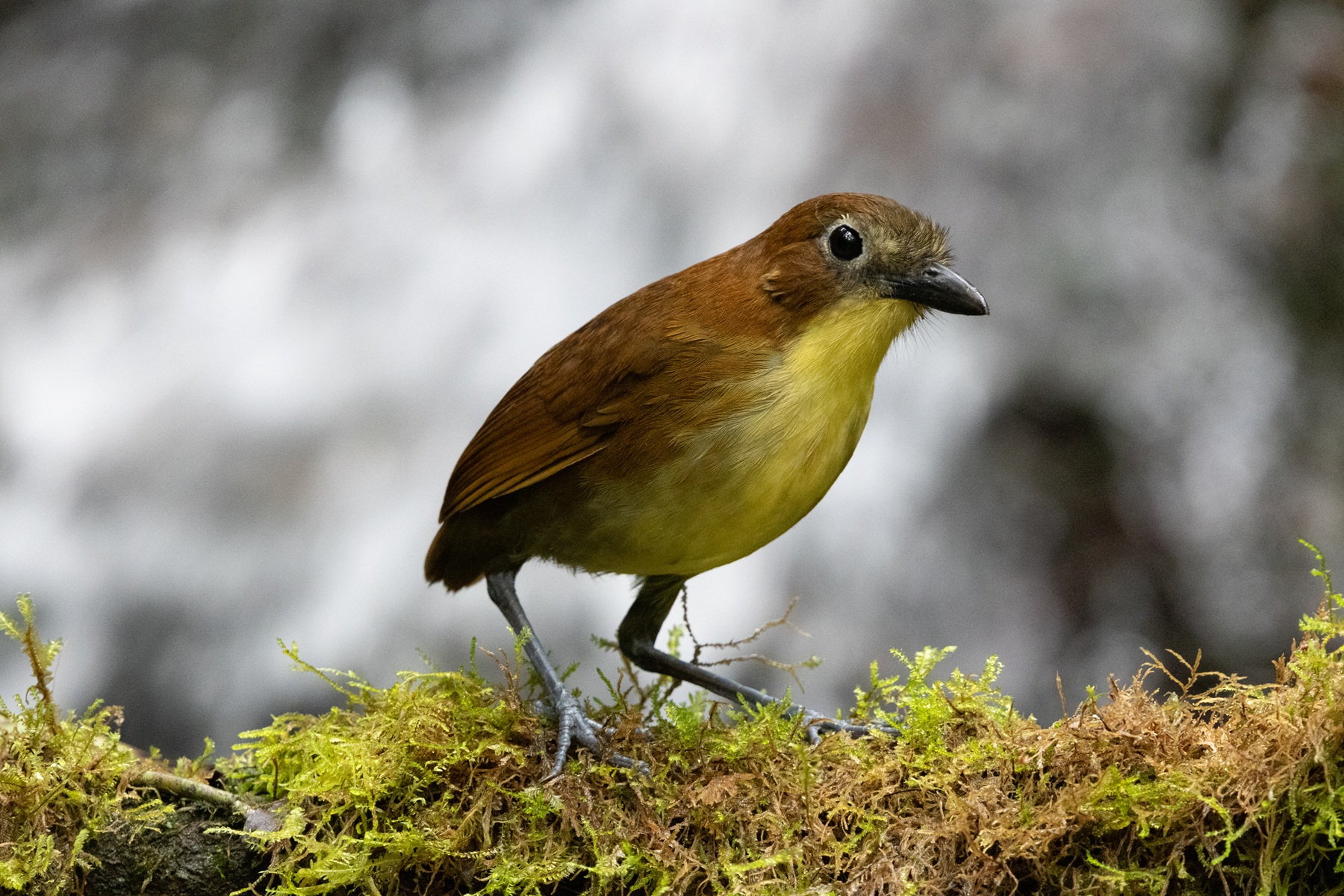
- Yellow-breasted antpitta © Jan Kelchtermans
Then we head towards the location of a giant antpitta territory – the absolute star of Paz de las Aves. While we were having breakfast, it turns out that Patricio, Angel’s brother, had already successfully scouted it out. Hats off to the thoroughness and efficiency with which they work here! Once again, a Chocó endemic species is introduced to the attendees with care, empathy, and professionalism: the giant antpitta. What a beast! Like an Easter egg on legs, a female suddenly hops out. Twice she greedily picks up the offered worms, destined for her nearby brood. Thank you, Patricio!
-
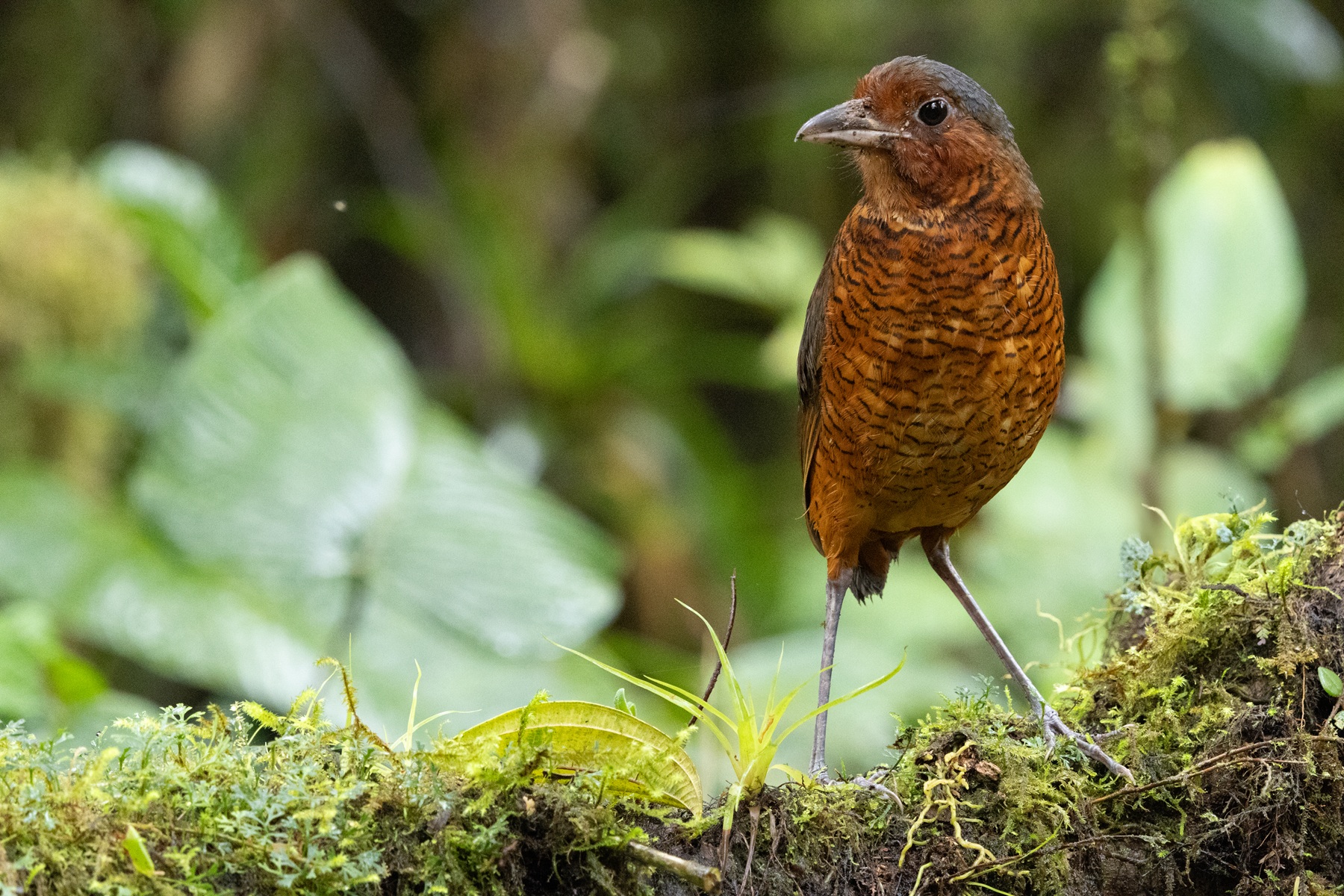
- Giant antpitta © Jan Kelchtermans
But even then, the adventure isn’t over. We continue our journey to a location for the ochre-breasted antpitta, the third antpitta species of the day. Upon arrival, Shakira is hungry. She sits waiting, her tiny body twisting, on a few branches above the feeding area. A nearby male of the same species also allows himself to be admired from very close up. Wonderful!
-
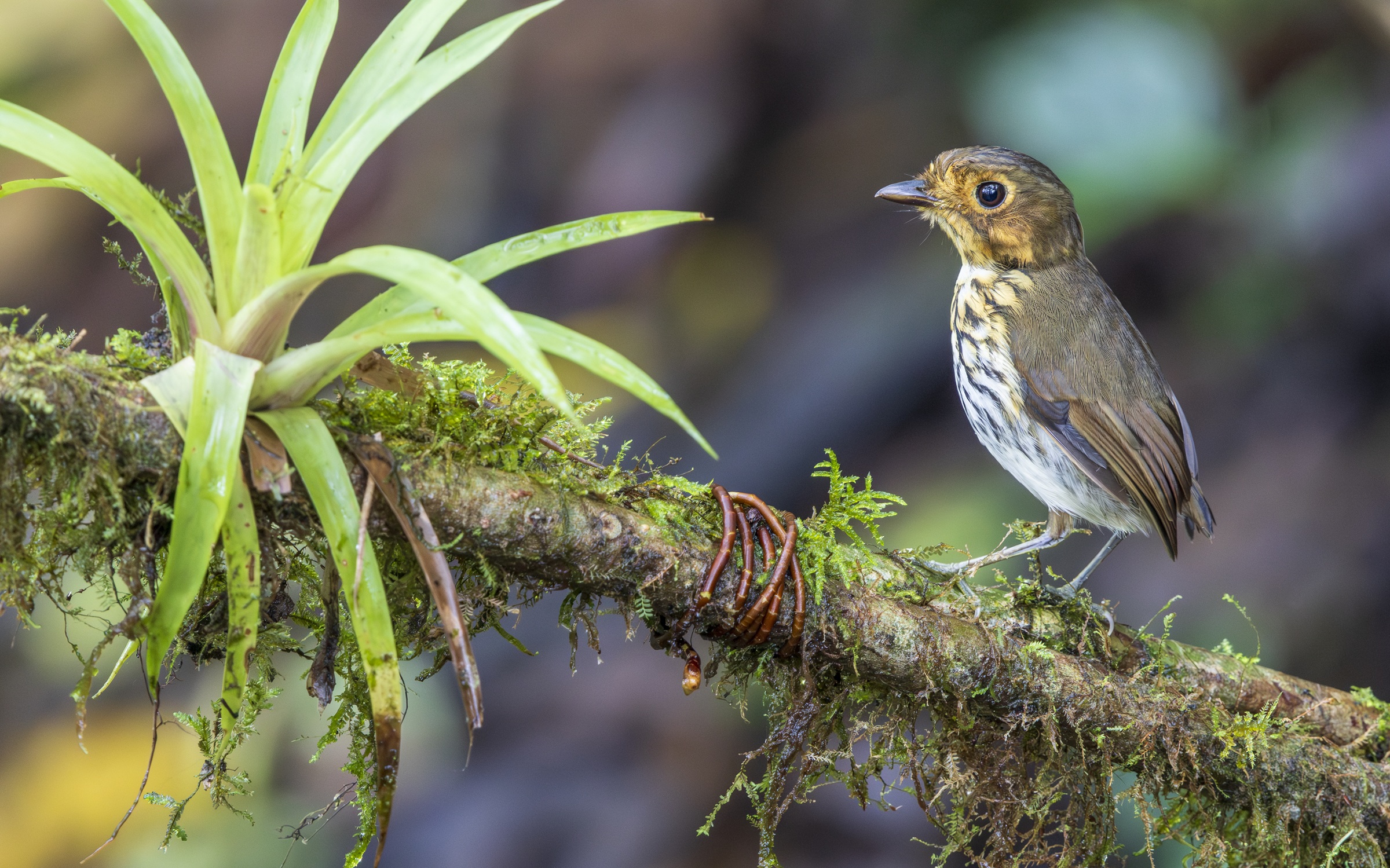
- Ochre-breasted antpitta © Jan Kelchtermans
-
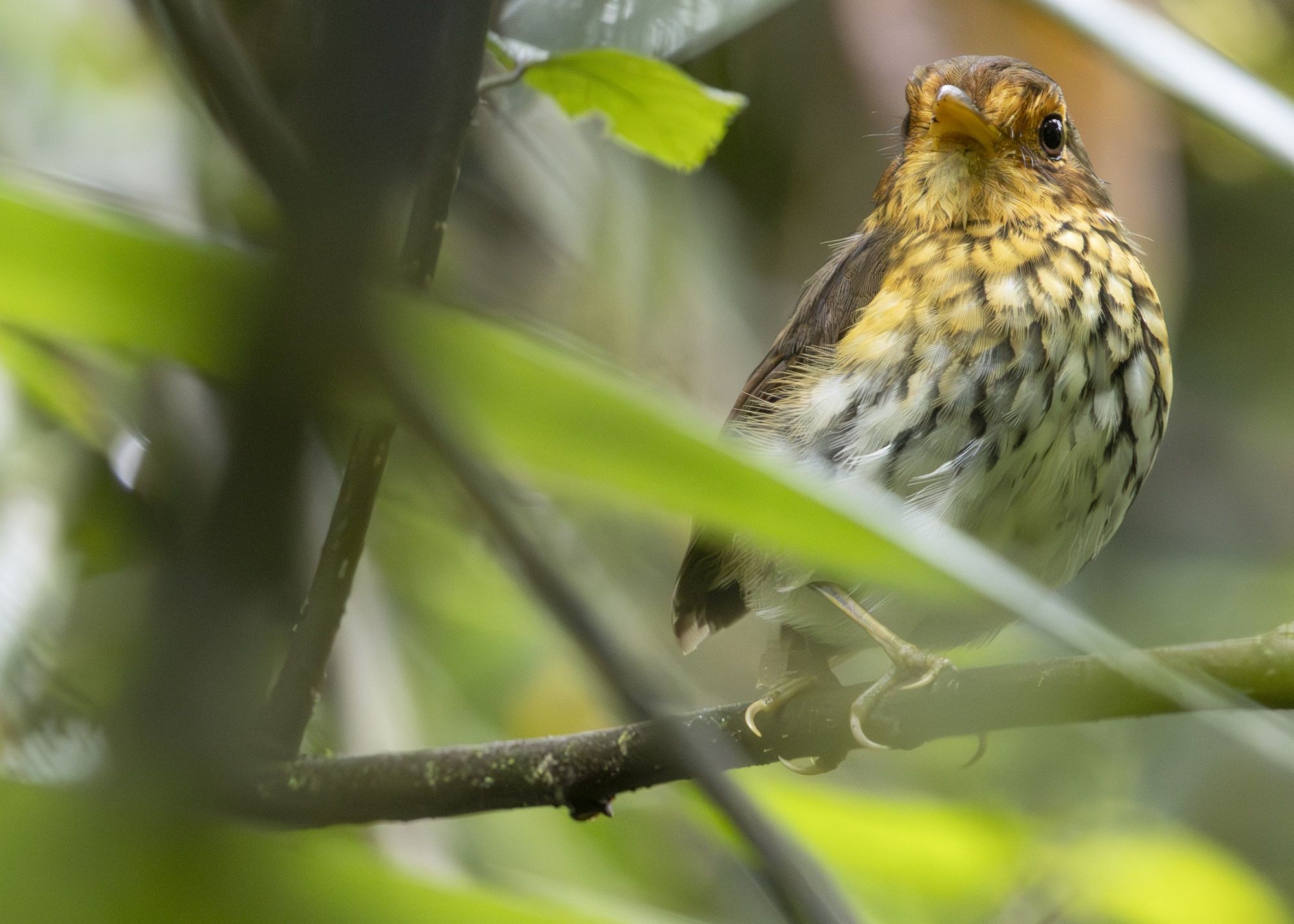
- Ochre-breasted antpitta © Jan Kelchtermans
Barely recovered from this sighting, on our way back we are overwhelmed by a group of toucan barbets, which appear briefly but powerfully at a banana feeder. Wow, special birds! We arrive just in time to watch and photograph the noisy and hungry birds. What a spectacle!
-
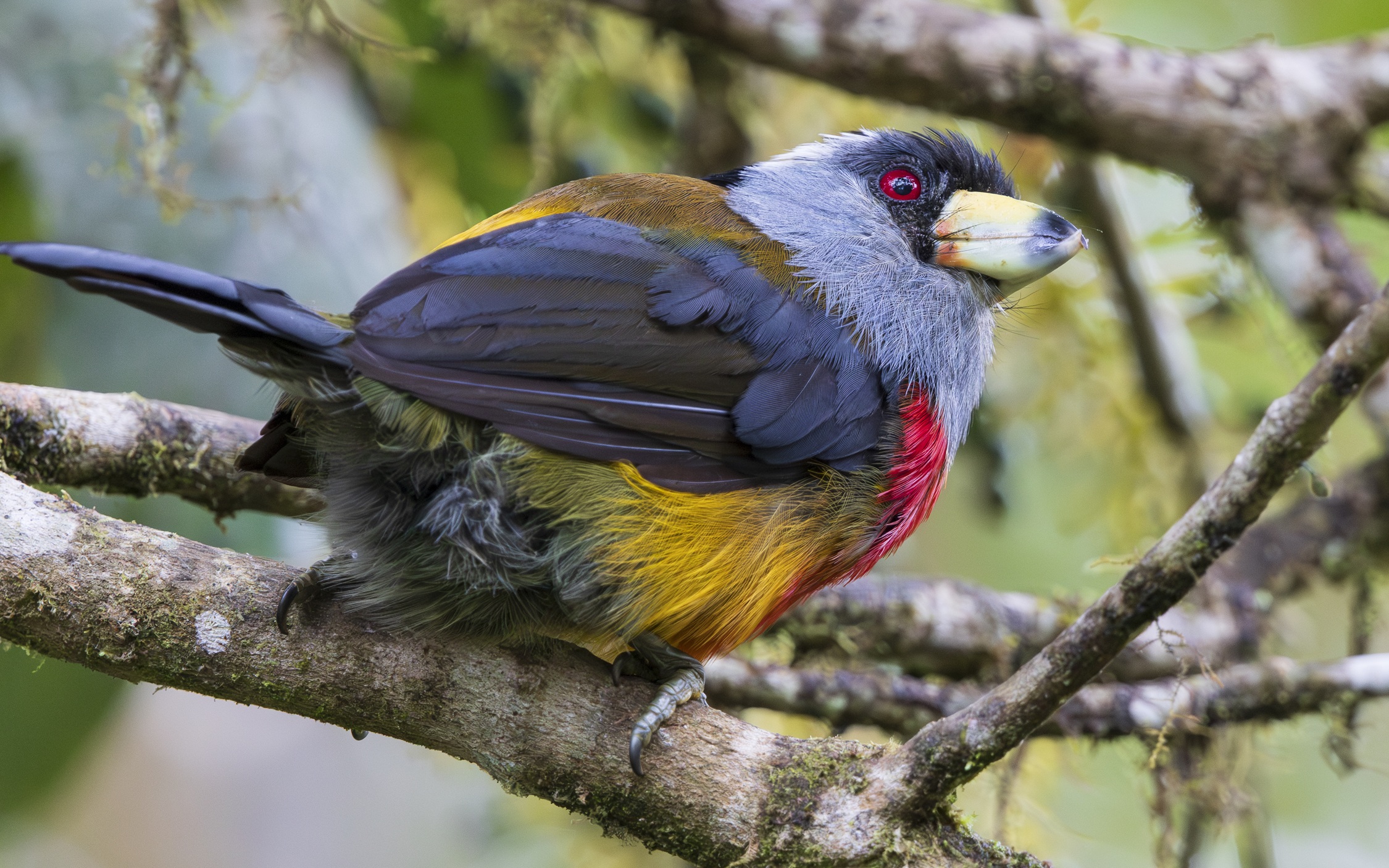
- Toucan barbet © Jan Kelchtermans
Back at the lodge, we enjoy another sighting of a female powerful woodpecker. A little further on, near a bridge over a river, we have another treat. This time, it’s a pair of lyre-tailed nightjars. The male sits on a perch, the female on a boulder. Both rely completely on their camouflage and willingly allow themselves to be photographed.
-
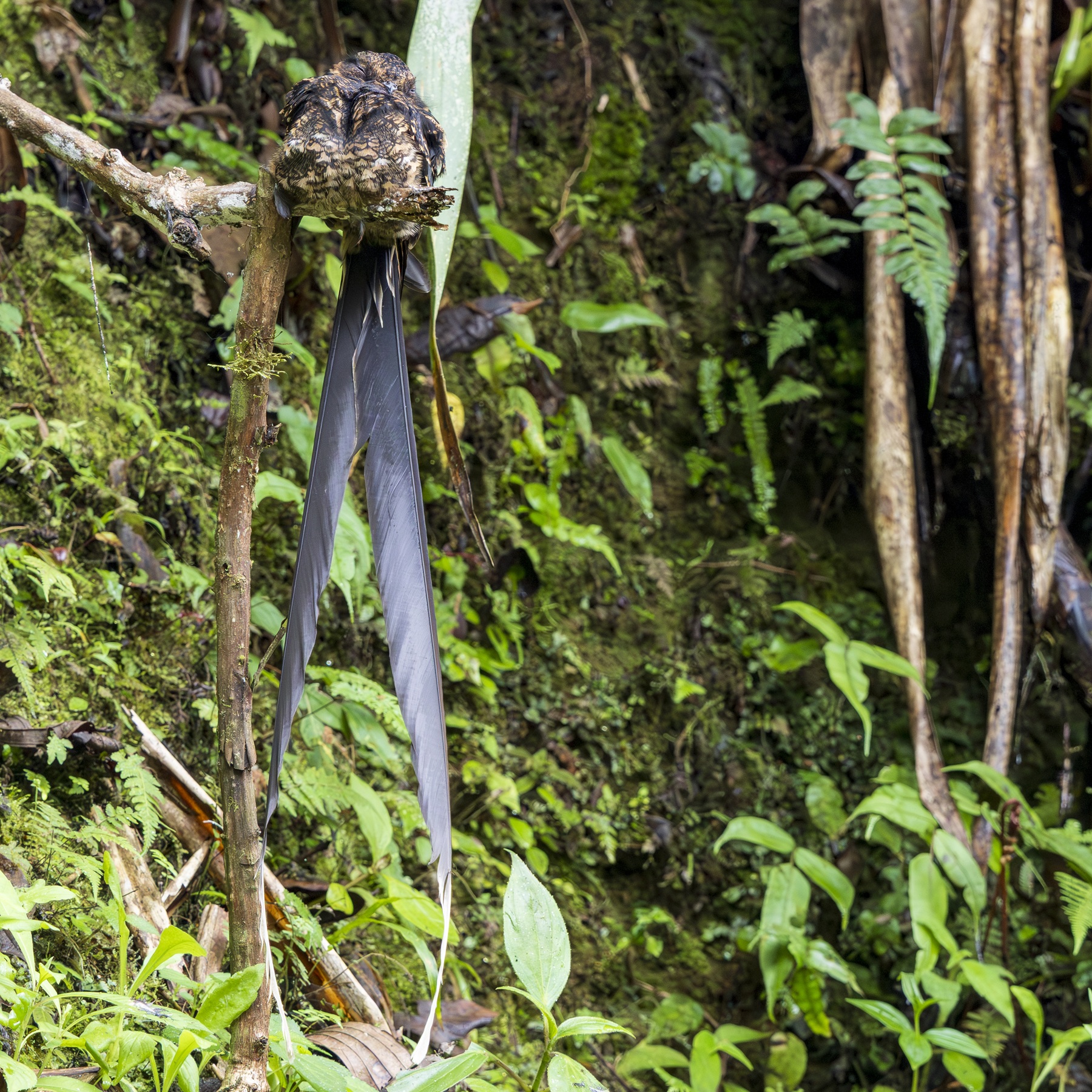
- Lyre-tailed nightjar © Jan Kelchtermans
The next highlight is culinary: a simple but delicious lunch is served at the lodge, prepared with local ingredients. Viva Ecuador!
Zura Loma
On the day of our departure, we visit Zura Loma, a place similar to Paz de las Aves, but younger in its existence and situated at a higher altitude. Because bird species are often restricted to specific altitudes, this visit promises to reveal new species.
-
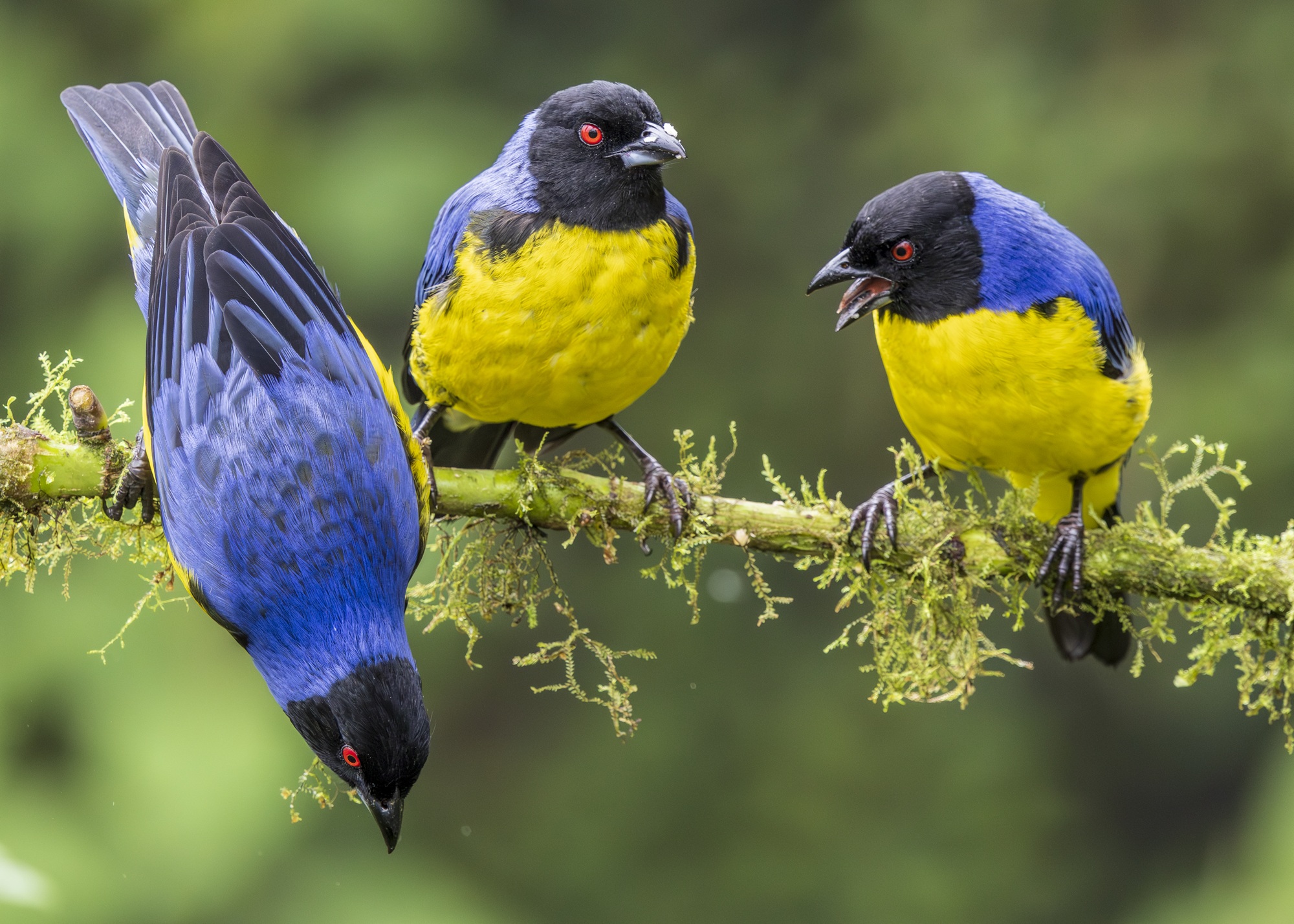
- Hooded mountain tanager © Jan Kelchtermans
-
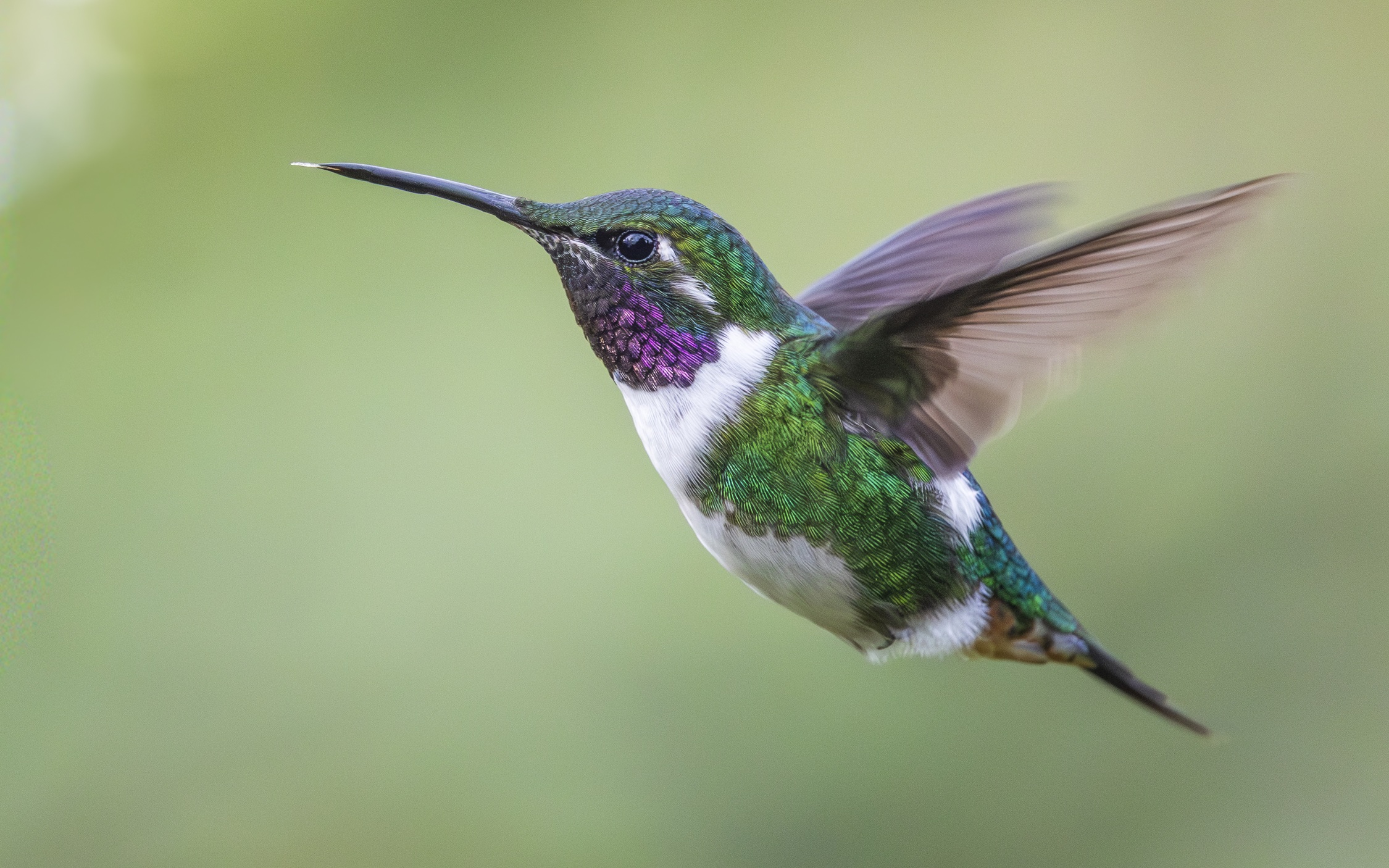
- Purple-throated woodstar © Jan Kelchtermans
To make the most of this last day in Ecuador, we get up early. Once we arrive at this idyllic location, we can enjoy our takeaway breakfast with freshly brewed coffee – pure enjoyment!
-
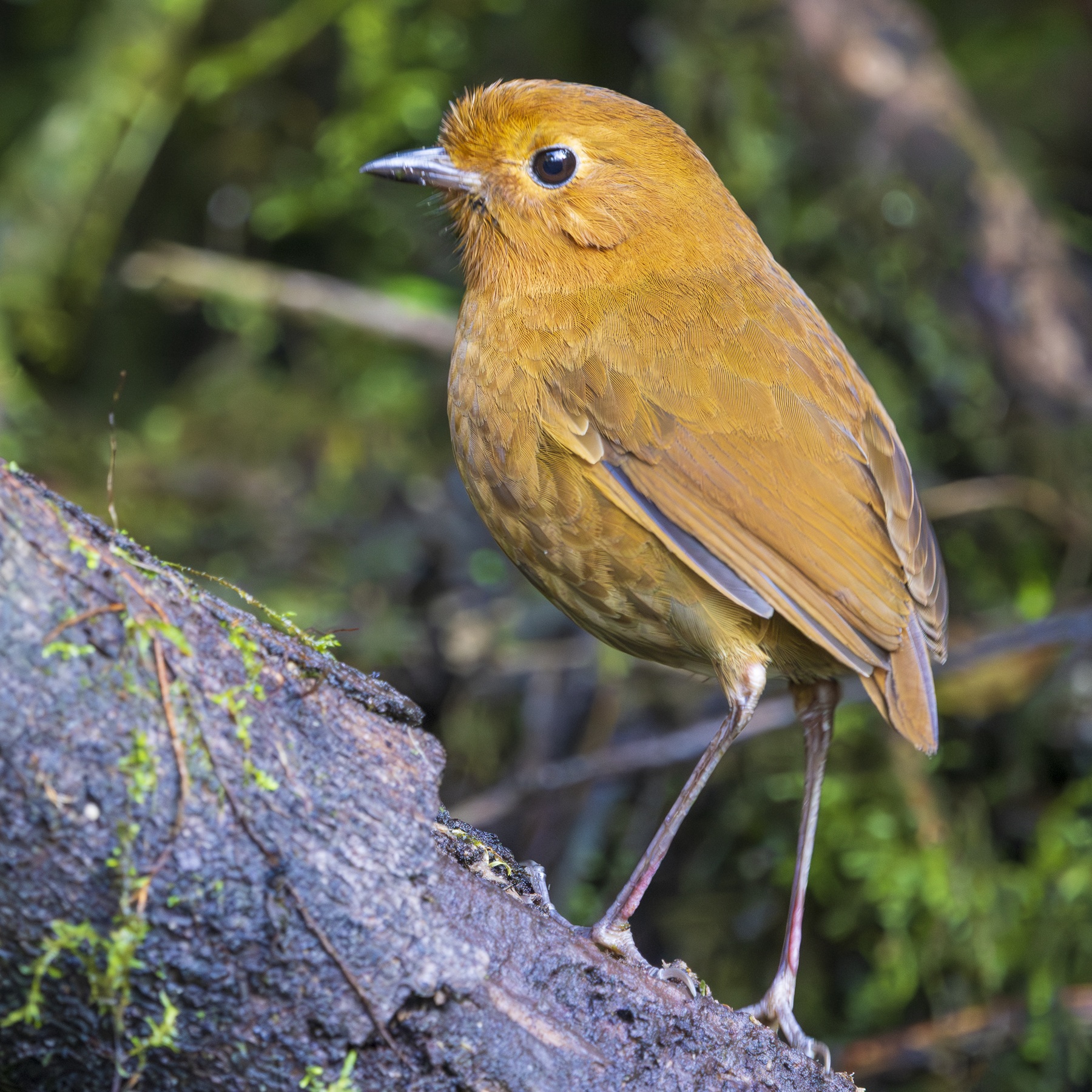
- Equatorial antpitta © Jan Kelchtermans
-
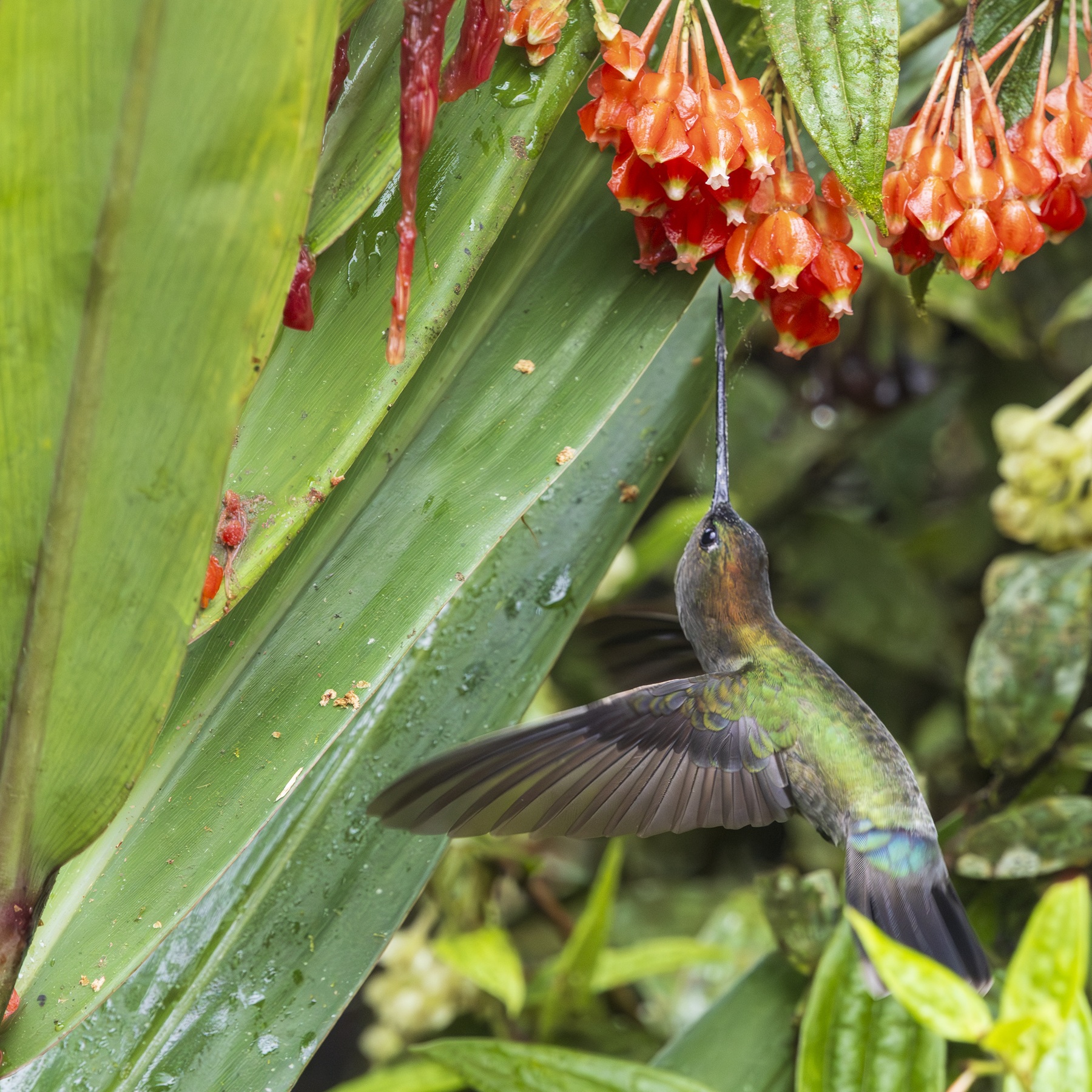
- Green-fronted lancebill © Jan Kelchtermans
Meanwhile, guide Jan, cup of coffee in hand, keeps his eyes fixed on the only hummingbird feeder near the cafeteria. After three previous visits, he quietly hopes for an encounter with the male Black-breasted Puffleg, a rare hummingbird that is seen here from time to time. This species is a true mega-rarity, with Zura Loma and the nearby Yanacocha Reserve of the Yocoto Cloudforest Foundation being the only places where it sporadically appears. This species is considered critically endangered due to its extremely limited range, estimated at less than 100 km². The entire population is estimated at 100-150 individuals. And since individuals of this bird species disappear here as quickly as they appear, the first thing to do is enjoying the sightings of the species that effectively do show up. And there are many! At the second, slightly lower feeder, a constant parade of antpittas, tanagers, flowerpiercers, hummingbirds and thrushes can be admired. Cameras are working overtime as the colorful birds show off their best side. And we’re not alone: other guides with their guests and international birders have also gathered.
-
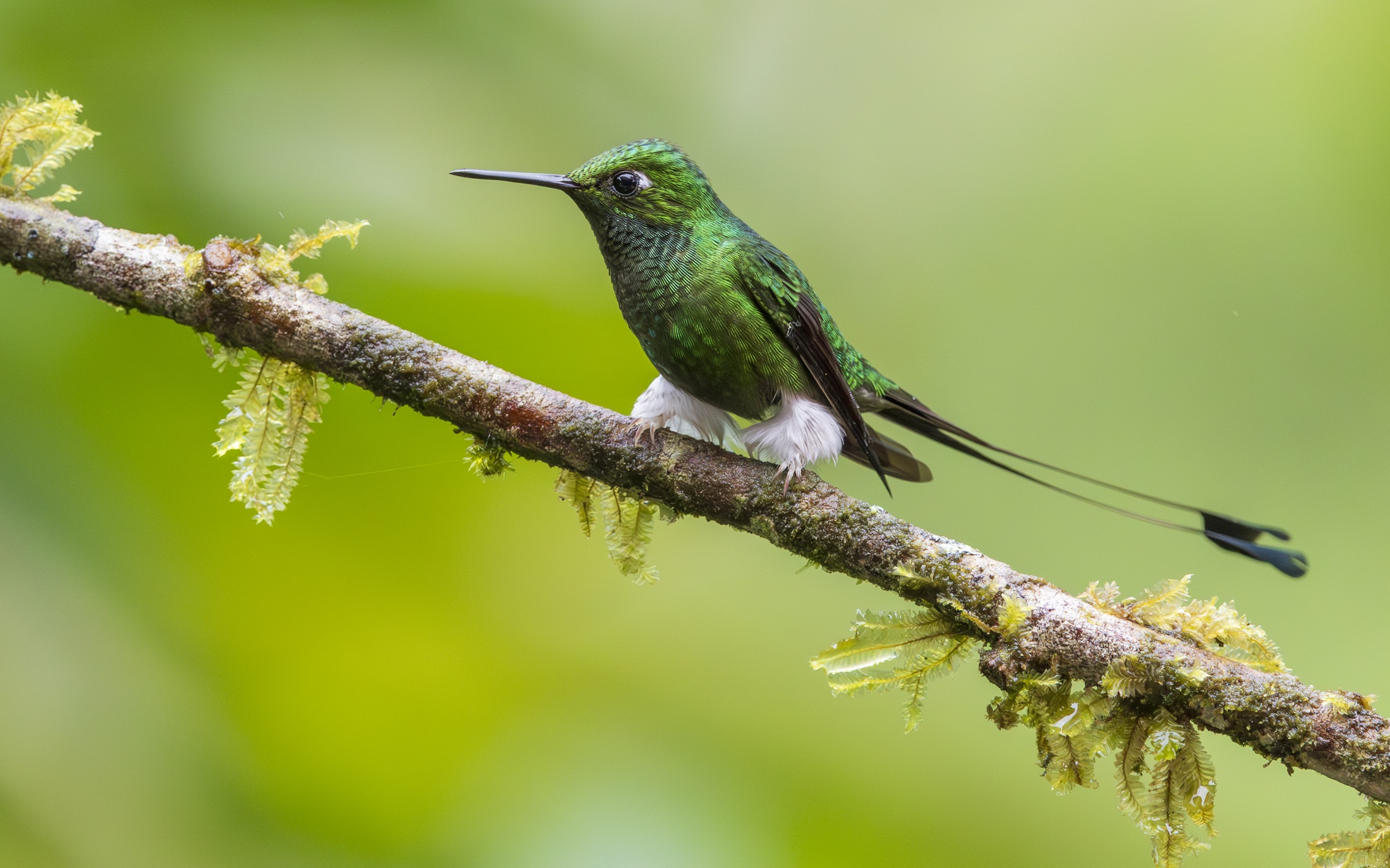
- Booted rackettail © Jan Kelchtermans
After more than three hours of waiting, the redeeming word finally comes from one of the locals: “Puffleg!” A brief but intense moment: the Black-breasted Puffleg makes its appearance, and immediately the sound of countless cameras resonates. Fortunately, the bird returns several times, allowing us to note all its characteristic features: the black breast, violet-blue throat, dense white leg tufts, straight black bill, and dark forked tail. Check! Yes! Fists-up!
-
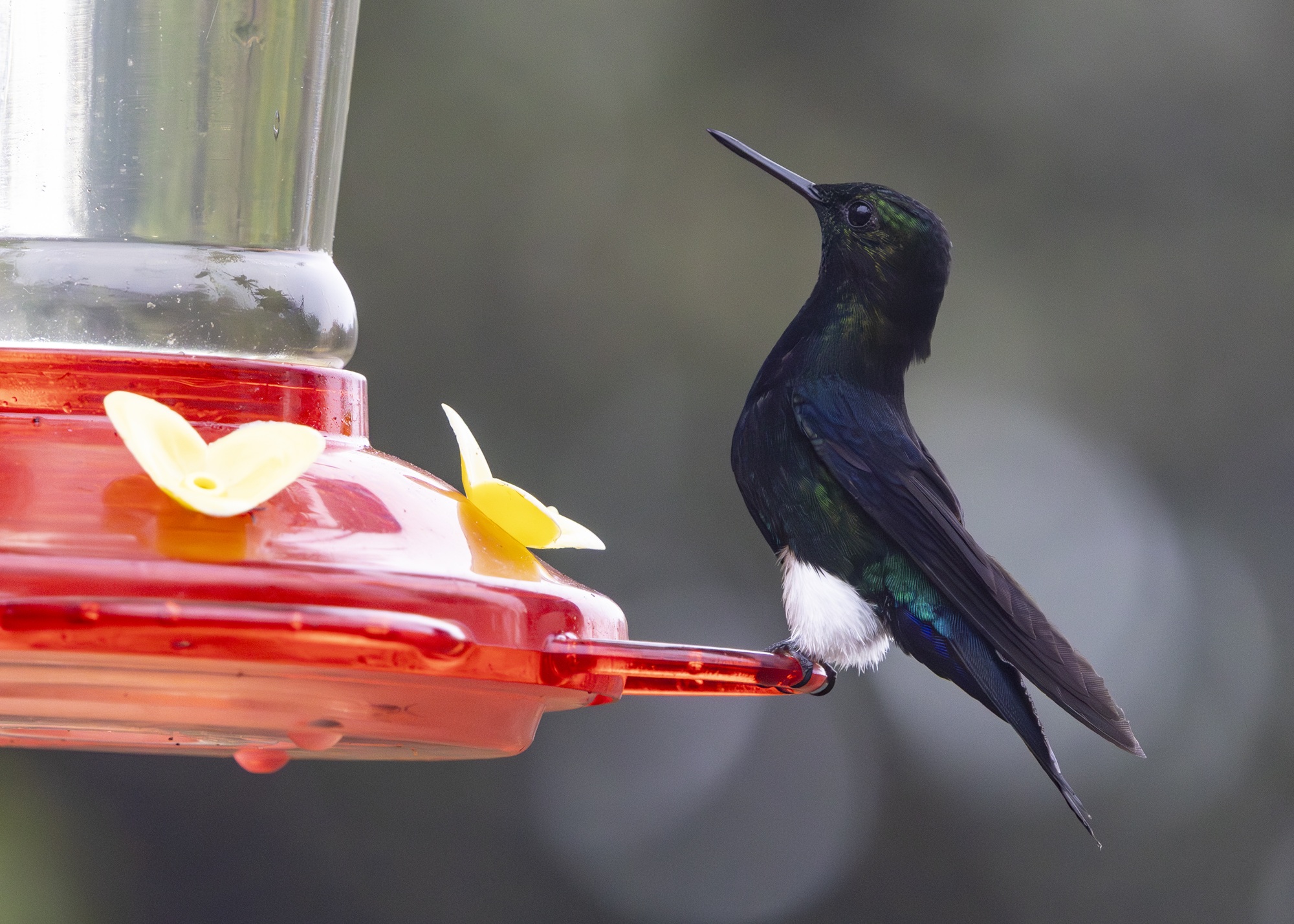
- Black-breasted puffleg © Jan Kelchtermans
Our time is limited, but we quickly visit the feeders of the nearby Yanacocha reserve, where resident species are also abundant. The buff-winged starfrontlets, sword-billed hummingbirds, masked flowerpiercers and, new for this trip, the black-chested mountain tanager, particularly capture our attention.
-
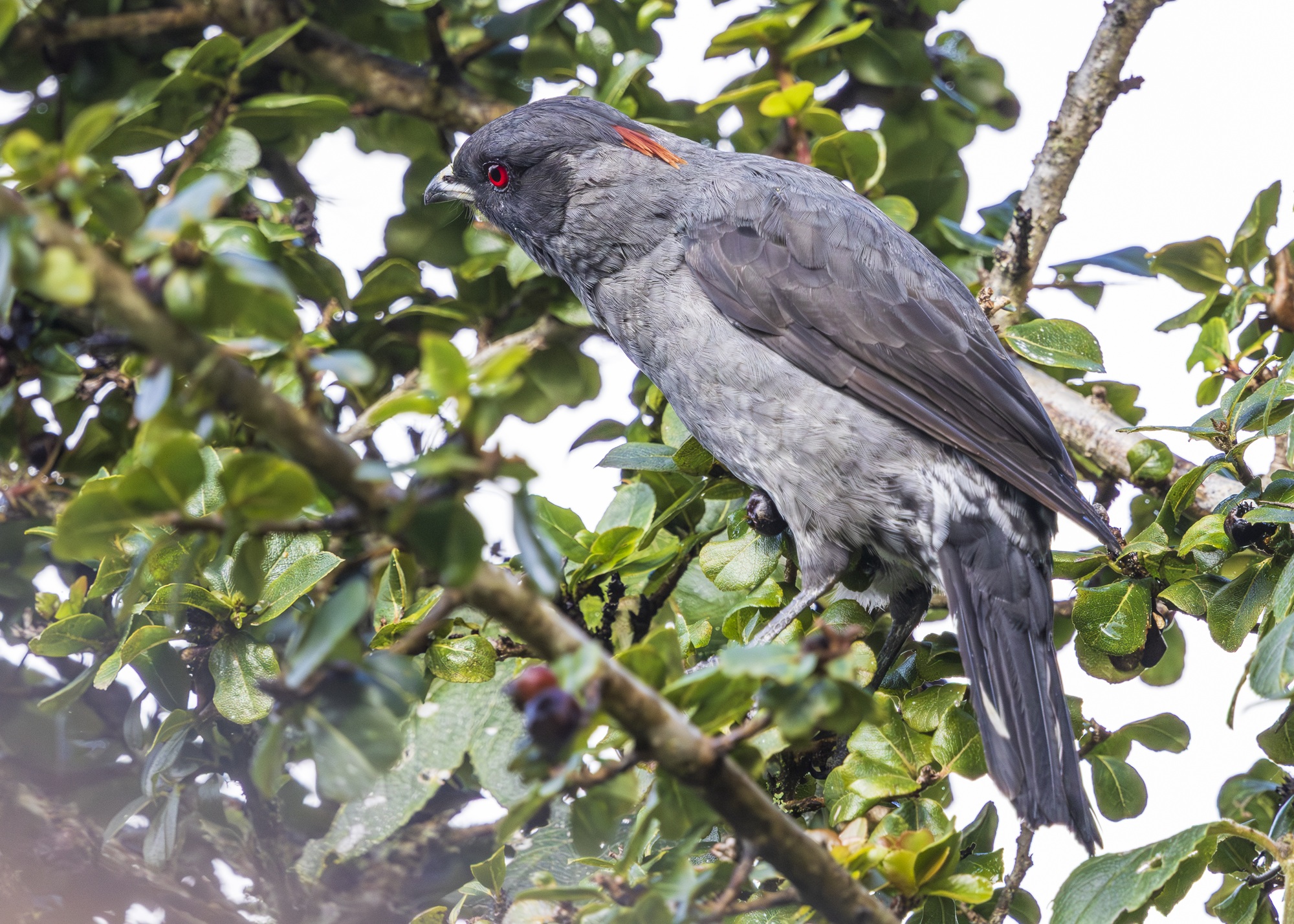
- Red-crested Cotinga © Jan Kelchtermans
We end with an exclusive meal in the adjacent Yocoto Cloudforest Foundation building. On the way to the bus, bringing an unforgettable journey through Ecuador to a end, we enjoy a couple of tawny antpittas showing themself the full monty way. It was truly amazing!
Part five of the atmospheric report of the Ecuador tour in 2026: spectacled bears all the way!
Friday, January 30. After breakfast at seven o’clock, we head to Guango, a nearby lodge about fifteen minutes from our accommodation in Papallacta. This is despite the fact that we have already seen most of the target species for which the lodge is famous—both mammals and birds, such as Torrent Duck, White-capped Dipper, and Mountain Tapir. Recently, however, a feeder has been installed here for the Grey-breasted Mountain Toucan, a phenomenon that has made its way here from Colombia. There, too, the Neotropical concept of feeding and watching birds is well established—LOL!
-

- Torrent ducks ; male and female © Jan Kelchtermans
Besides, it would simply be great to add a third species of mountain toucan to our list. We had already managed this earlier with Plate-billed Mountain Toucan at the feeders of the fantastic Guancapi Lodge, and with Black-billed Mountain Toucan while exploring the Jumanji Trail across the Guacamayos Ridge near San Isidro.
-
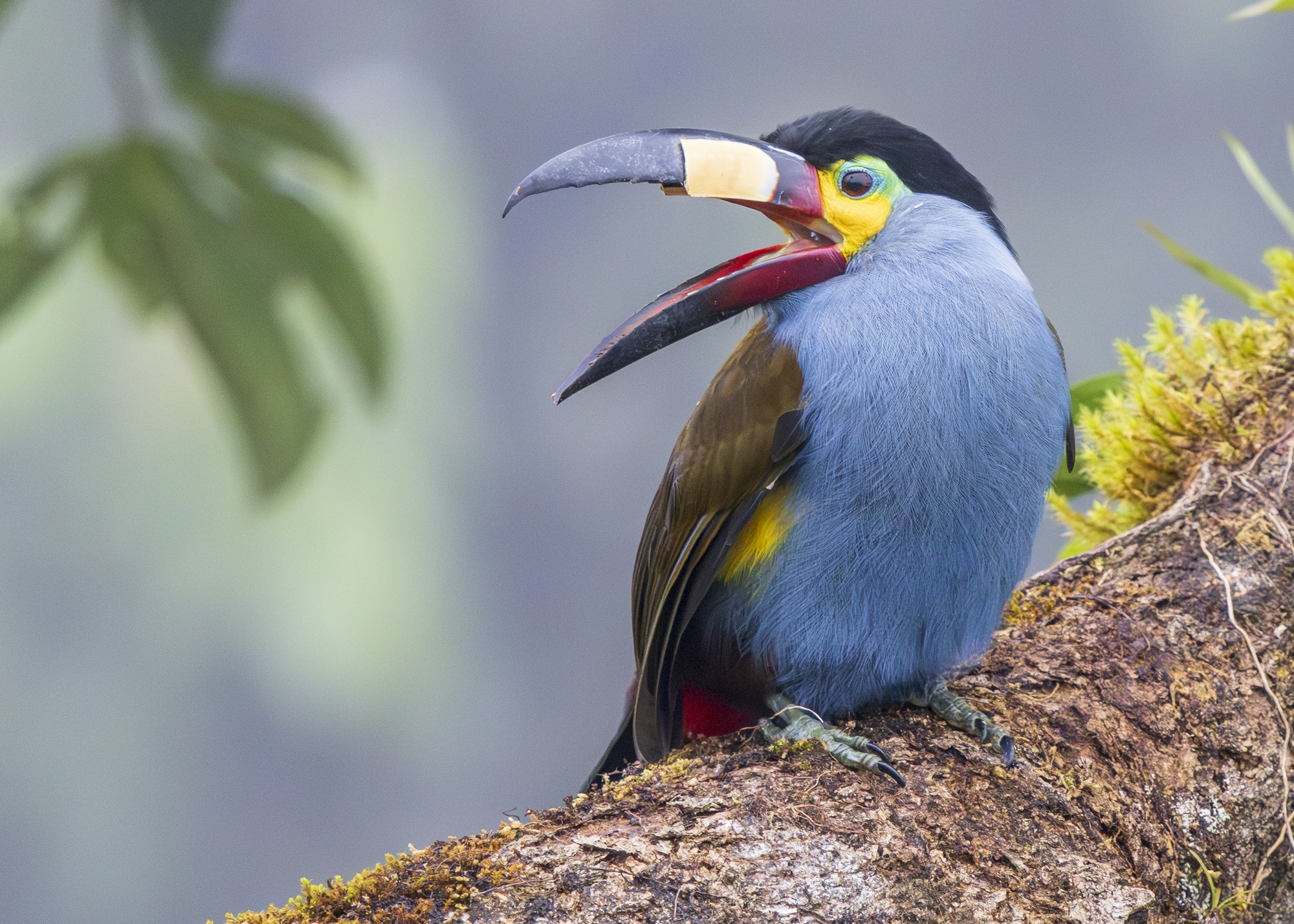
- Plate-billed mountain toucan © Jan Kelchtermans
Once parked and after a brief check of the hummingbird feeders, we immediately head up the opposite slope toward the shelter and the toucan feeder. We wait briefly for a staff member, who soon arrives carrying a bunch of grapes and fresh bananas. The birds are clearly being pampered here! Once the feeder is refreshed and restocked, all that remains is to wait.
Surrounded by endless rainforest—360 degrees of green—we wonder whether the birds we hope to see will even find those two modest bunches of fruit. At first, we have to settle for an Andean Guan, which is the first to land on the branch and feast on some grapes. Not exactly a consolation prize—a stunning bird!
-
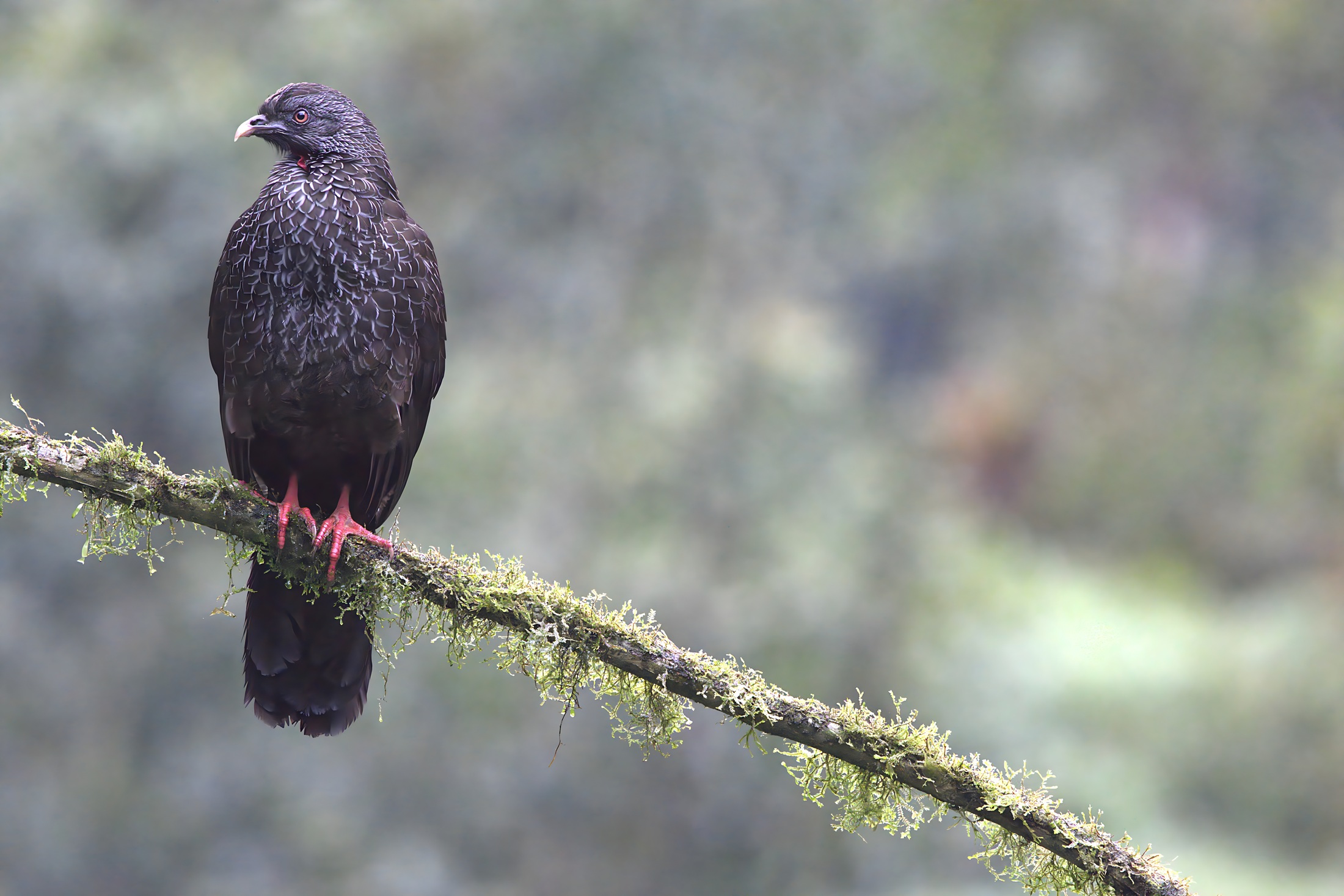
- Andean Guan © Jan Kelchtermans
The staff member, still present, then beckons to Luis and asks for his binoculars to inspect a bird in a nearby tree that is literally bending under the weight of fruit. It turns out to be the very mountain toucan we were expecting at the feeder! When a second bird of the same species soon arrives and begs for food, we briefly fear that grapes may not be on today’s menu—the tree is bursting with fruit. Despite a beautiful observation of food transfer between the two birds, photographing them proves difficult due to backlighting. But that problem solves itself quickly. Moments later, the first Grey-breasted Mountain Toucan appears at the feeder—and he’s not alone. Over the next hour, three to four individuals come and go, gorging themselves on all the treats on offer. Once they are full and resting in the canopy of a nearby tree, we head back down.
-
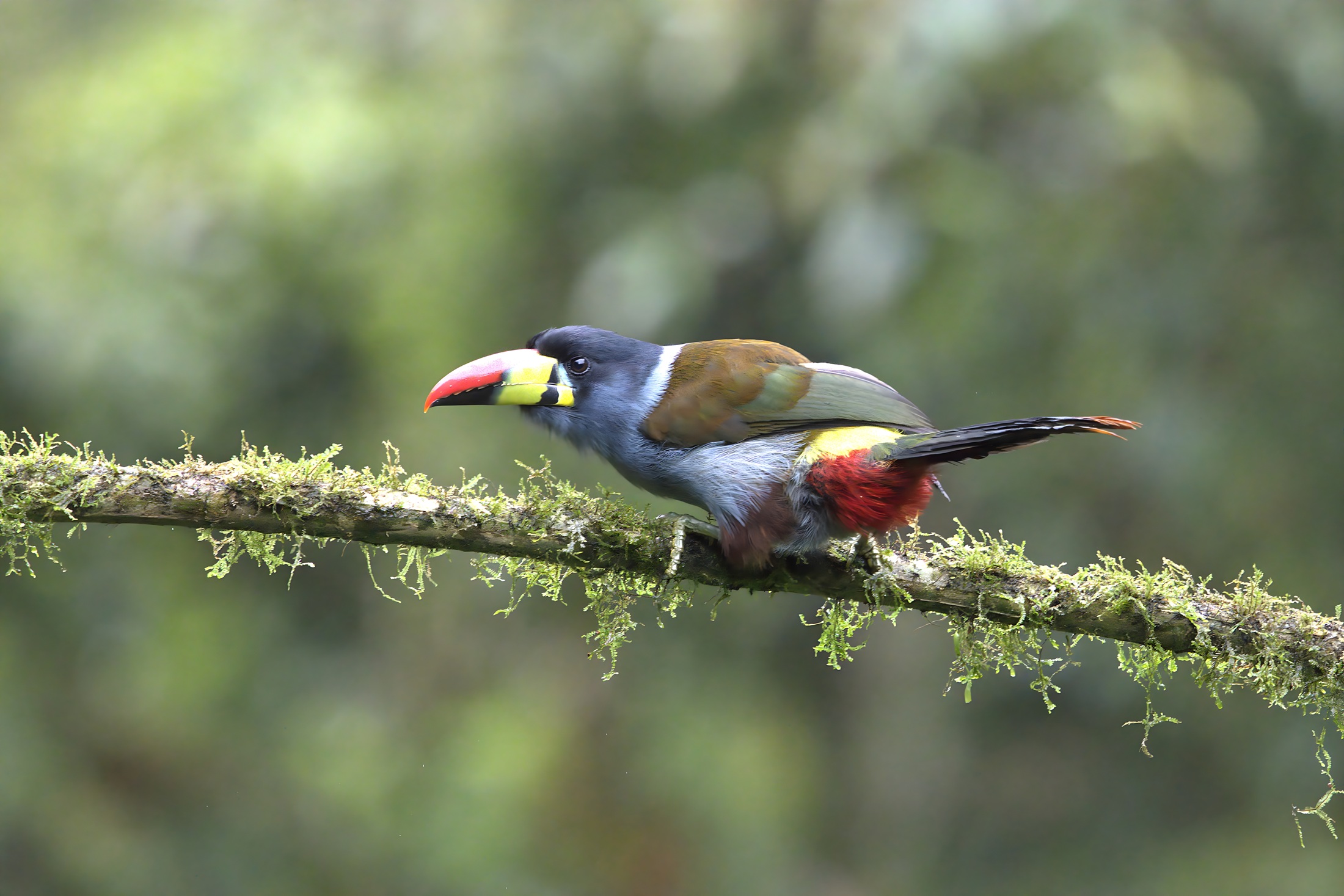
- Grey-breasted mountain toucan © Jan Kelchtermans
Time for a cup of coffee, a walk along the river trail, and a session at the feeders. Although they are less productive than during Jan’s visits in previous years, they still yield beautiful images of three species the lodge is known for: Tourmaline Sunangel, Long-tailed Sylph, and White-bellied Woodstar.
-
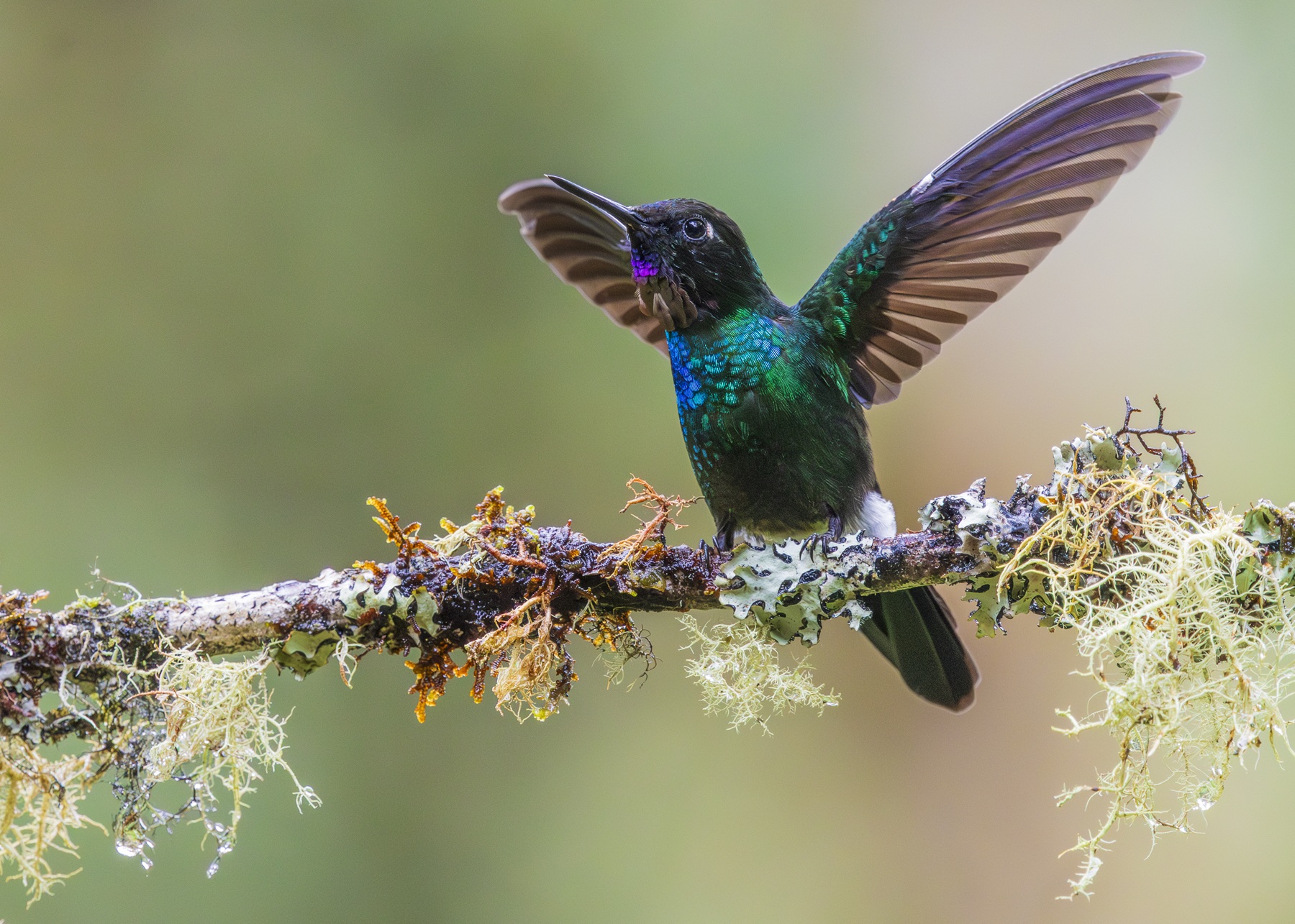
- Tourmaline sunangel © Jan Kelchtermans
-
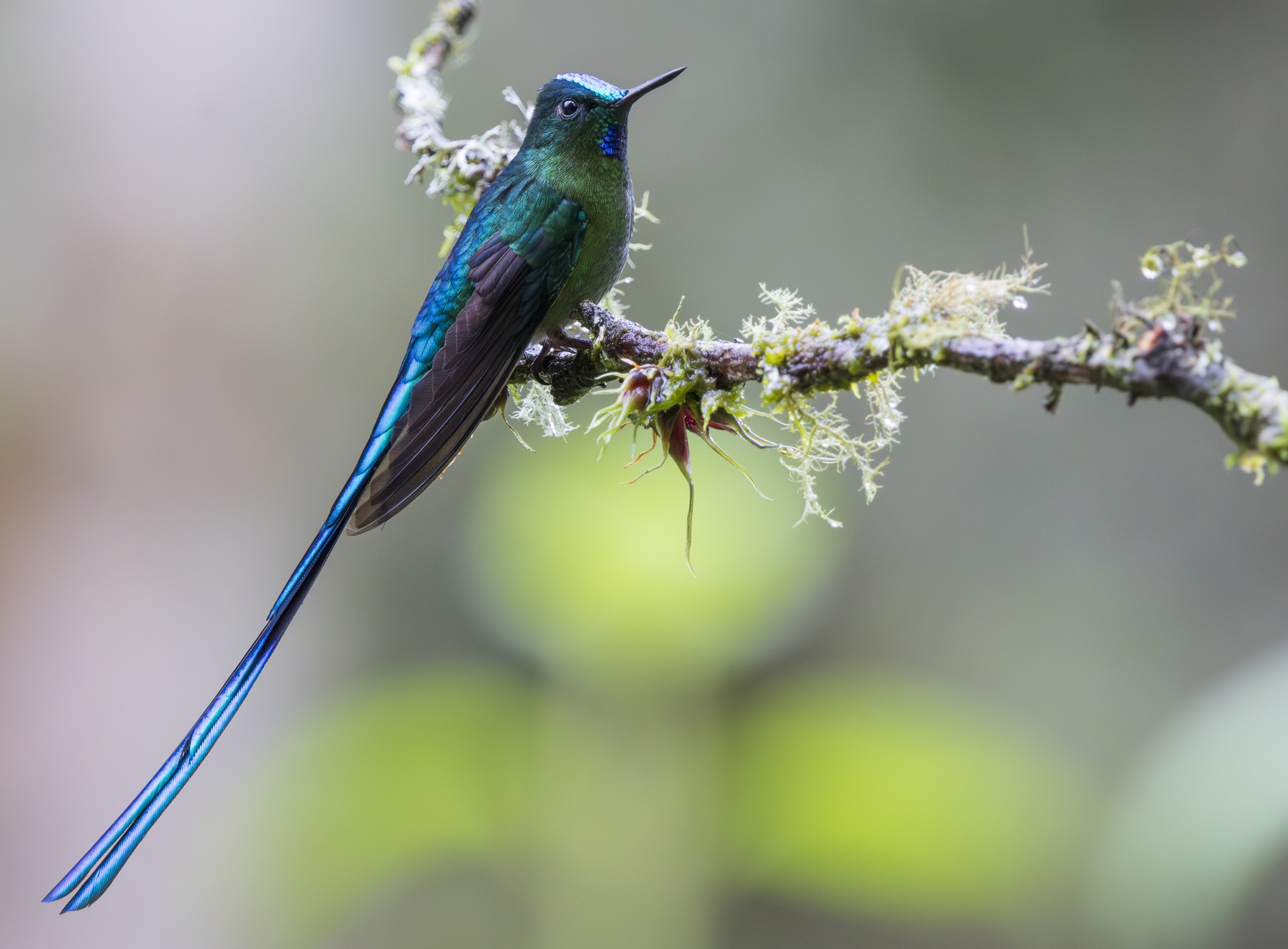
- Long-tailed sylph © Jan Kelchtermans
More than satisfied, we return to our accommodation in Papallacta where—once packed and ready—a final lunch is served. On the drive toward Quito, jokes are made about Jan’s goal of reaching the milestone of twenty Spectacled bears. During the scouting trip for this journey, he managed to see eight individuals. This time, so far, we had only seen one—observed two days earlier in the tapir meadow. Seven more to go! LOL!
At the summit, we leave the highway. We skip the gravel road to the antennae—partly because it is completely socked in by clouds due to bad weather, and partly because we had already observed and photographed our real target species there earlier: Rufous-bellied seedsnipe—a pair and a group of five individuals.
-
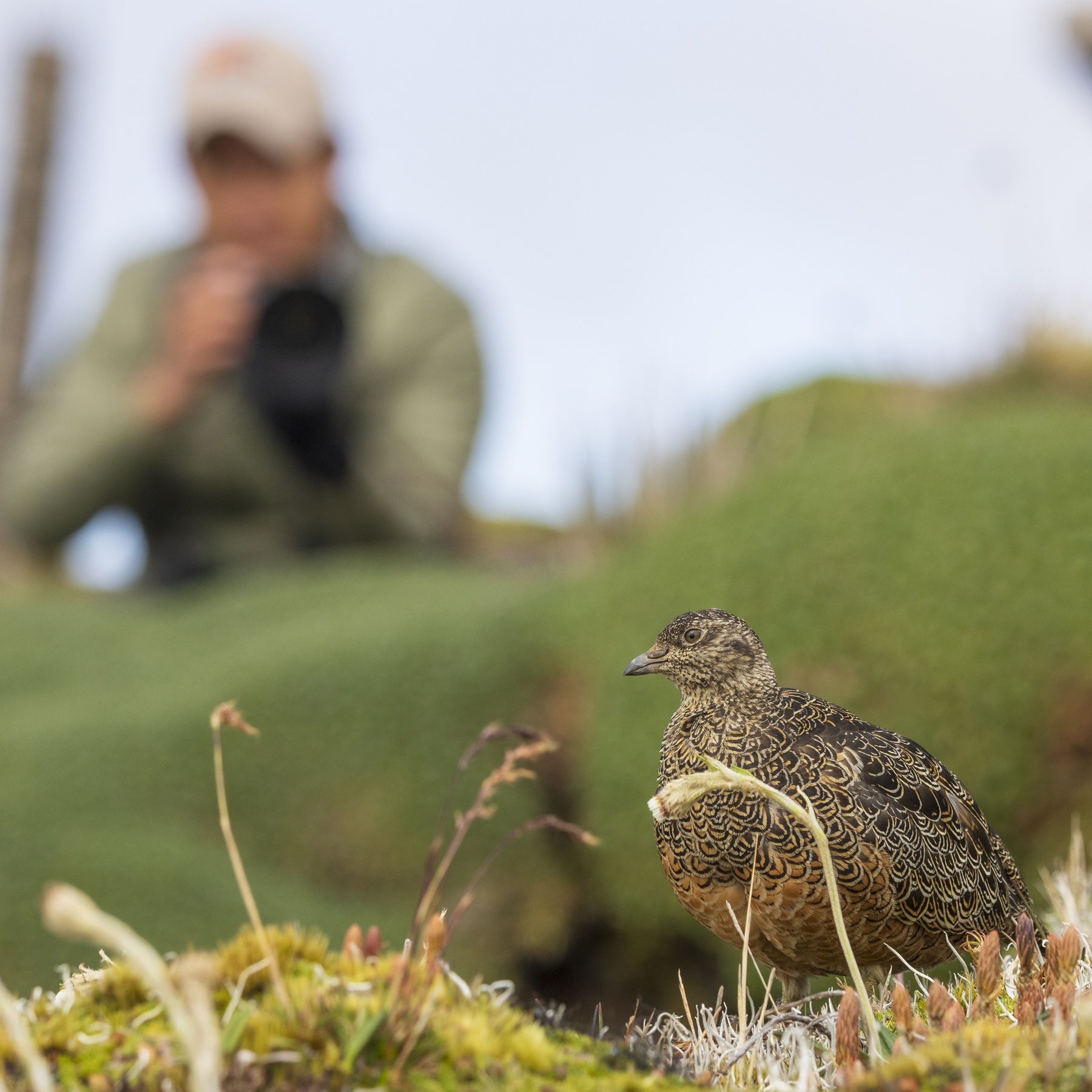
- Rufous-bellied seedsnipe © Jan Kelchtermans
-
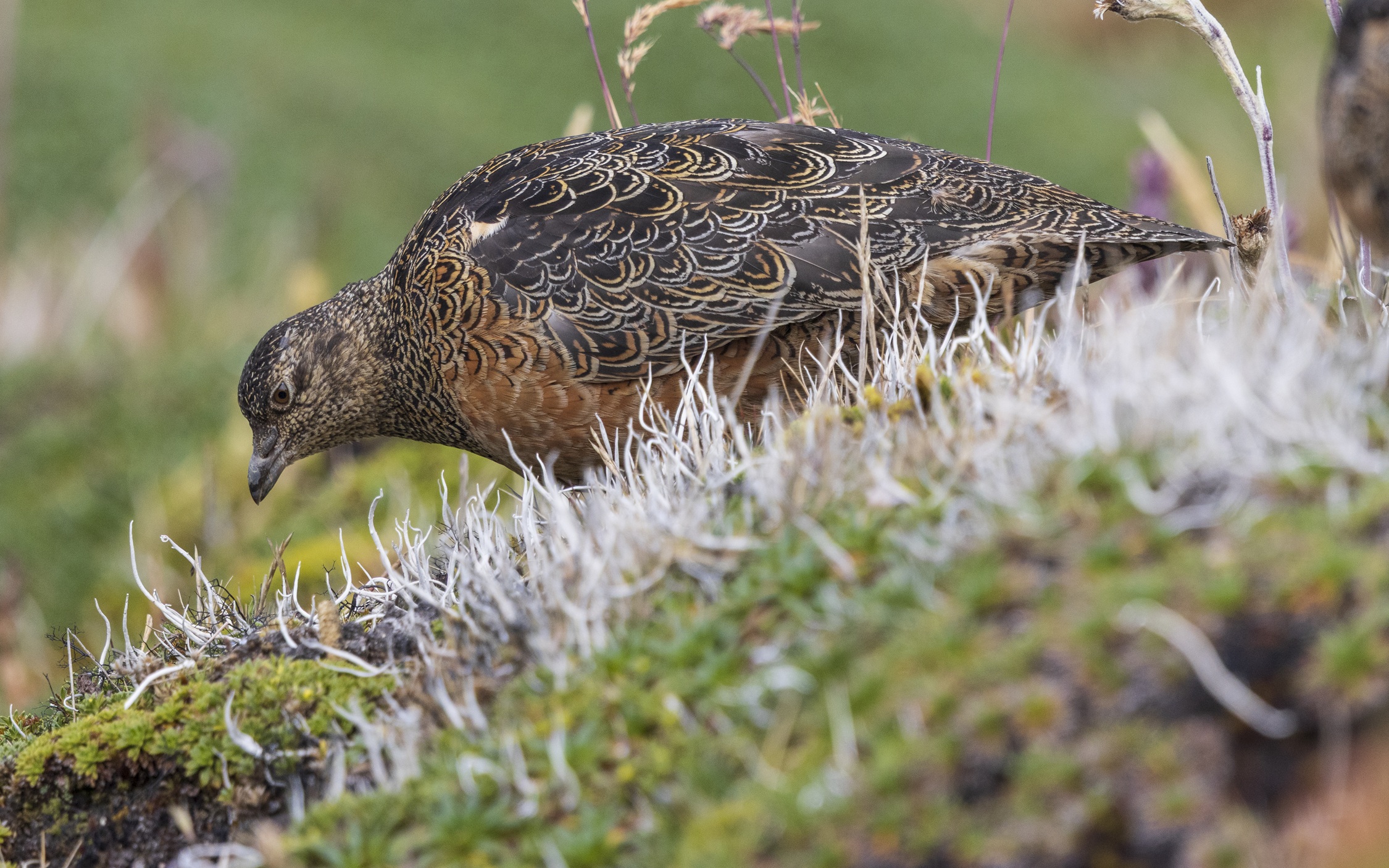
- Rufous-bellied seedsnipe © Jan Kelchtermans
Instead, we take the old road to Quito. It winds left and right through a unique high-Andean ecosystem, characterized by cloud forests, wetlands, grasslands, mosses, ferns, bromeliads, and orchids. Typical of the area are Polylepis trees with their paper-like bark. It is Luis who suddenly draws our attention: “Guys, watch out for a big black moving spot in the grass. The bears are obvious and striking in this landscape.” We immediately start scanning through the large windows of the minibus…
Very quickly, it is Luis who excitedly shouts: “Bear! Bear! Guys, quick! There is a bear!” The doors of the minibus fly open and everyone jumps out. From fairly close range, we are stared at by an adult Spectacled Bear standing on a slope. Clearly startled by our sudden presence, the animal has just jumped out of a fruit-laden tree. The bear moves a bit higher up the slope to assess what is going on. Because of the short distance, its pink nose—sniffing the air—and the characteristic white eye markings are immediately visible. Absolutely amazing! And how exclusive is this: just the eight of us, alone with the bear. Pure joy!
At first, we hope it might return to the fruit tree, but that doesn’t happen. Instead, it moves farther up the slope without really disappearing. From various vantage points, it surveys the surroundings, repeatedly sniffing the air. It rubs its rear, scratches behind its ears, and eventually dozes off, its head resting on one of its forepaws. All of this is beautifully visible through the scope. Jan jokes: “Bear number seventeen—only three to go!” 😂
-
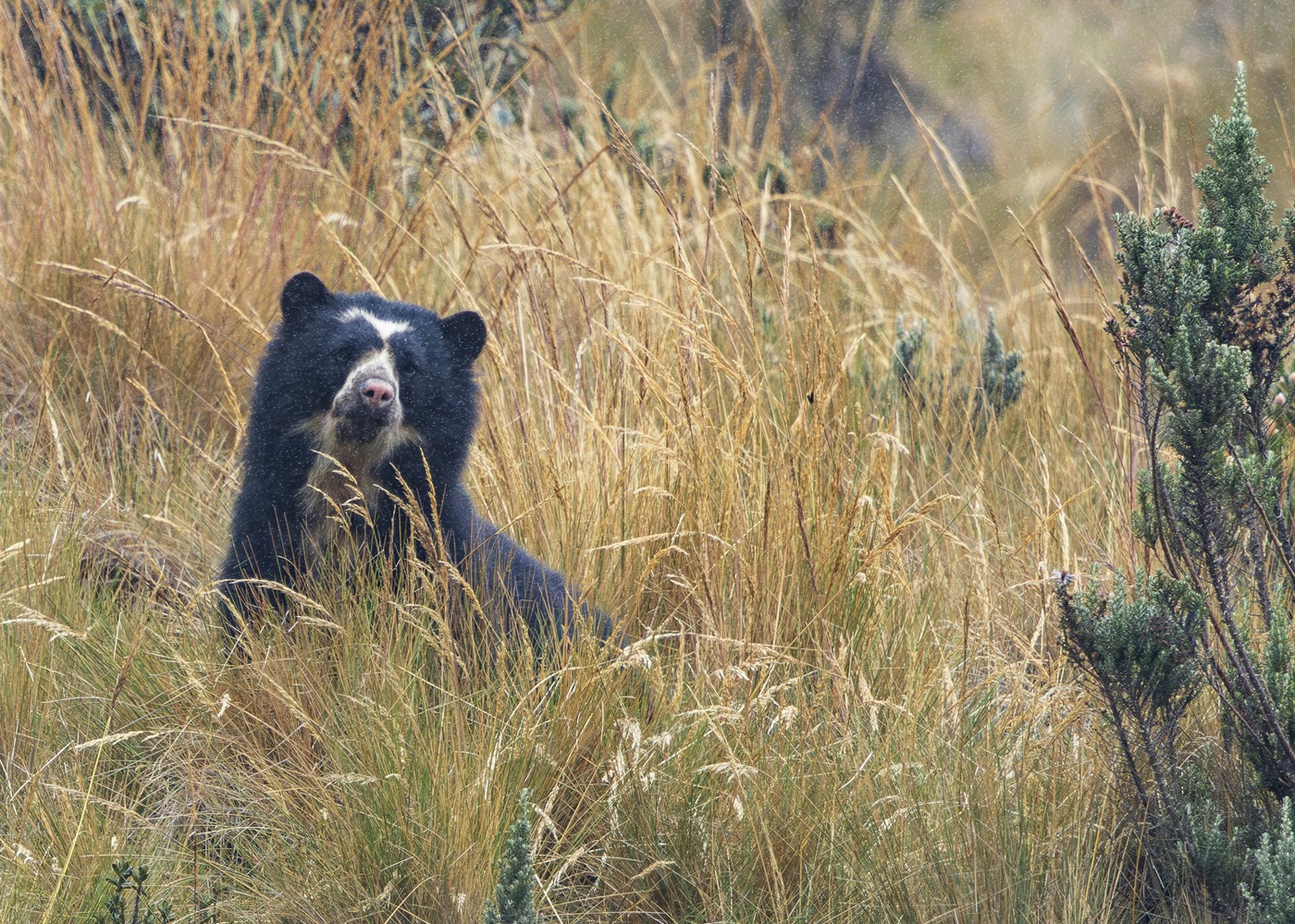
- Andean bear © Jan Kelchtermans
Satisfied, we continue our winding descent toward Quito, stopping twice more to scan the slopes along the highway for Spectacled Bears—especially where bromeliads are abundant. The soft heart of these plants is, after all, the bears’ favorite food. The first stop yields nothing, and honestly—what are we worried about? With a total of seventeen Spectacled bears and hours of observed behavior, you could happily go home. Moreover, this is already more than double the eight individuals Jan observed during his scouting trip around the turn of 2021–2022. At the final stop, only Luis quickly steps out, saying: “Just a quick stop to check something.” When he reappears laughing from behind the guardrail, Jan knows the game is on again. “I couldn’t locate the mom with two cubs from early January,” Luis says, “but they are probably still in the area, as some bromeliad patches show recent bear foraging behavior. Moreover, there is another bear, but a bit higher up.” Naturally, some of us gets out immediately. Bear number eighteen—something we obviously want to confirm with our own eyes.
-
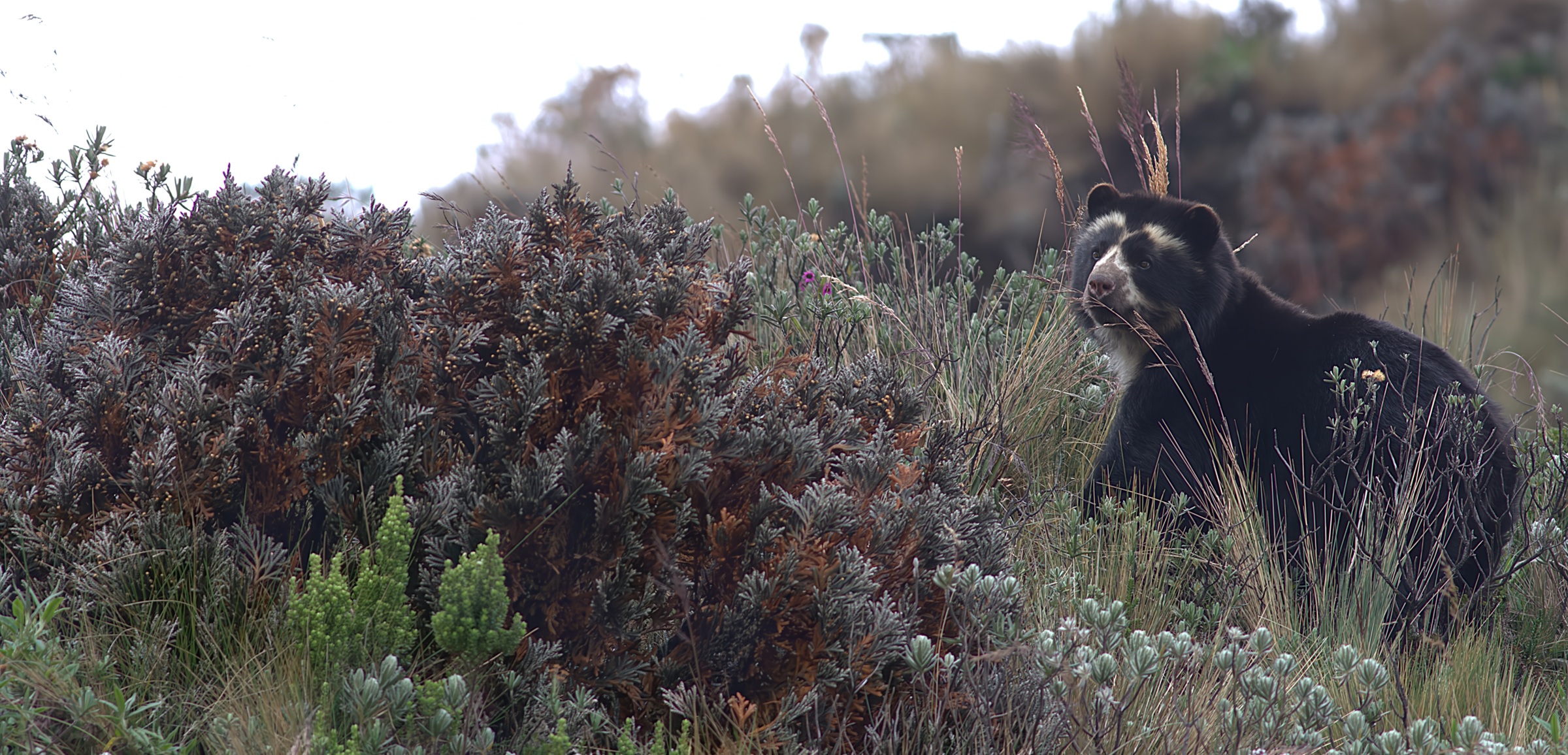
- Andean bear © Jan Kelchtermans
But the bear has suddenly vanished, probably hidden in the dense, tall shrub vegetation on the slope where the bromeliads grow. Even with the thermal binoculars, it’s a challenge. Heat signatures are clearly visible, but actually locating the animals with binoculars or a scope is another story. Lower on the slope, Jan meanwhile finds another Spectacled bear foraging on bromeliads. Number eighteen! Eventually, the bear Luis had spotted is also located—and it turns out to be the female he was looking for. Number nineteen! As the female moves and becomes more visible, Jan spots one of the cubs. Number twenty!
-
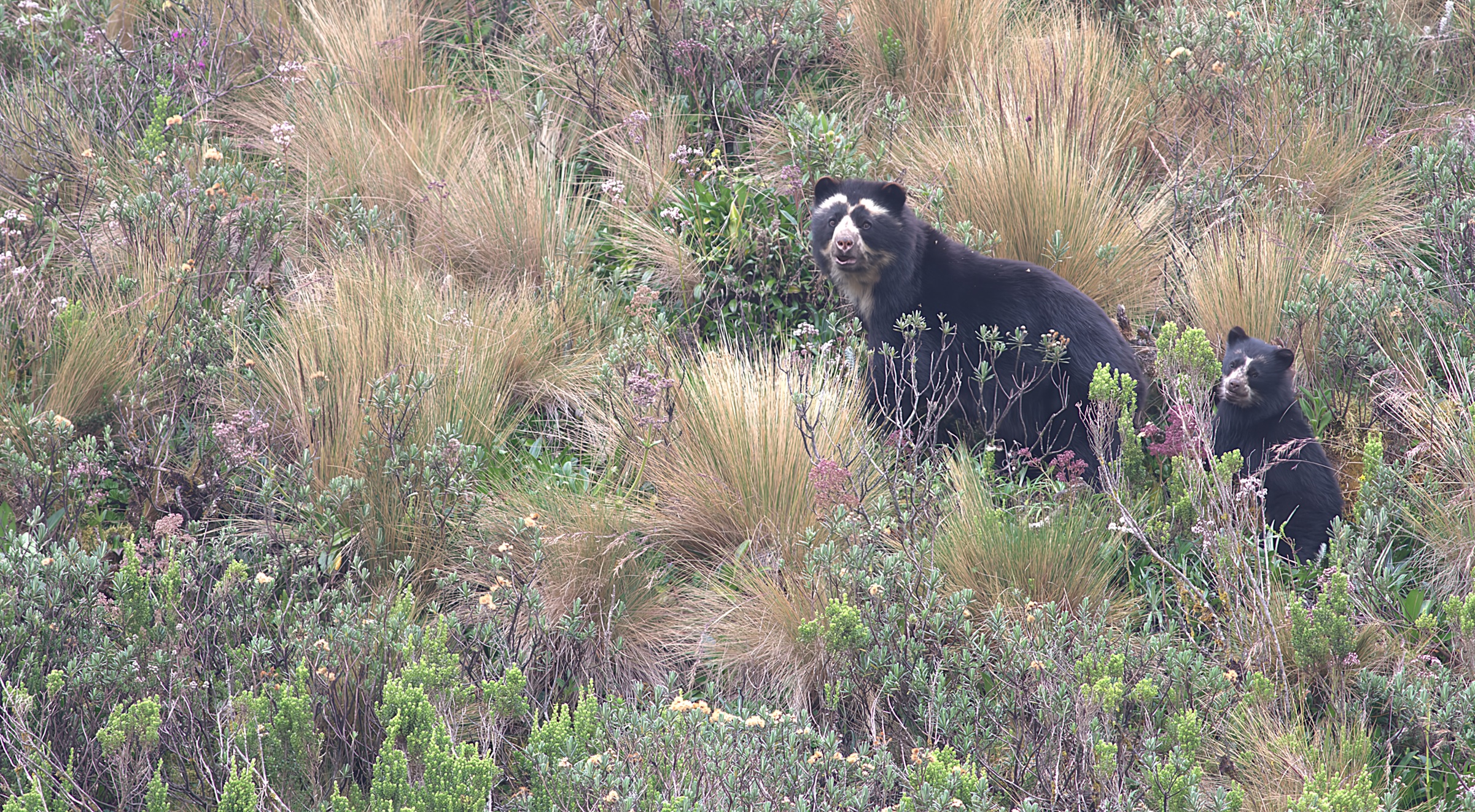
- Andean bear © Jan Kelchtermans
“No, there are two cubs!” Number twenty-one! And it doesn’t stop there. Near the bear lower on the slope, a second individual appears, later crossing a meadow toward another bromeliad-rich area. Number twenty-two! Above the female with her two cubs, yet another bear moves from left to right through the shrubs, visible through the thermal binoculars. Bear number twenty-three! Jan can’t stop laughing—the situation is downright comical.
-
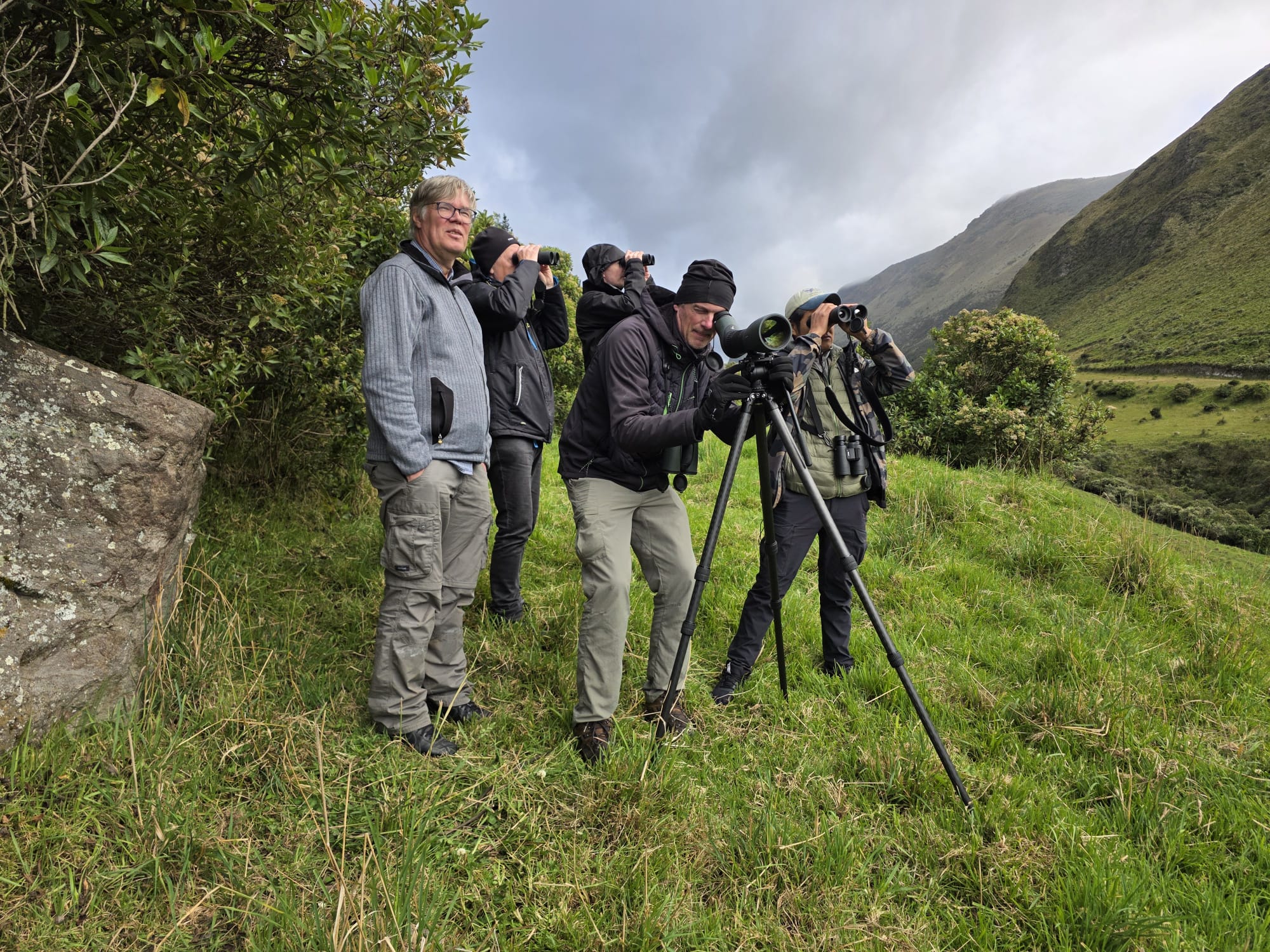
- Scope and binos on Andean bears © Greet Cuyt
-
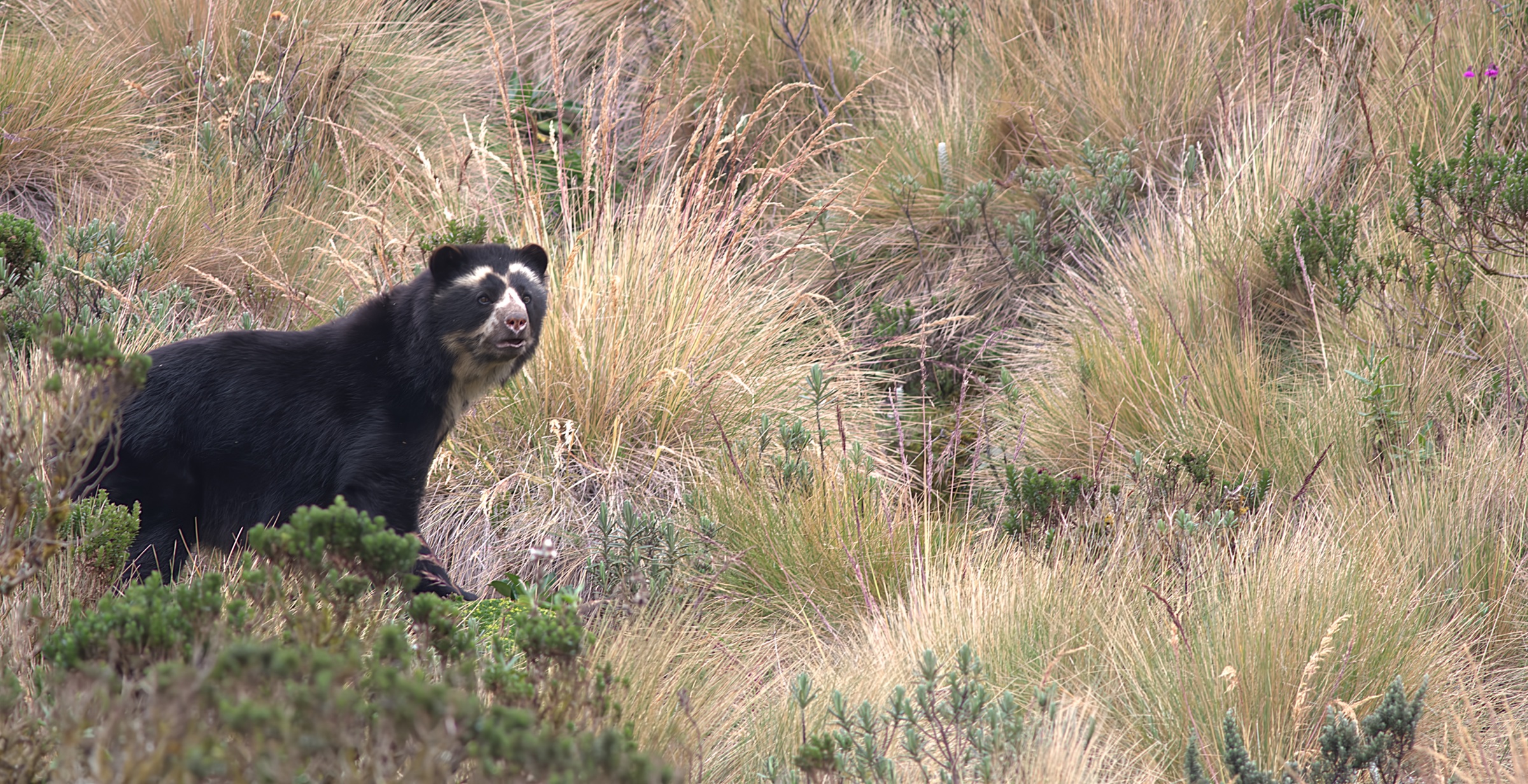
- Andean bear © Jan Kelchtermans
Especially when, near the two bears lower on the slope, he discovers a third, larger bear also feasting on bromeliads. The scene is surreal: the mother with two cubs in front of us, one bear higher up in the vegetation, and three bears lower on the slope. At the same time, we are watching seven foraging Spectacled bears. Including the earlier bear at the summit, the day count reaches eight individuals, and the trip total rises to twenty-four! LOL! What an unbelievable bear-filled ending to the journey. Belgium—and Europe—here we come!
To end a remaining portfolio showing six pictures of some more and different mammal species we encountered during the trip
-
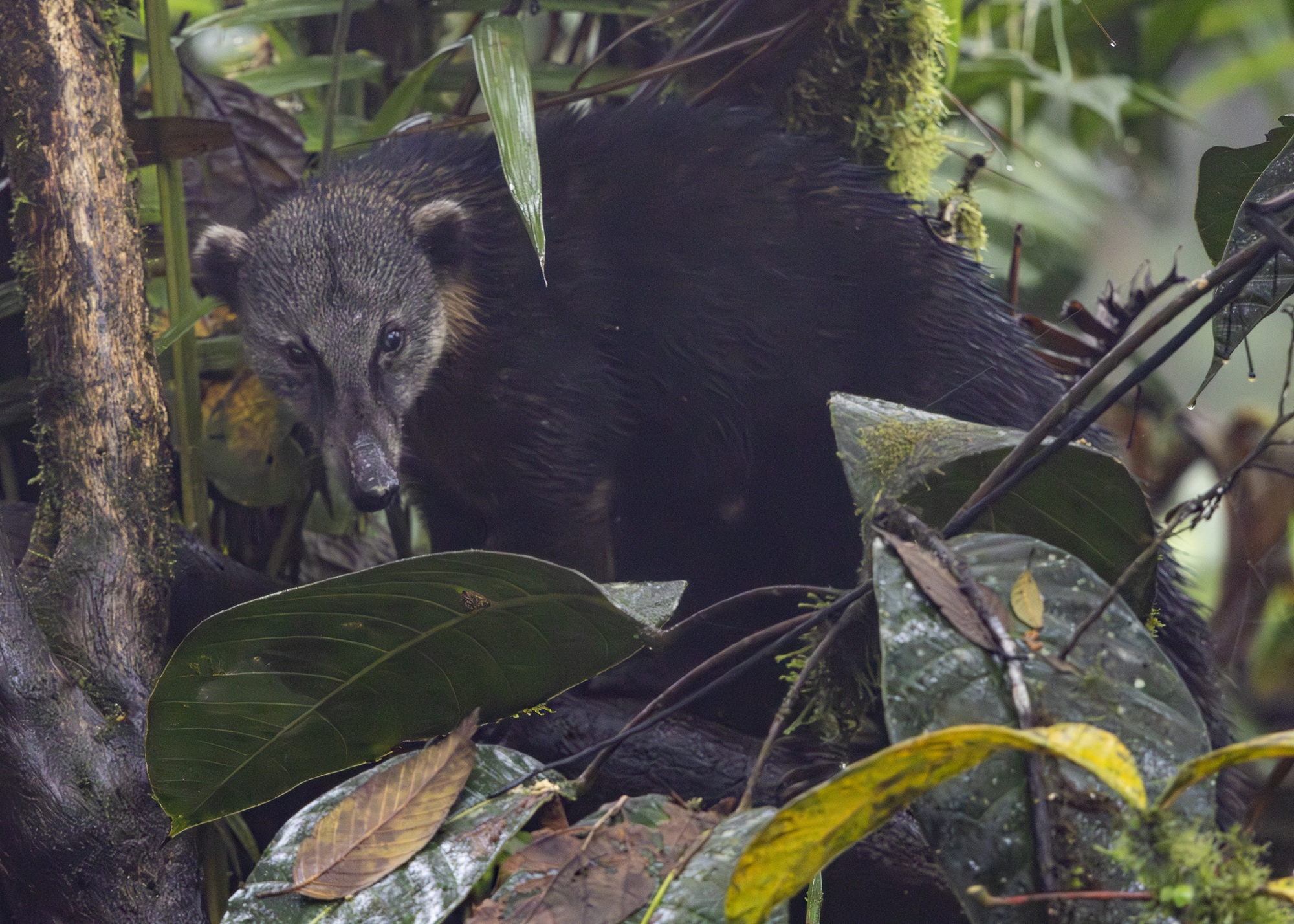
- Mountain coati © Jan Kelchtermans
-
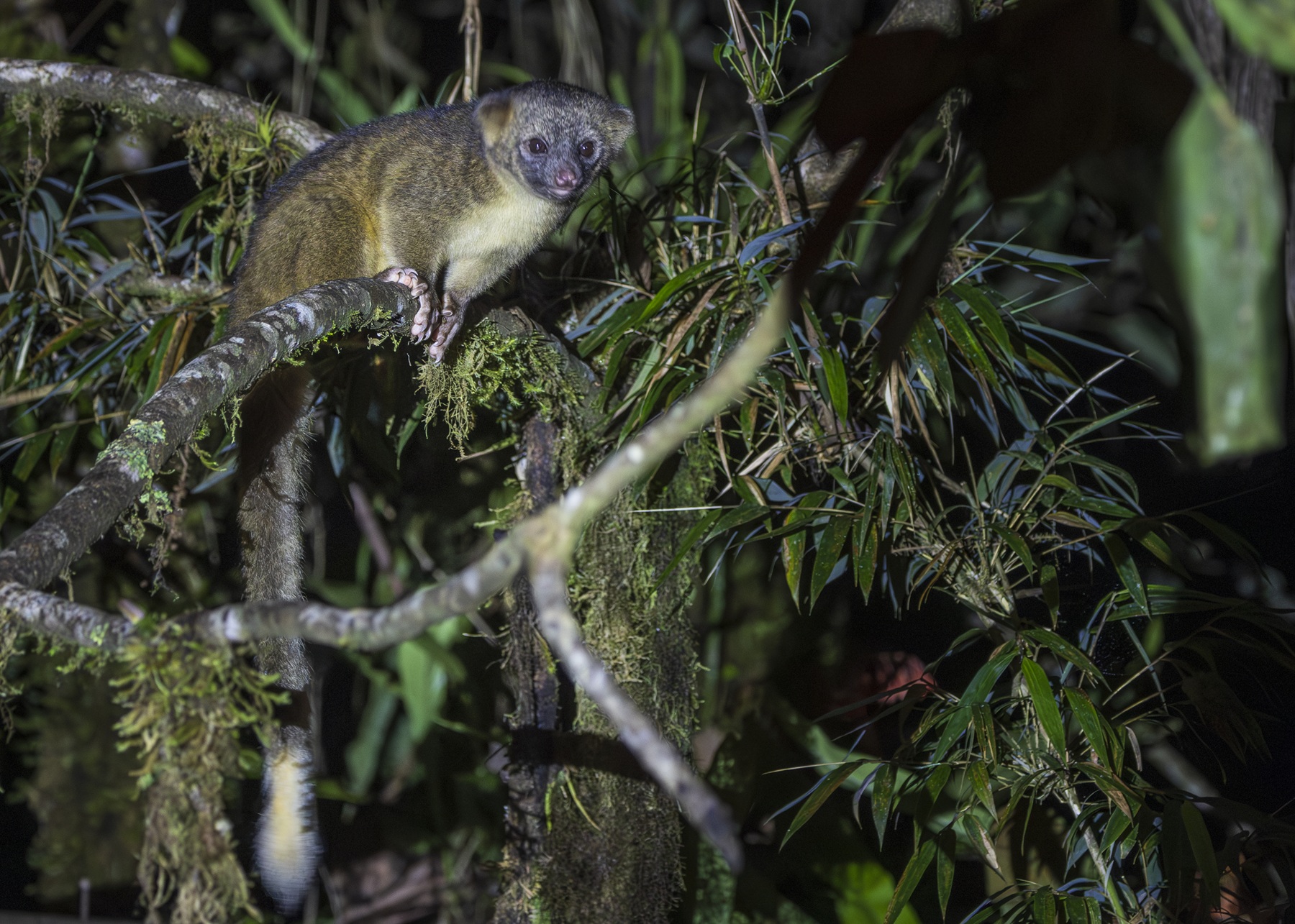
- Olinguito © Jan Kelchtermans
-
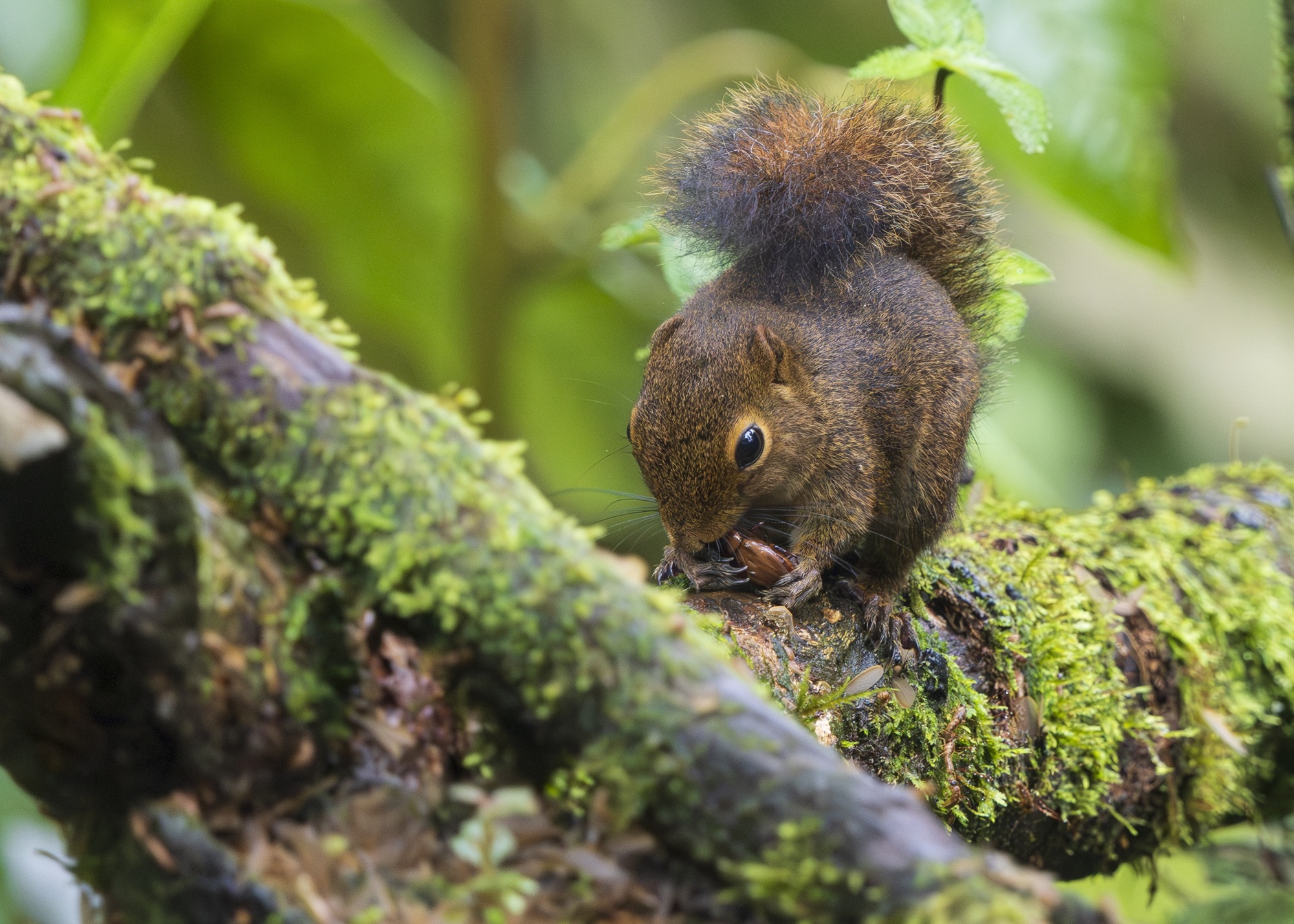
- Western dwarf squirrel © Jan Kelchtermans
-
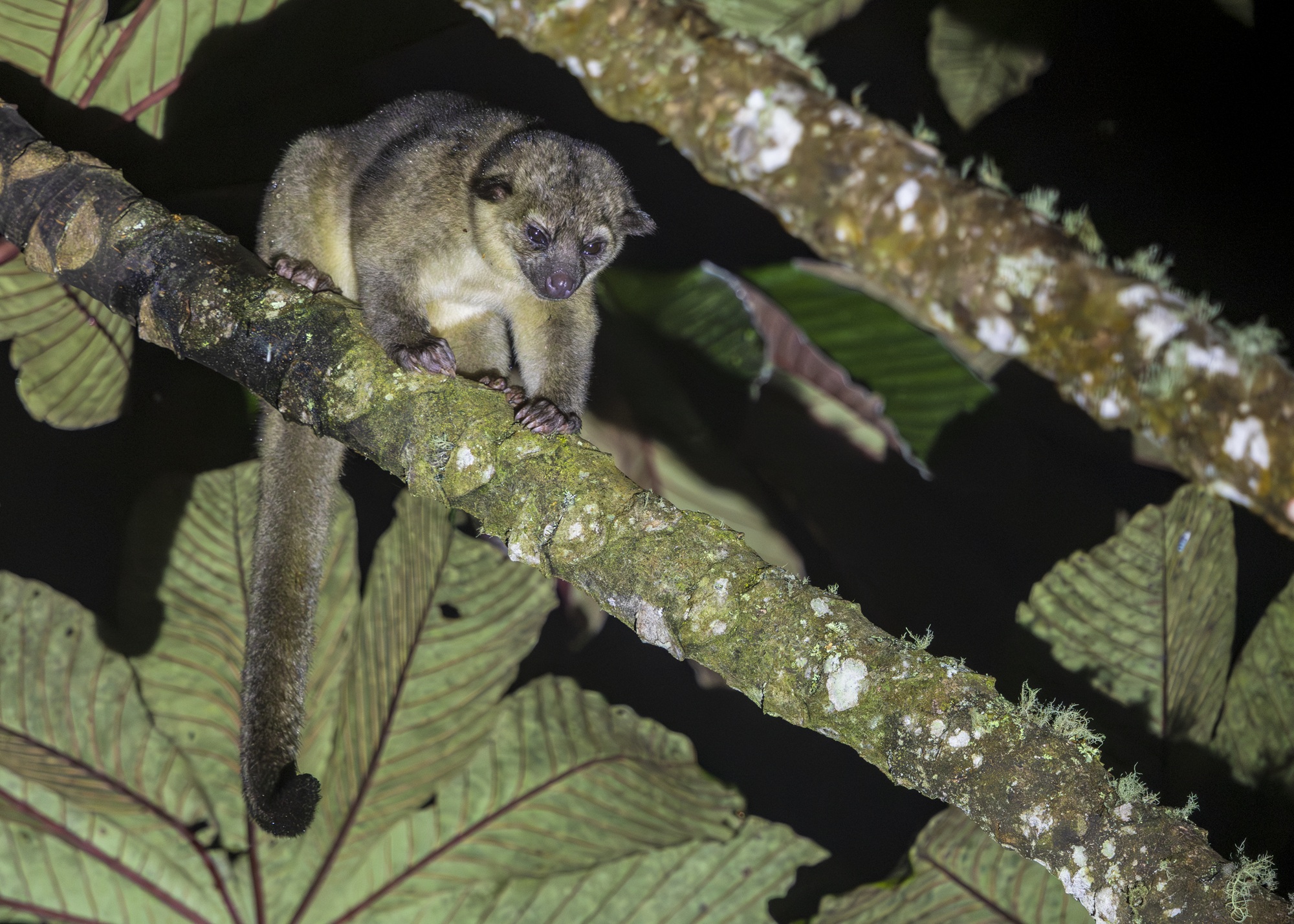
- Kinkajou © Jan Kelchtermans
-
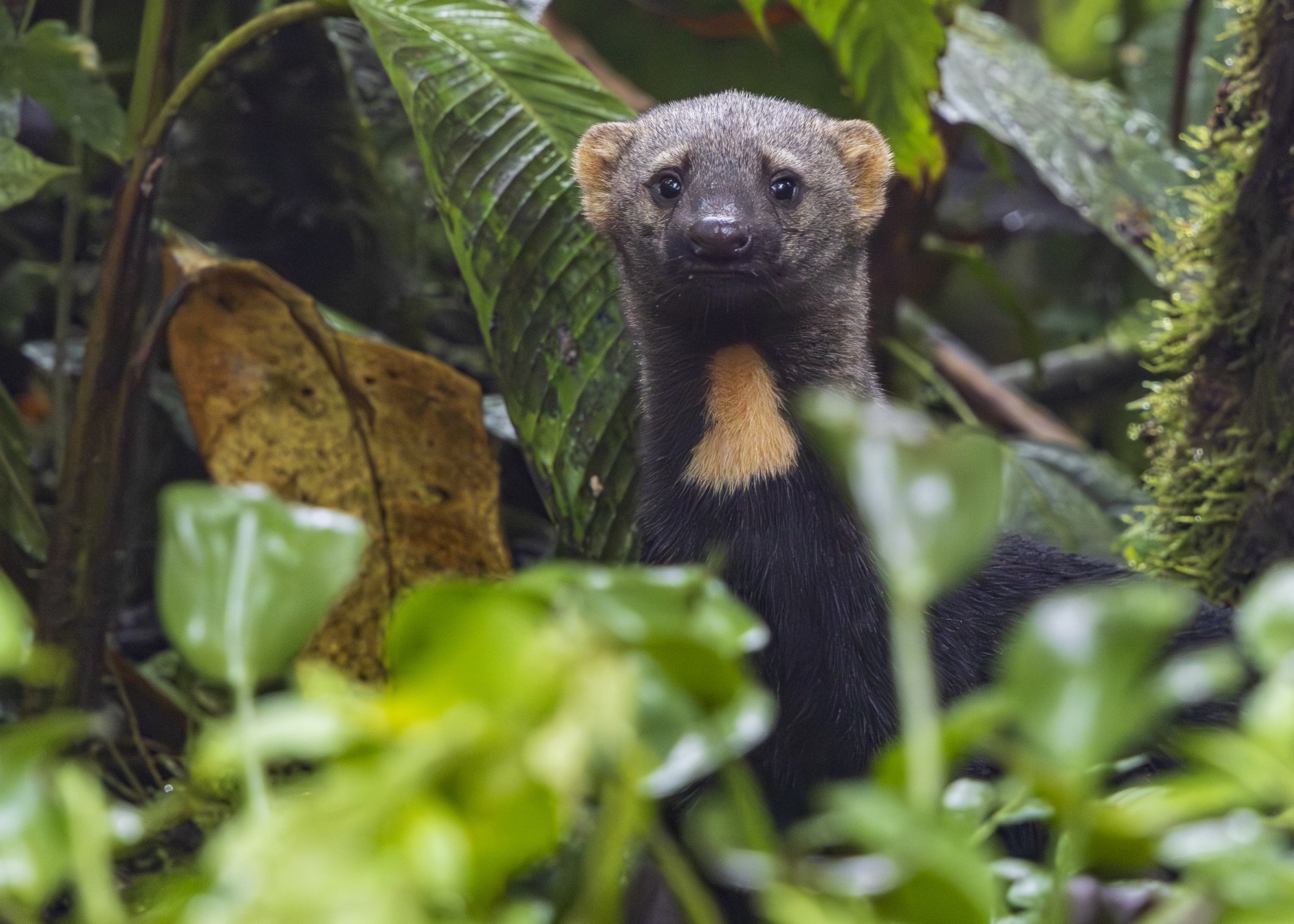
- Tayra © Jan Kelchtermans
-
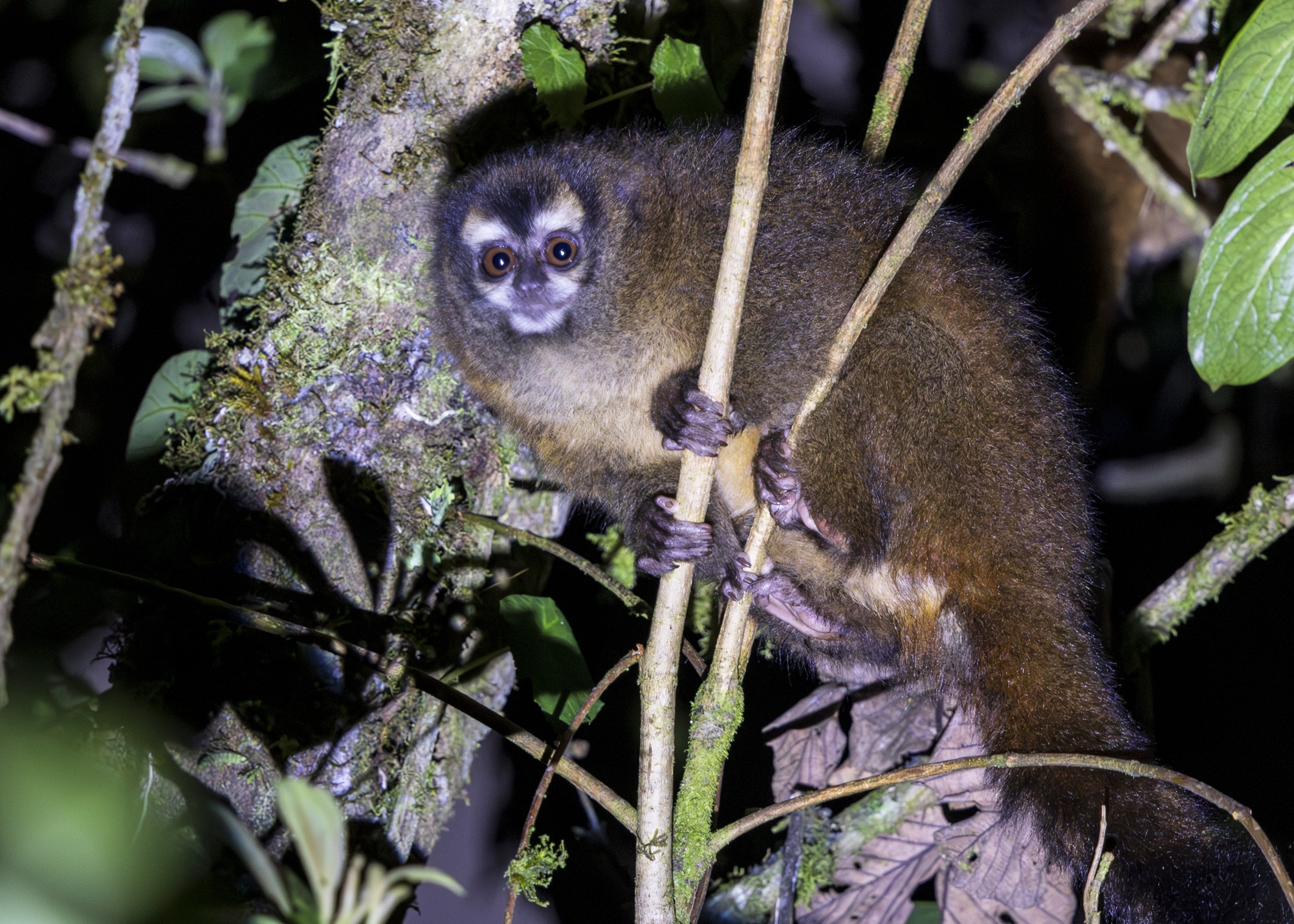
- Colombian night monkey © Jan Kelchtermans