Finland 2026 – part one
Specially designed feeding sites as part of Finnish ecotourism
In stark contrast to the inadequate legal policy for the protection of large carnivores in the country, Finland also offers opportunities to observe several large carnivore species. Brown bears, wolverines and wolves regularly appear at specially designed feeding sites operated as part of ecotourism activities.
-
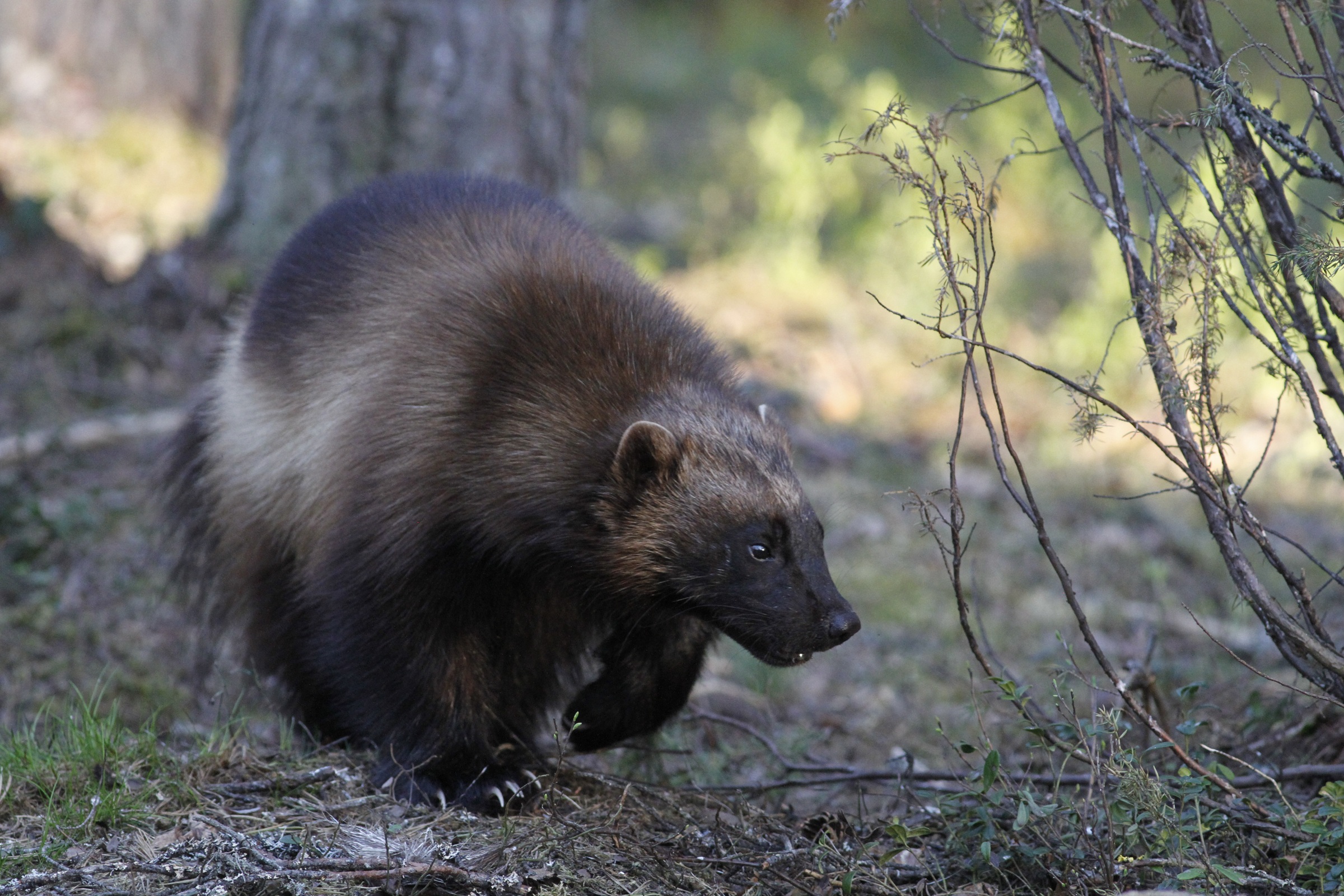
- An adult wolverine approaching the bait © Jan Kelchtermans
Lynx, however, are a completely different story. The Eurasian lynx, the only feline species in the European far north, is rarely, if ever, observed at such sites. The trio of bear, wolf and wolverine is therefore a realistic and achievable goal, but adding the lynx to that list is an entirely different matter. Seeing all four species during a single trip is virtually impossible. Yet last year, I managed to do so not once, but twice. On the first occasion, we spotted a young individual, half-hidden in the grass and fixated on hares in a field. The second time, we saw that same individual walking with a hare in its mouth. And both sightings took place right at the beginning of a tour! Check a previous EB5 newitems (‘Finland 2025’ ) to see the related images regarding this unique observations.
A year later, I manage to do it again!
This time, within a mere two-hour window, we see all four carnivores at one of the well-known feeding sites. Something that had never happened before!
The 17th of July 2026: once again, the impossible becomes possible
Sitting in a hide overlooking large carnivores, the entire afternoon session turns into five hours of staring at an empty landscape. From 4 p.m. until well past 9.30 p.m., hardly anything happens. Only a few mallards and gulls make an appearance. The former are busy feeding on the grain scattered near the edge of the lake we are overlooking; the latter search for meat hidden beneath stones and tree trunks, scattered across and around the adjacent field, which is covered in grass, ferns and rosebay willowherb.
But this is nothing unusual. In fact, it is practically the norm. Only in a zoo do animals show up for a fixed feeding time. At Finland’s unfenced feeding sites, things are very different. The animals living there in the wild decide for themselves when, or even whether, they turn up. Weather conditions, a lack of hunger, natural prey and the presence of other carnivores nearby are just some of the factors that determine whether the animals make an appearance.
This means that no two nights are ever the same, either in terms of which animals show up or how the evening unfolds. And sometimes, although it is genuinely exceptional, you see absolutely nothing. That has not happened to me once during any of my hide sessions this year. There have been occasions, though, when a bear or a single wolverine appeared only briefly during an entire session. But a whole night without even a single large predator? Never. Lucky me!
But back to 18 July. At 9.39 p.m., we embark on a roller coaster of sightings and emotions. First to appear are the adult alpha male wolf and one of his daughters.
-
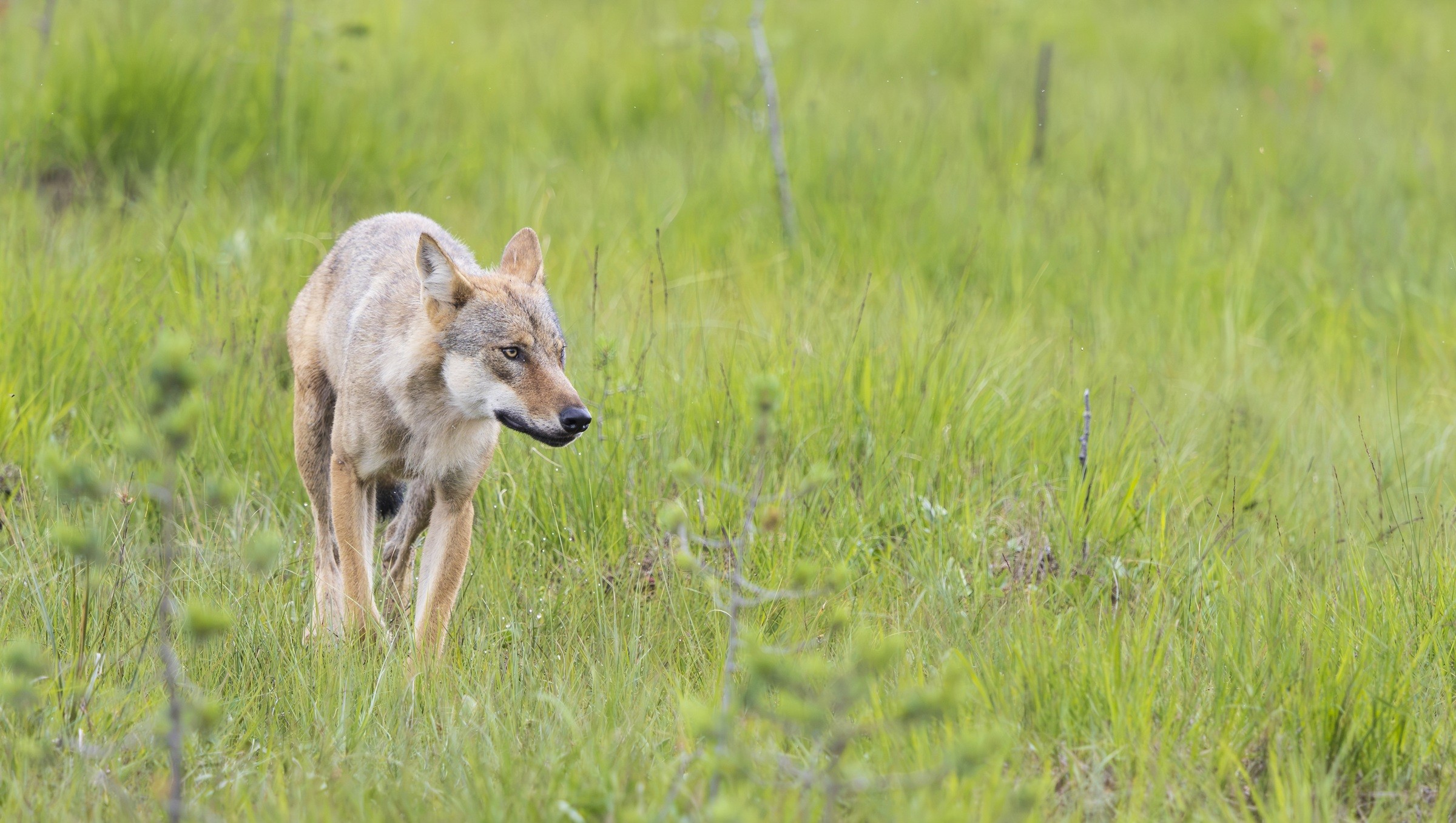
- A young female wolf approaching the bait © Jan Kelchtermans
I had already seen both animals separately and at close range the previous year, from another set of hides located deep in the forest. When you come face to face with such impressive animals, you remember their stature, their coats and their behaviour. And above all, those eyes that seem to tell you everything.
As the animals actively and purposefully search for food, several questions cross my mind. Why is the alpha male no longer accompanied by his alpha female? That animal, a strikingly pale, almost white she-wolf, is certainly not the young female now accompanying him. Moreover, based on sightings reported by others, it is unclear whether she is even still alive. Did the hunt prove fatal to her last winter, or did she die of natural causes? And is this beautiful young she-wolf indeed his daughter and now the new alpha female? After all, in a region further north, near Kuhmo, the alpha pair are also brother and sister. The culling of wolves disrupts the natural exchange of pack members, making inbreeding increasingly difficult to avoid. The same phenomenon can also be observed in Belarus.
-
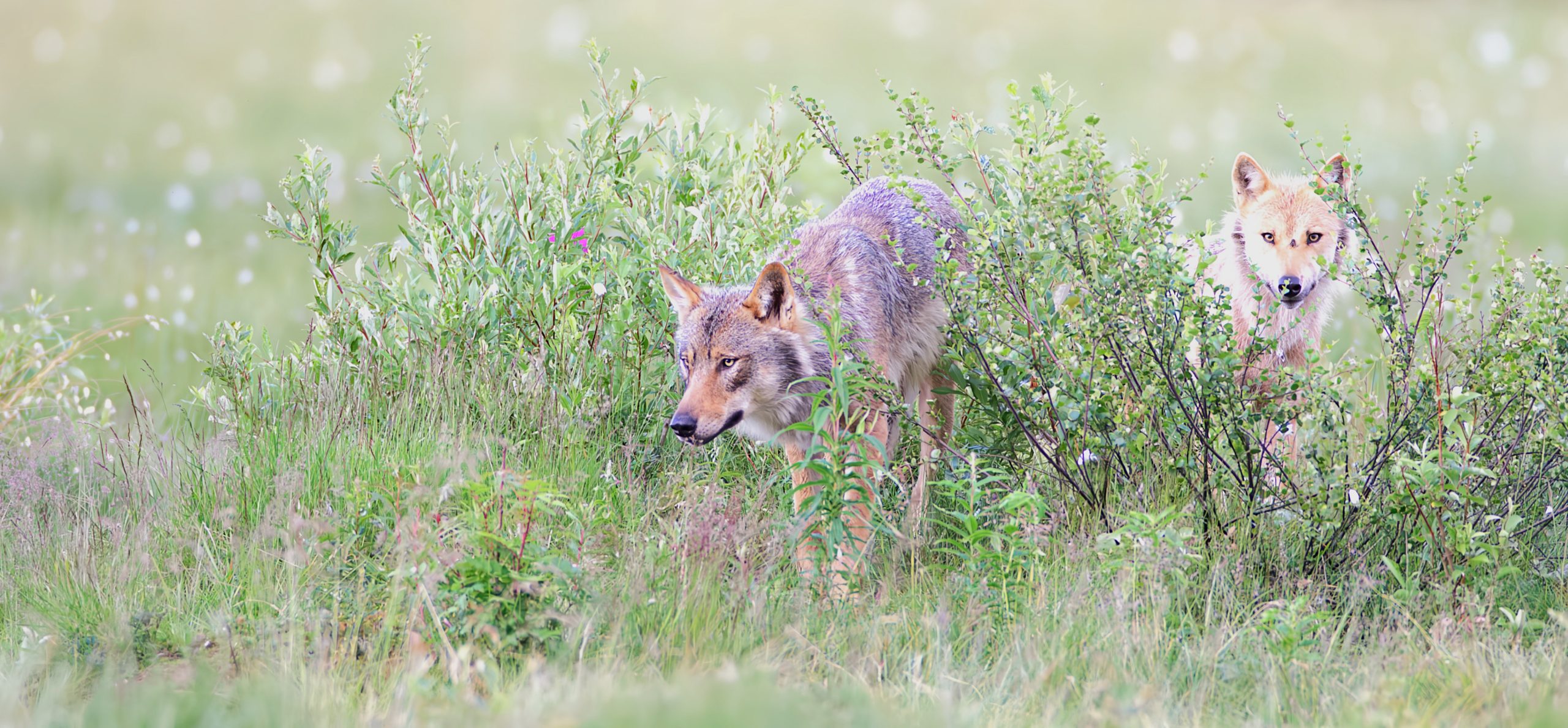
- The well known alpha wolf pair of Kuikka, Kuhmo © Jan Kelchtermans
Unlike the alpha male, however, the she-wolf soon decides she has had enough. Partly because she is clearly keeping an eye on us, and partly because another carnivore appears on the scene shortly after the wolves arrive: a brown bear. A fairly dark individual, on the lookout for leftovers.
-
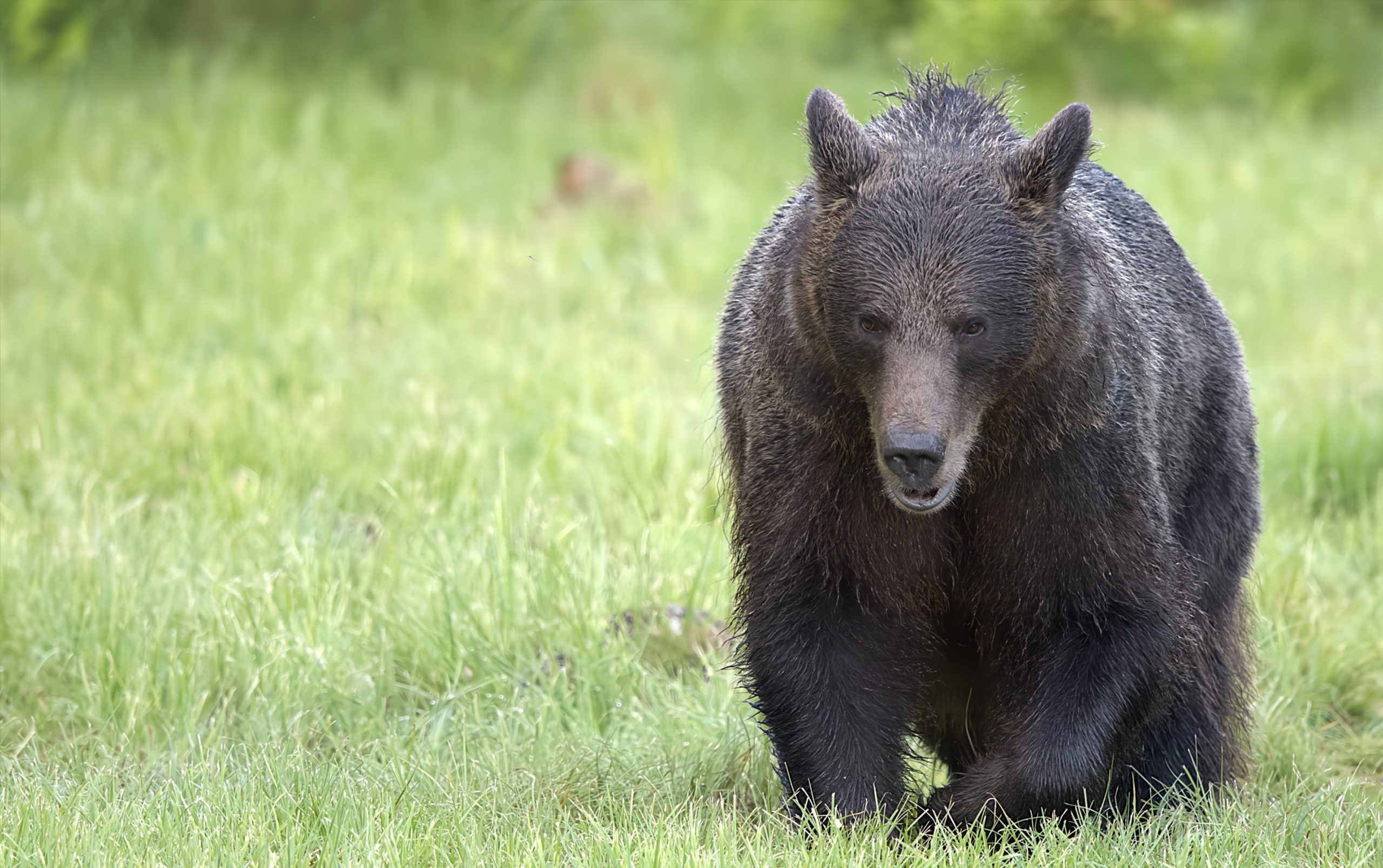
- An adult brown bear approaching the bait © Jan Kelchtermans
This animal is clearly more at ease with its surroundings and with its audience. What is more, it knows exactly where all the bait has been laid out. In an almost routine circuit, it inspects every stone and tree trunk scattered across the site. With a slightly larger piece of meat between its jaws, it then disappears from view.
A little later, the she-wolf also succeeds in finding something to eat. From a different vantage point, we watch her visit a dense sedge-covered patch three times, each time snatching substantial chunks of meat from it.
And that is not the end of it.
On the far side of the lake, at the foot of Haaravaara Hill, a wolverine suddenly appears as well. However, as it heads towards the open field, it spots the brown bear. Rather than continuing its lumbering walk, it opts for the safety of the dense habitat of boulders and spruce trees on the hillside. We do not see it again.
-
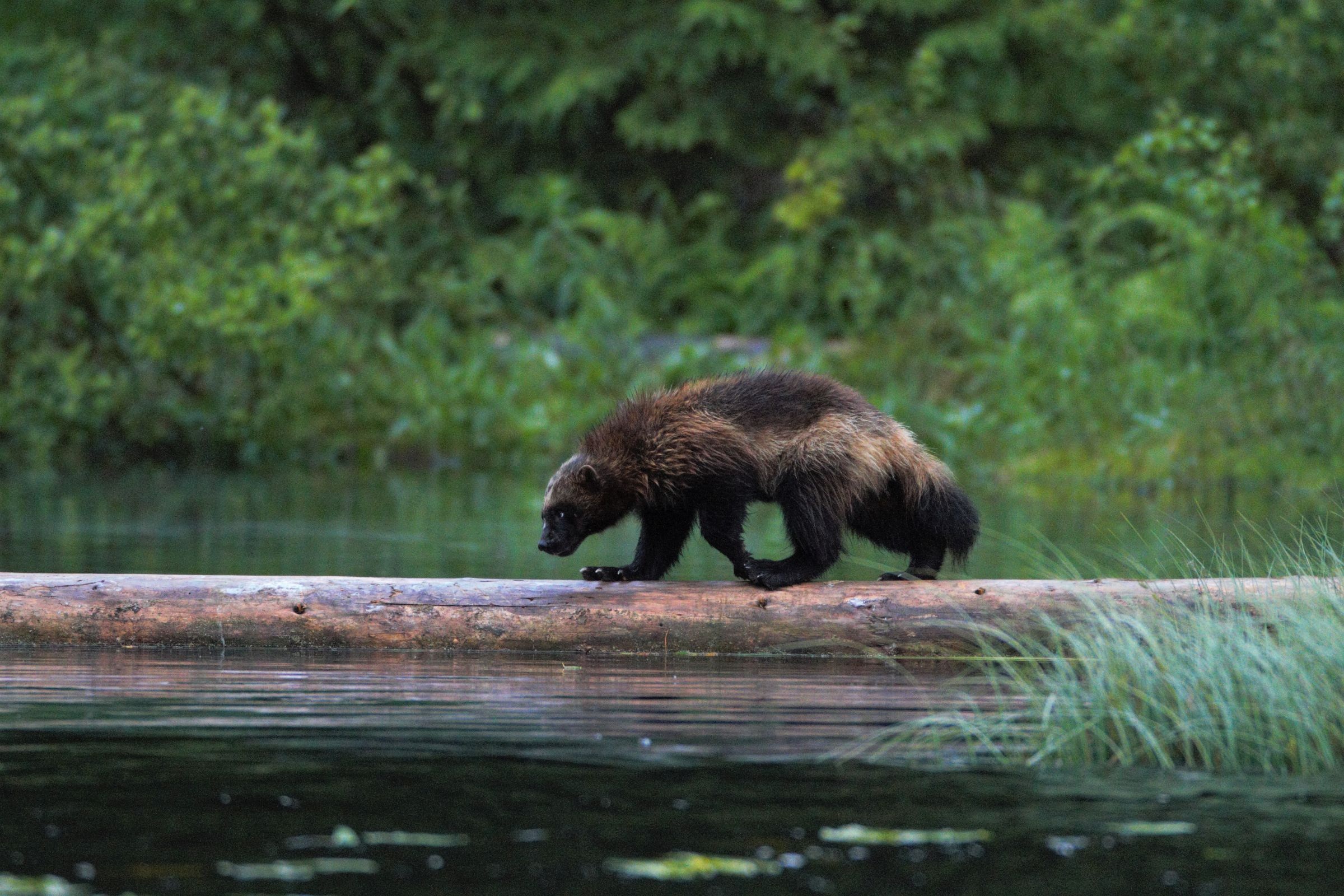
- An adult wolverine approaching the bait © Jan Kelchtermans
So, in less than an hour, we have seen three large carnivores, including interactions between wolf and bear, as well as between wolverine and bear.
-
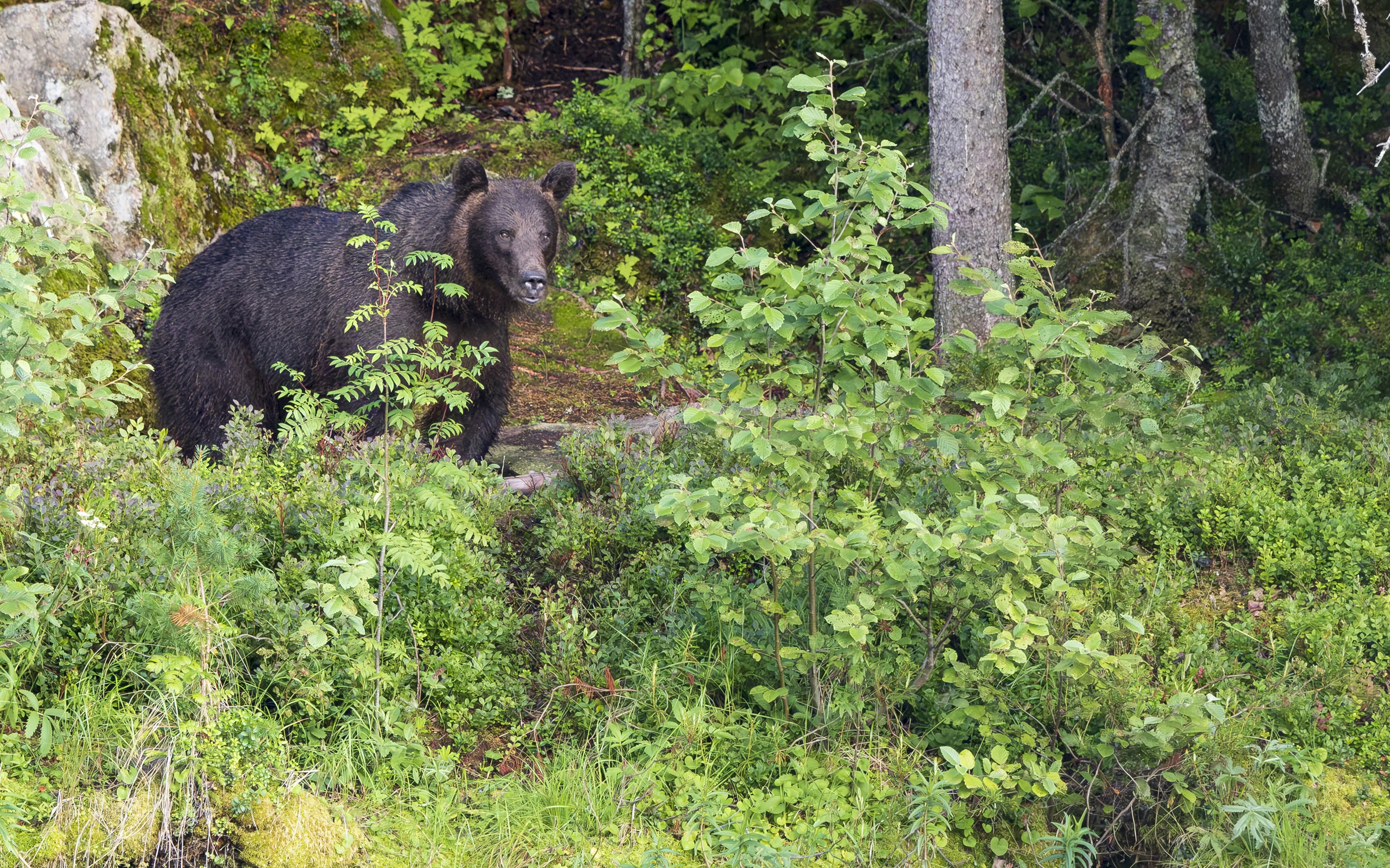
- An adult brown bear on the riverbank © Jan Kelchtermans
Mission accomplished, you might think. Time to call it a night.
But then the impossible happens.
Suddenly, on the far side of the lake, I spot a light brown figure emerging near a large, triangular, light-grey rock on the shore. The moment I notice the sturdy forelegs and the short, black-tipped tail, all the alarm bells start ringing. My adrenaline shoots through the roof as well.
“Guys, there is a lynx! There is a lynx! Look at the opposite side of the lake, at the base of the big triangular-shaped grey rock. It’s sitting there on its haunches!”
A lynx! A lynx! As if this evening had not already been spectacular enough!
And the animal gives us an absolutely fantastic view, too. This despite the almost complete darkness at that late hour: just half an hour before midnight.
Apparently completely fixated on the mallards on the lake, the animal subsequently settles down like a true sphinx, with its head and chest held forward and its forelegs stretched out in front. Its body and hind legs remain hidden in a hollow.
-
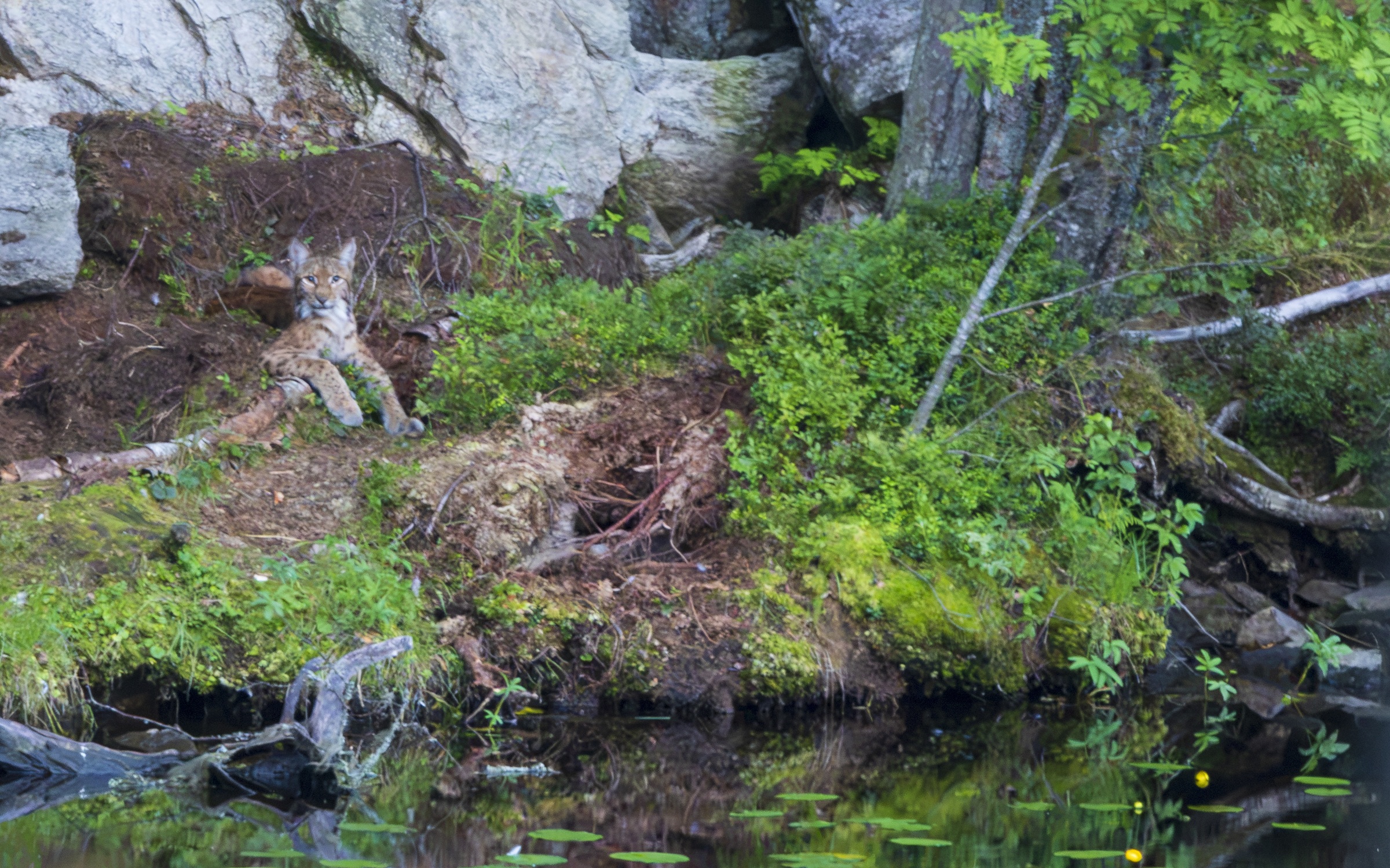
- A Eurasian lynx on the riverbank © Jan Kelchtermans
Because the animal lies motionless, I decide to alternate between my binoculars and my camera. The camera’s slow click-clack immediately betrays an extremely slow shutter speed: 0.6 seconds. Fortunately, the grey rock behind the animal acts as a kind of beacon, providing a little contrast.
Of the 53 photographs I take through the glass, from a considerable distance and in almost complete darkness, I eventually manage to salvage a few usable shots. Enough to work with and to provide photographic evidence of this unique sighting.
And unique it certainly is: with four carnivores present at the same time, this is a sighting unlike any known to have occurred at any other feeding site in Finland. Simply crazy!
Because I spend time reviewing the photographs on my camera screen, some uncertainty remains about exactly what happened next in the scene unfolding before us. The ducks suddenly take flight across the water, sounding the alarm, and the lynx starts moving. Did it catch a young duck, or perhaps a rodent? Or is it simply chewing on some of the bait that had been laid out? Unfortunately, the photographs are too unclear to determine this with any certainty.
In any case, once the lynx has finished eating its prey, it decides to call it a night.
It jumps back onto the rock from which it had descended earlier, then walks along the foot of the slope, its hindquarters raised and its tail held jauntily upright. It then sprays urine onto another boulder to mark its territory, before disappearing just as suddenly as it had appeared.
Once I am back in the dormitory with its bunk beds, I find it remarkably difficult to come down from my euphoric high and drift off to sleep. Because what on earth have we just seen, experienced and been fortunate enough to witness!