MEET THE IBERIAN LYNX
Sojanita, Tanzanita, Mohena, Margaza, Nigeria and Granza — these are the names of six specific female Iberian lynxes in Doñana and Andújar that EB5 founder Jan encountered during his travels as a guide for Starling Reizen during the late winter of 2025-2026.
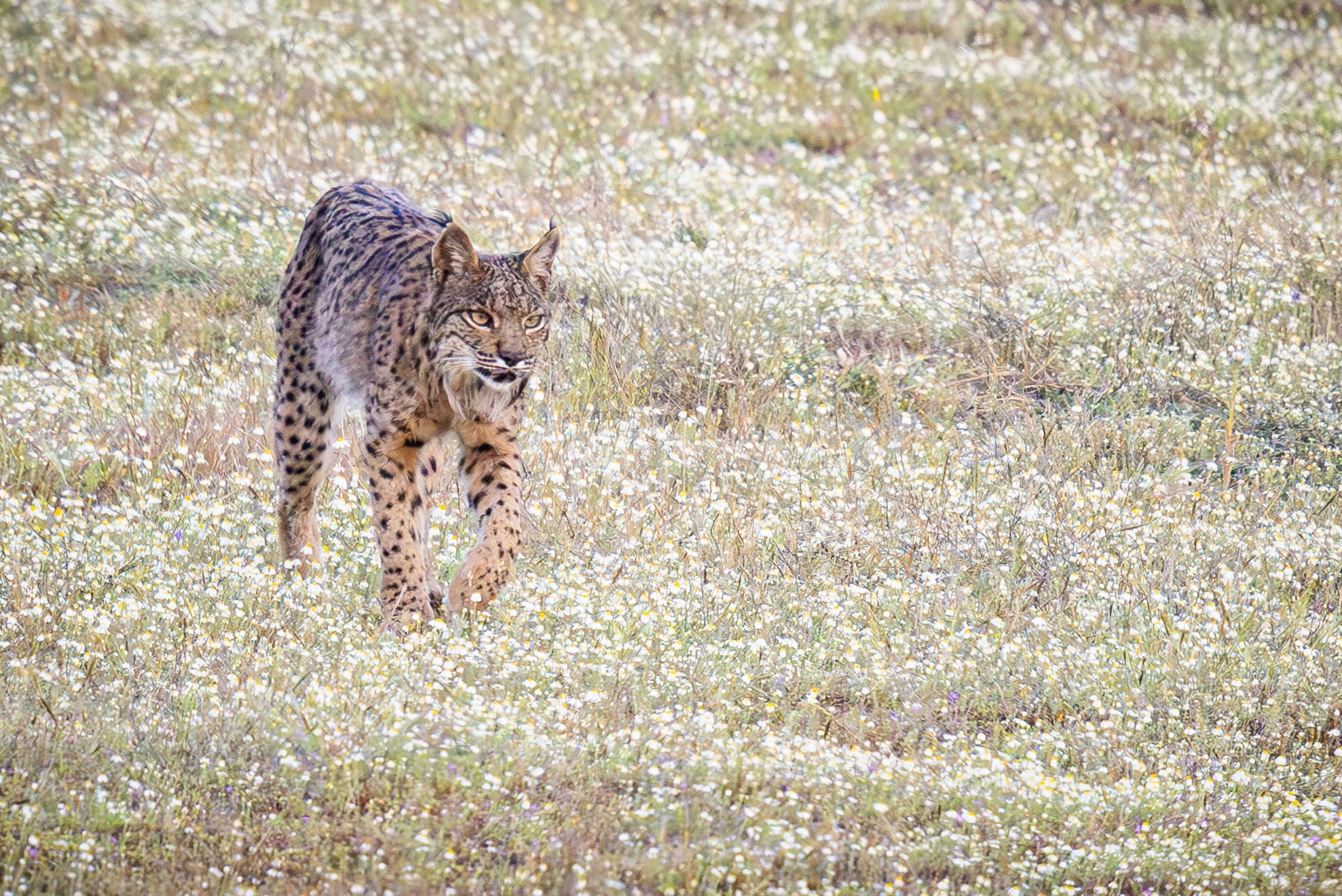
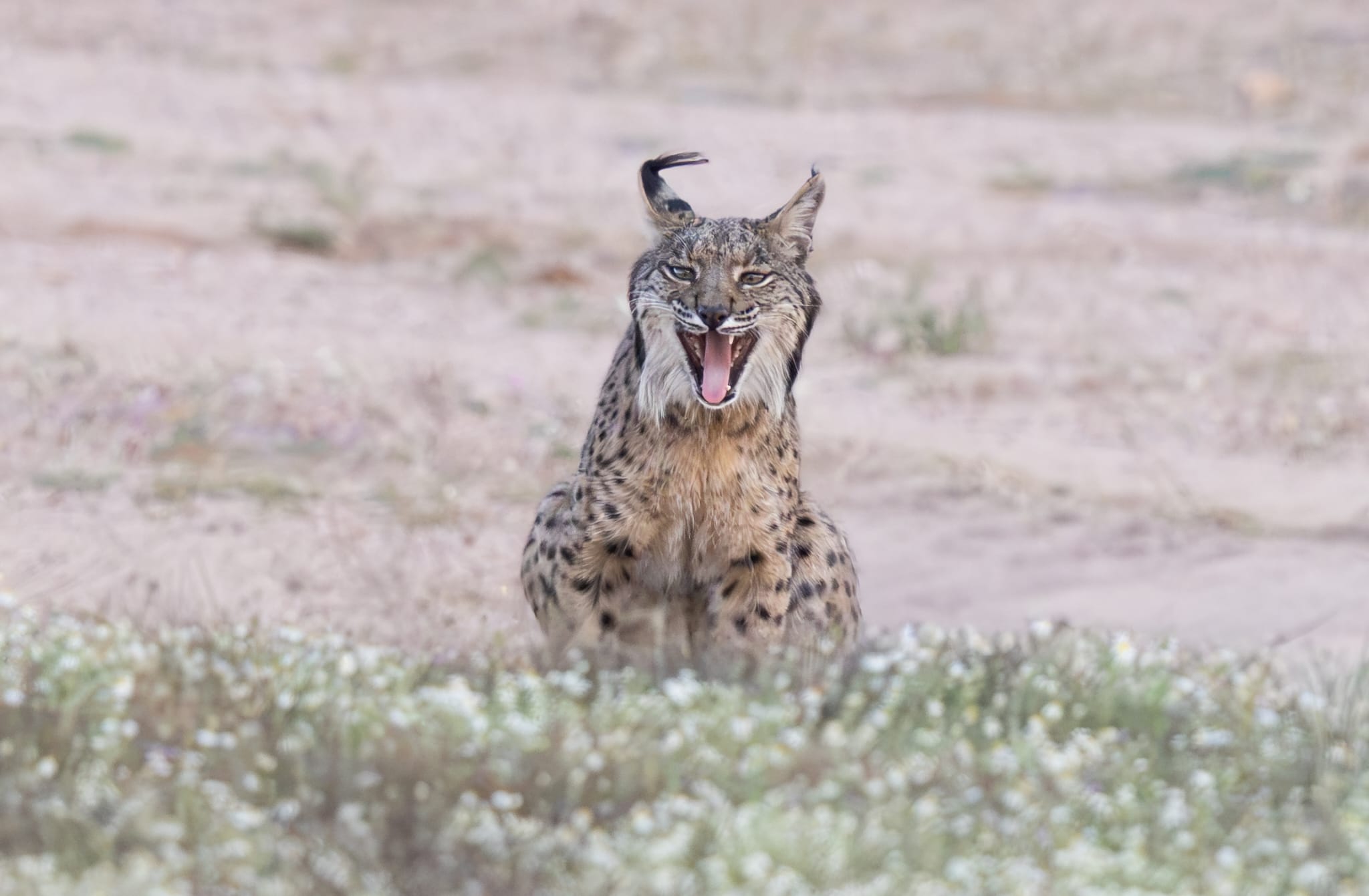
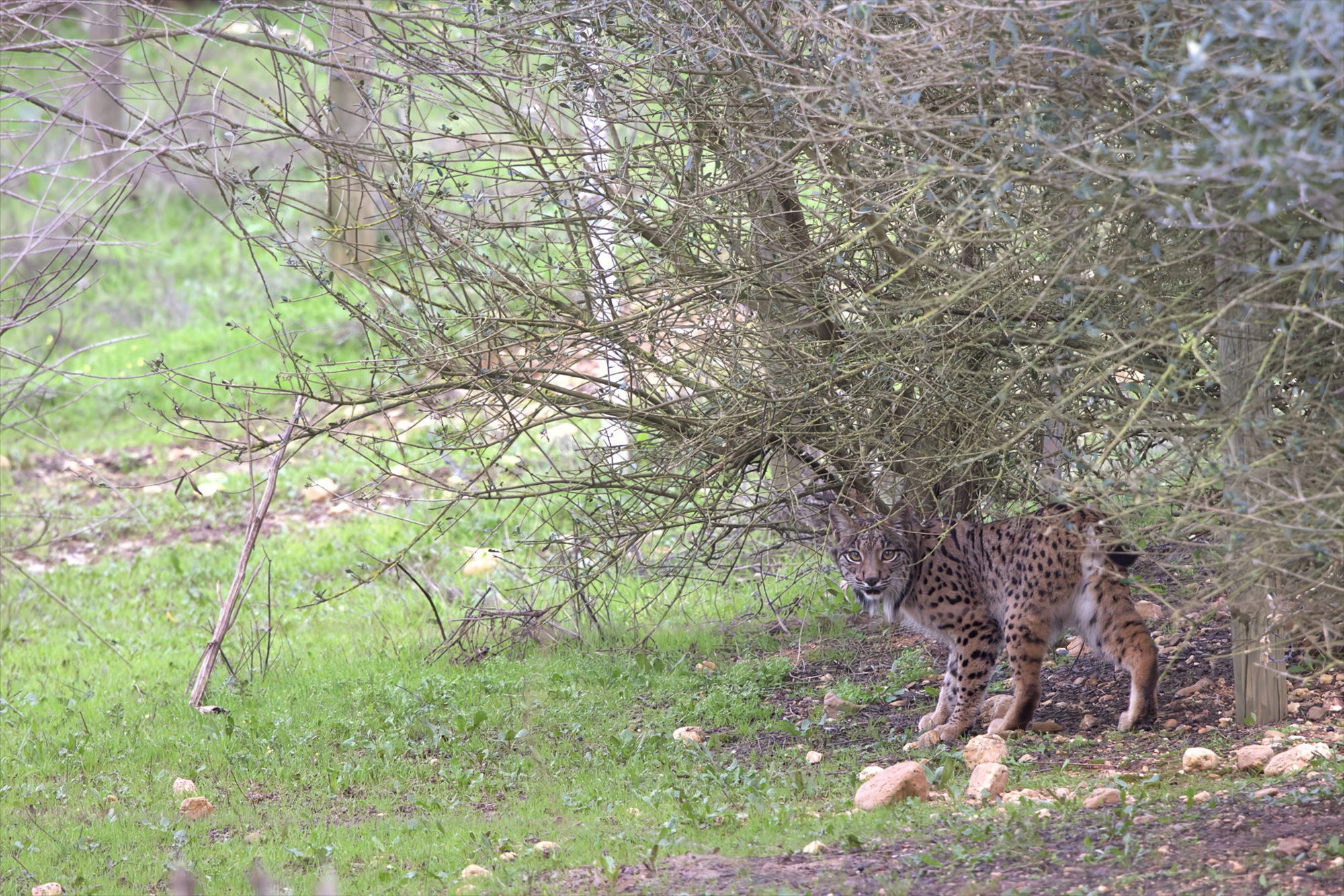
Three encounters with a female Iberian lynx aka Sojanita.
The third encounter was more challenging, however, as she was hunting and guide Jan first located her with his thermal binoculars. Once the animal had been picked up in the spotlight and everyone had seen her — always the first requirement — we got out of the vehicle. Something the cat clearly did not appreciate. She immediately disappeared into nearby scrub. Given the proximity of Sojanita’s territory, it was almost certainly her, especially as it was virtually the exact same spot where we had first seen her.
The other two encounters were much more cooperative.
The first came during an ultimate attempt, when guide Jan decided to change our evening location. Sometimes you have to make an educated gamble when you feel you have a better chance of intercepting a lynx elsewhere, particularly during the final hour of daylight. This is when lynxes, just like in the early morning, are most active. As with many other cat species, this is linked to their natural instincts: they are not so much nocturnal as crepuscular.
Just before reaching the core of Sojanita’s territory, it is trip participant Bart who spots her on a slope. “Hang on, there’s something here…” The words make Jan brake a little more firmly than usual. He confirms what everyone thinks they can see: lynx!
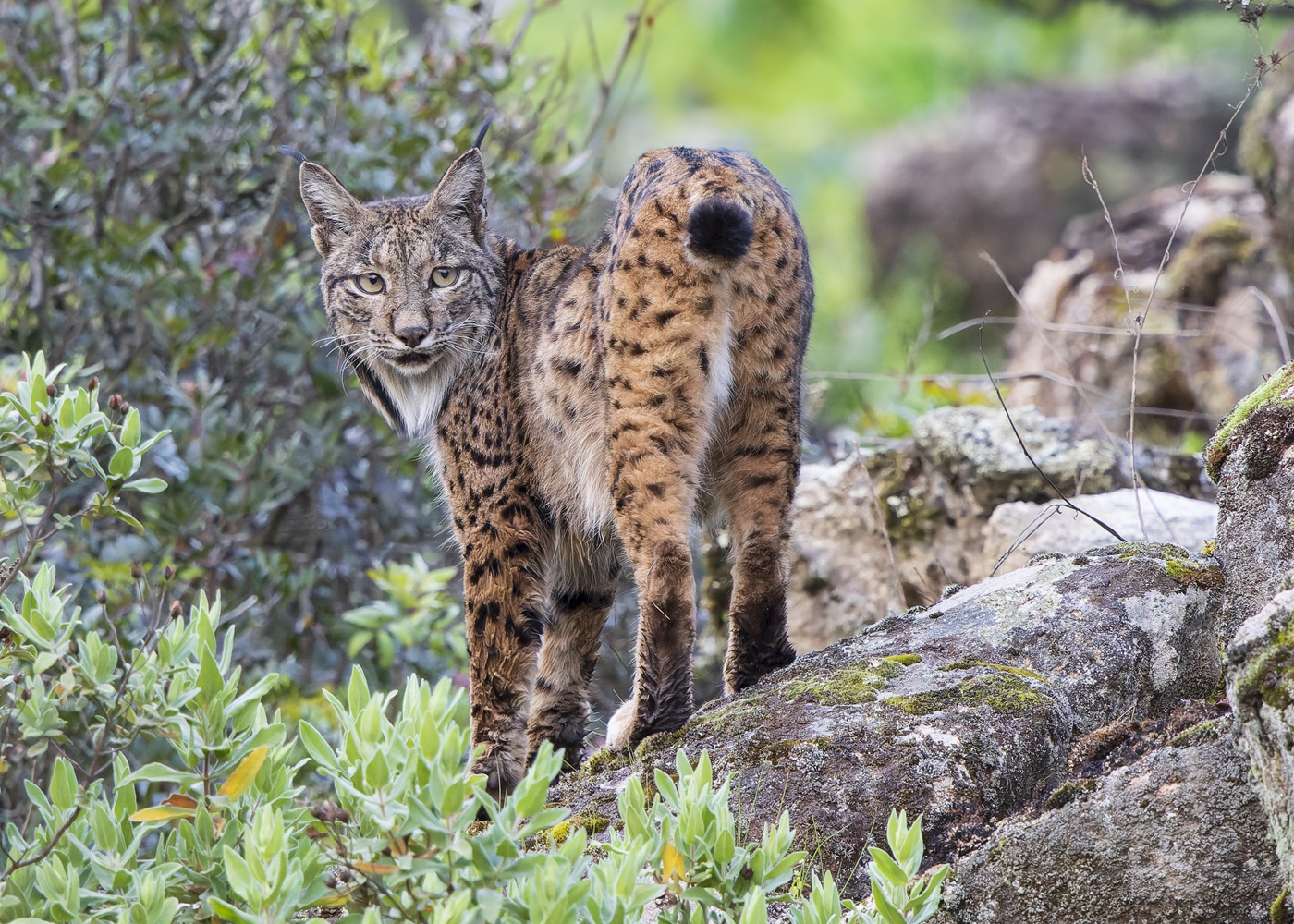
The animal sits on her haunches and looks at us for a moment before continuing her evening patrol. First through some scrub, then further up the slope behind it. A brief but powerful sighting, which we are also able to capture on camera. Every detail is visible: a medium-sized, heavily spotted cat, smaller than the Eurasian lynx, with its characteristic orange-yellow coat. Other distinctive features include the long cheek ruffs, black ear tufts and short tail with its black tip.
For Jan, this is the fifth consecutive time he has managed to show the species to trip participants in Doñana. What is an excellent area for birdwatching too.
During the second Starling trip, we see her again, this time during our very first morning excursion. Another guide already has her in his sights when we arrive in her core territory. A week earlier, everything had been underwater after severe storms. Now we find Sojanita sheltering beneath a bush. Through the telescopes, we can watch her beautifully. While the other guide soon leaves with his two clients, we stay and quietly enjoy the sighting. Jan is hoping for a scenario that many people here have experienced before. And sure enough, when she gets up and continues along her route towards the dense scrub beside the river, that scenario becomes reality. Sojanita heads towards the bridge.
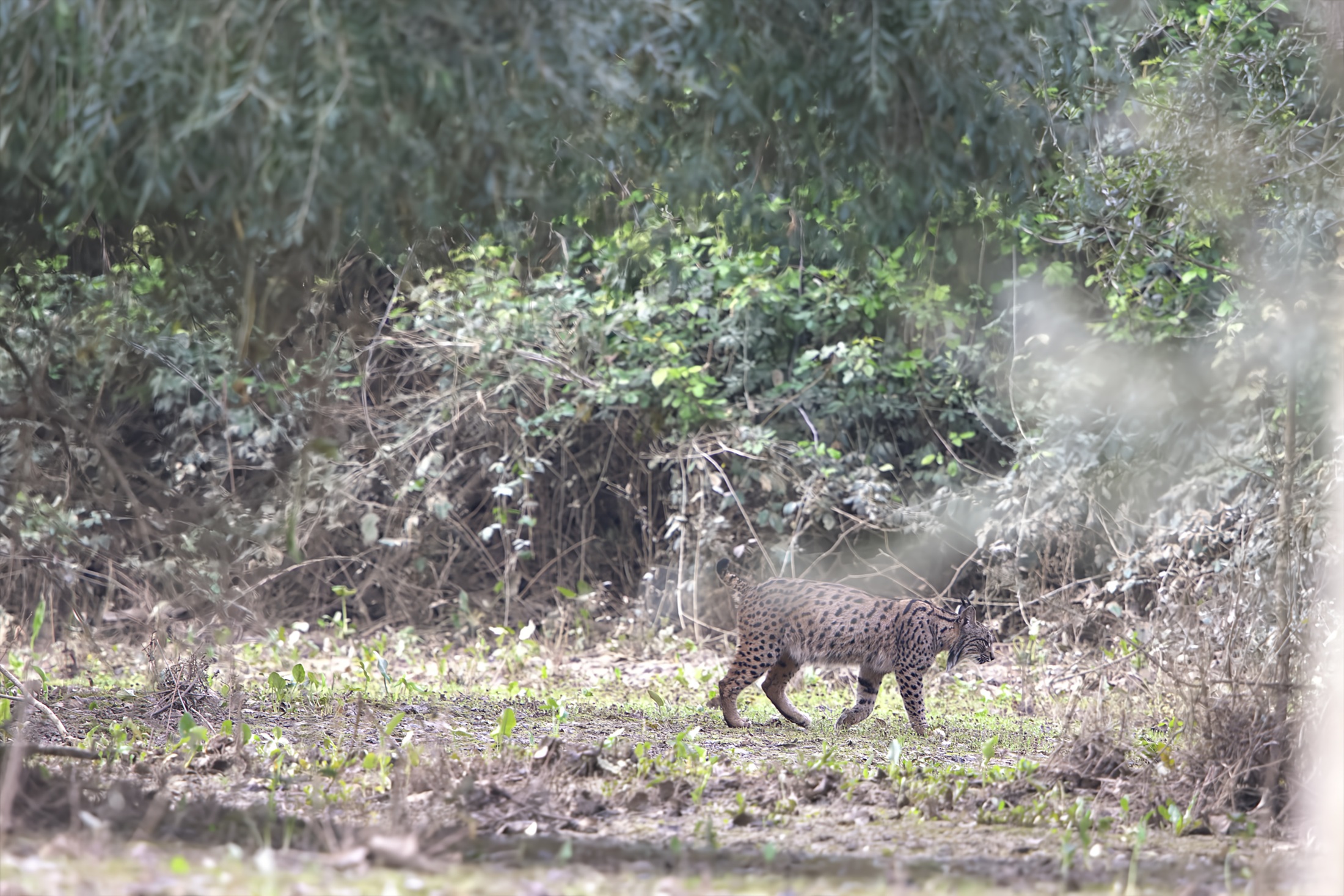
Jan immediately knows what is about to happen: Sojanita will use the bridge to reach the other side of her territory. Positioning ourselves strategically is crucial if we are not to block her route.
And it works perfectly. Only a few metres away, she suddenly appears at the top of the embankment to cross the bridge. A jogger approaching from the other side sees her disappear into a bush. With his phone in hand, he opens up the bush to film her. Jan immediately tells him to stop. But Sojanita takes it stoically.
Make no mistake: we are in a place that you would hardly associate with the silence of true wilderness. Sojanita is clearly accustomed to the human presence and activity that come with the green belt and agricultural landscape. Through our binoculars, we can observe her from incredibly close range. Her ears track every movement: our footsteps, but also the noise of vehicles crossing the bridge. Eventually, the impact of a heavy lorry — equipped with air conditioning for transporting fruit — proves just a little too much. Sojanita leaves the bush and prepares to move on.
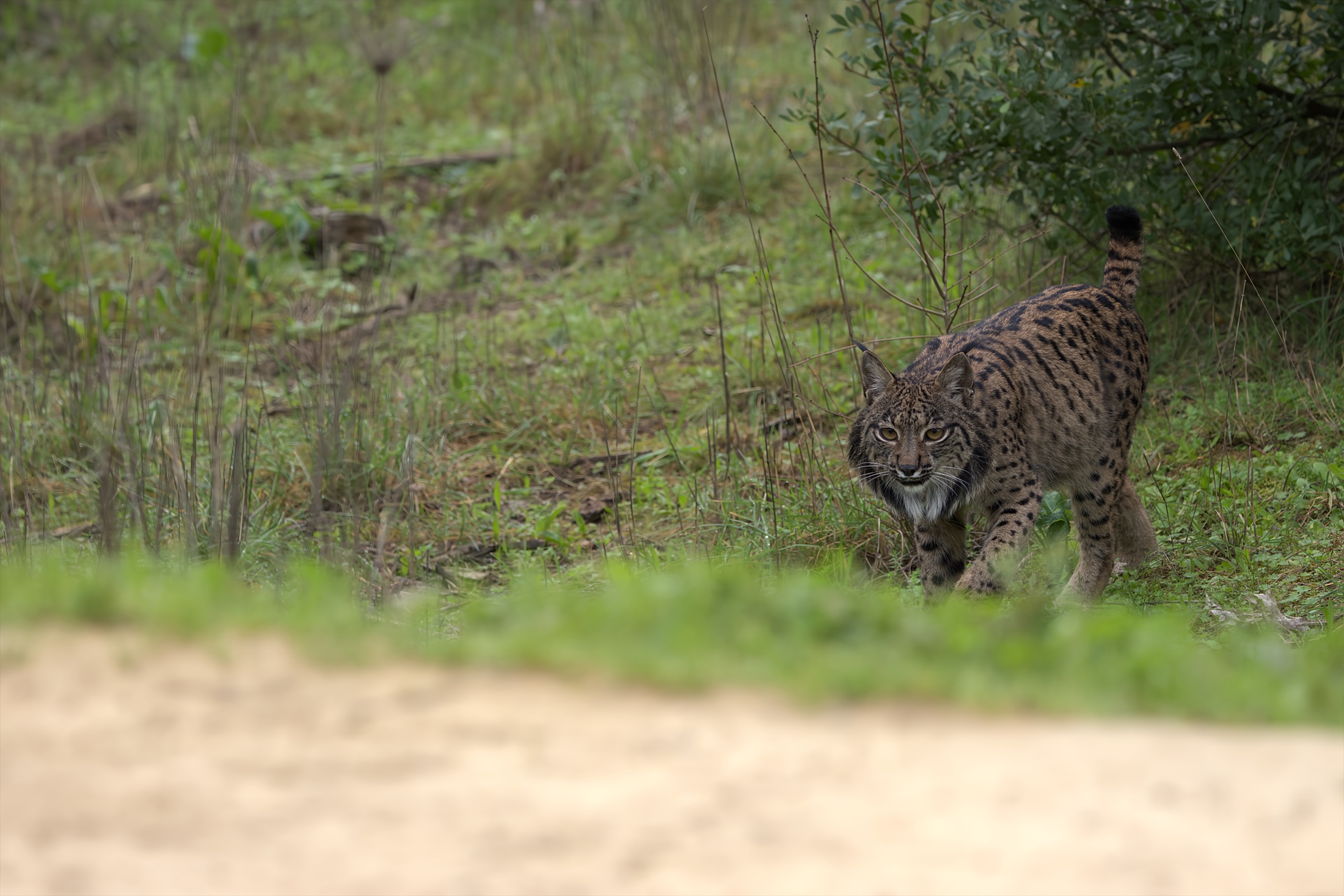
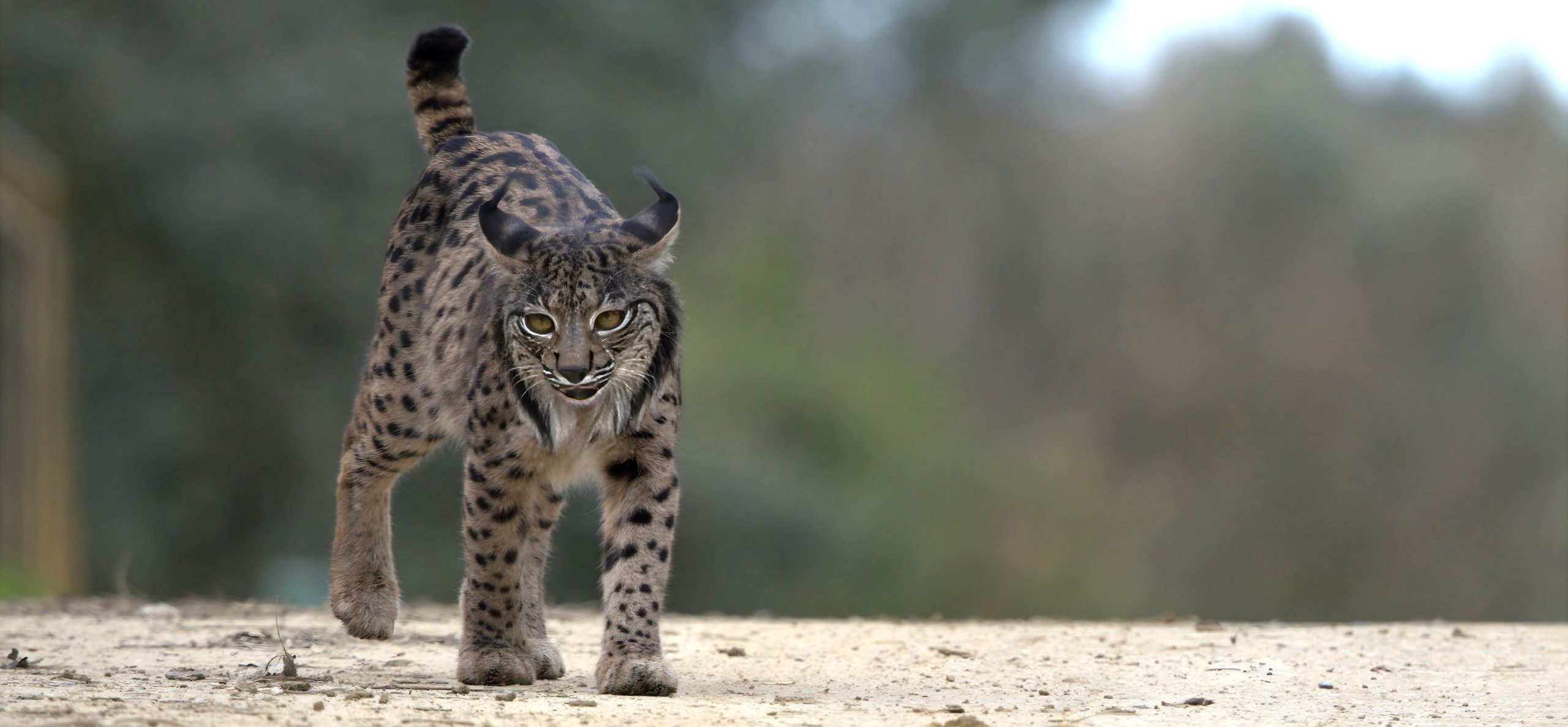
When she once again heads towards the bridge, Jan suddenly calls out loudly and clearly: “COME BACK NOW! OTHERWISE SHE WON’T TAKE THE BRIDGE!”
Everyone immediately follows his instructions. And it pays off: Sojanita gives us a second photographic highlight.
With clenched fists and more than a few cries of “YES!”, we then return to the hotel for an extended brunch.
What a start to the trip!
Tanzanita
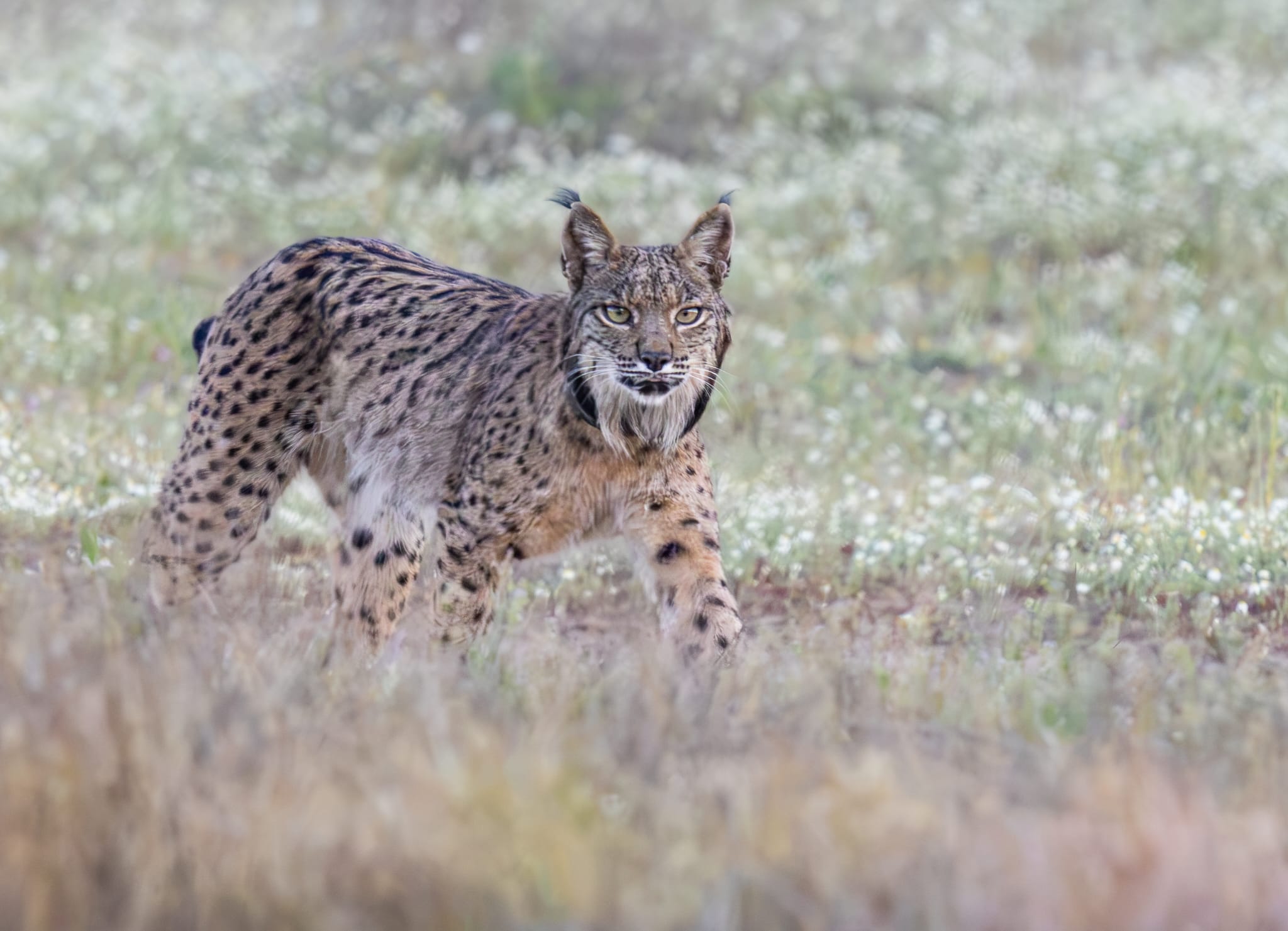
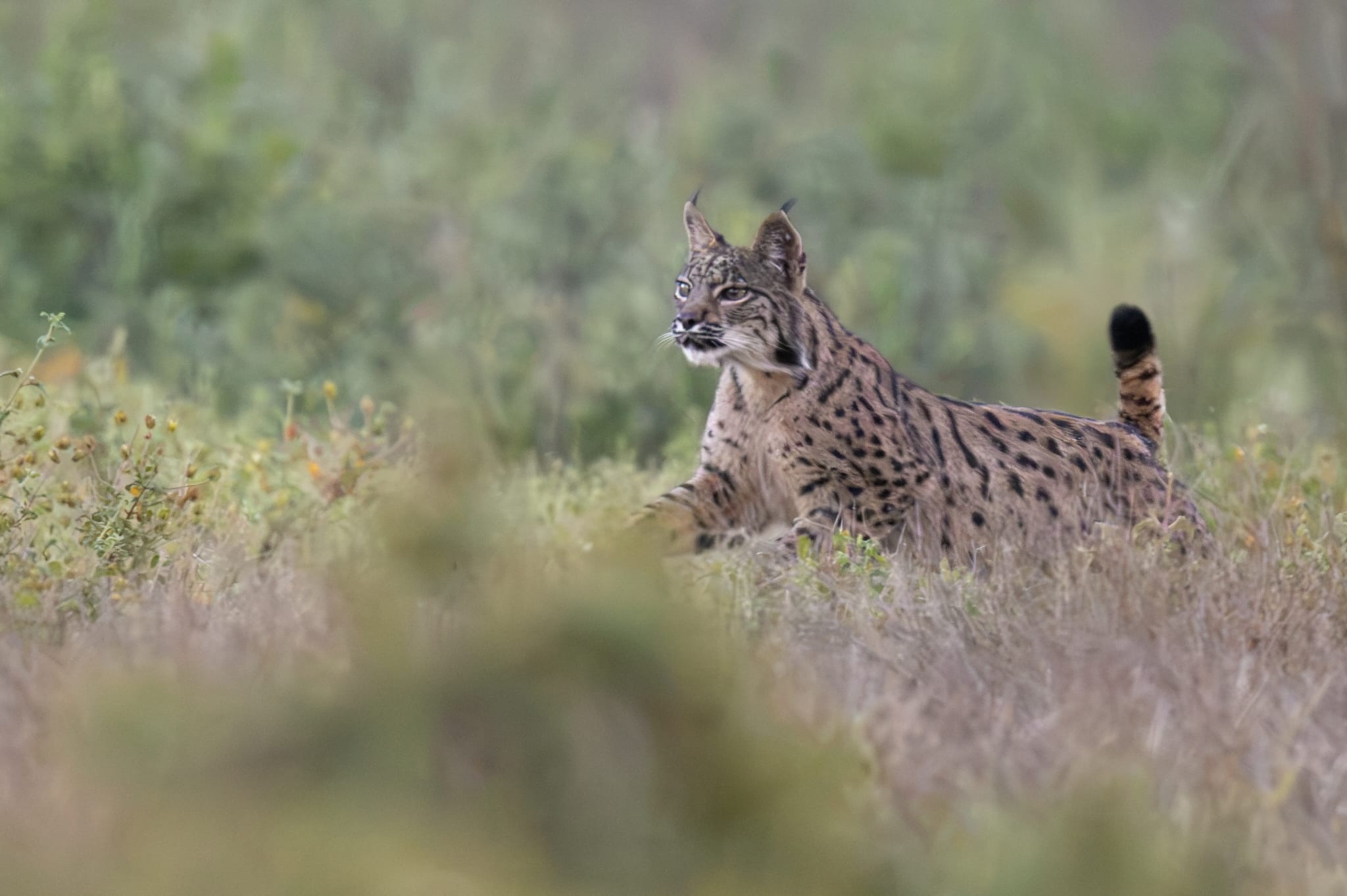
This young female, who appears together with her parents at one of the hide locations in the Andújar region, is probably one of the most photographed Iberian lynxes in Spain since the introduction of dedicated photography hides. This has become a trend over the past five years. Just as with the hides in Finland for observing large carnivores, creative methods are used here to attract lynxes. This increases the chances of an observation, but it certainly does not guarantee one. We experienced that first-hand.
During the first of our two afternoon sessions, we got no further than a few photographs of a rabbit. Sometimes lynxes simply catch prey elsewhere and decide not to show up. But there is no doubt that things can really pay off here. During an afternoon session in November 2024, for example, guide Jan saw Tanzanita together with Pirineo and Olingsto — both her parents — as well as another individual with a cub. At moments like that, observations and photographs take on a whole different dimension.
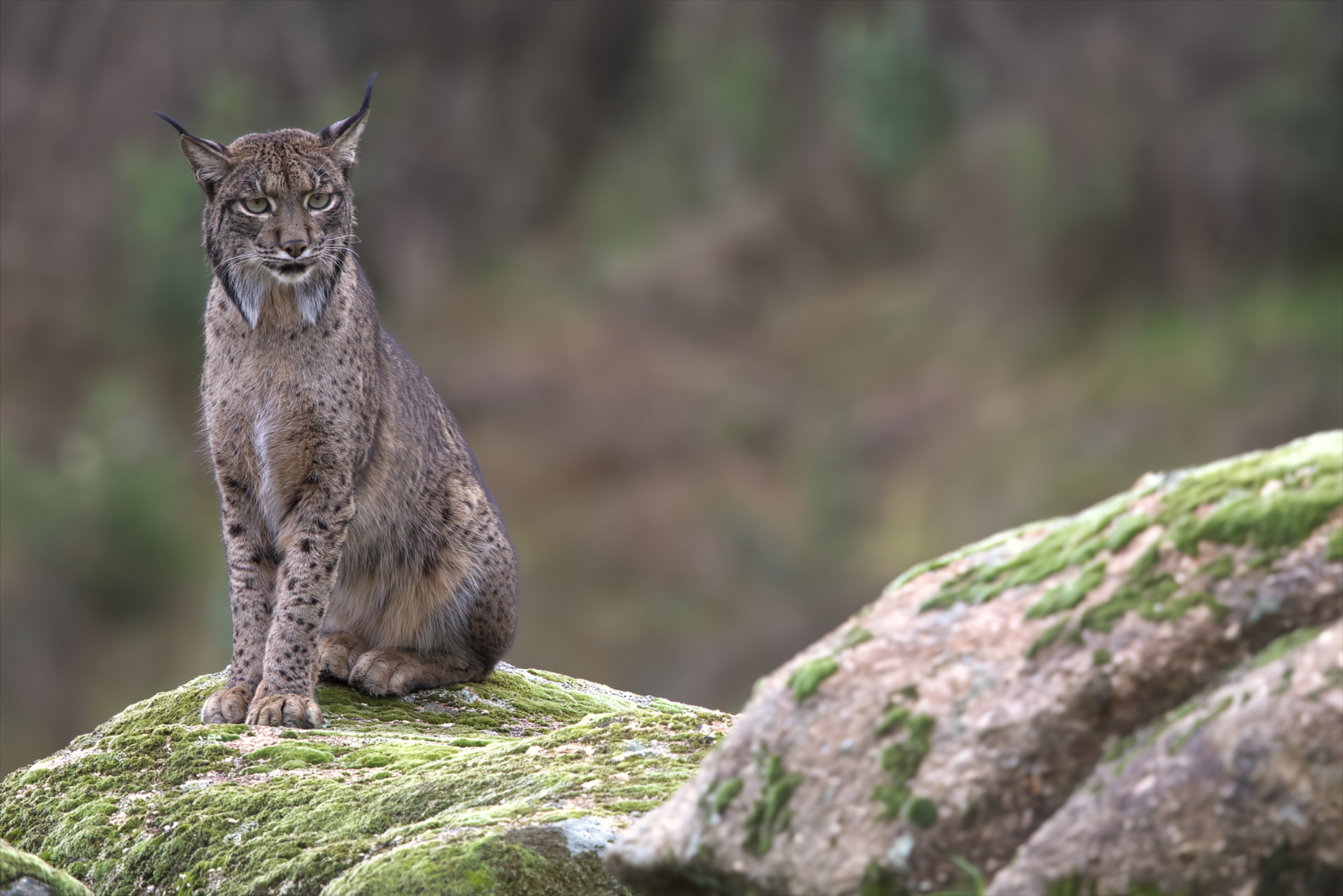
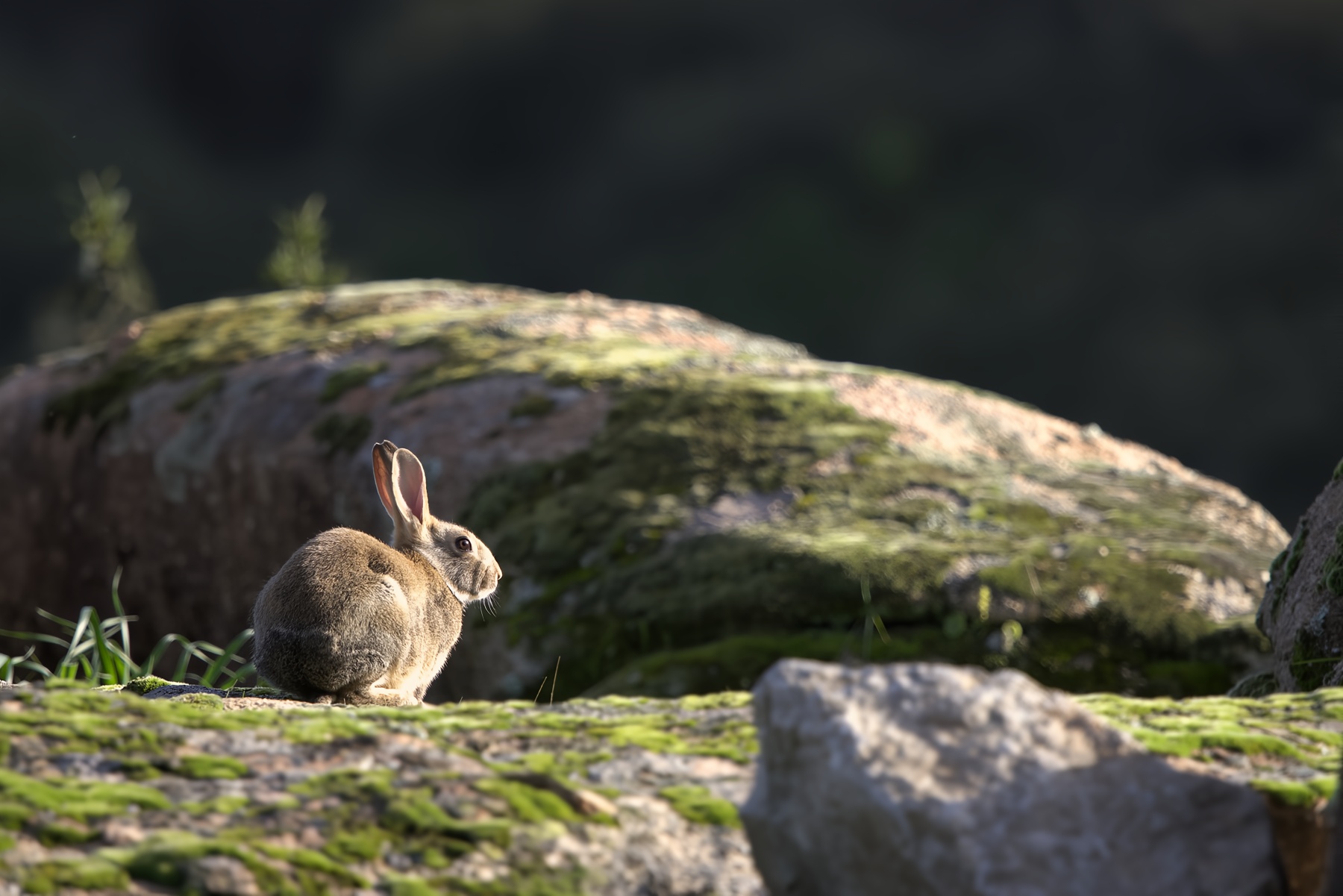
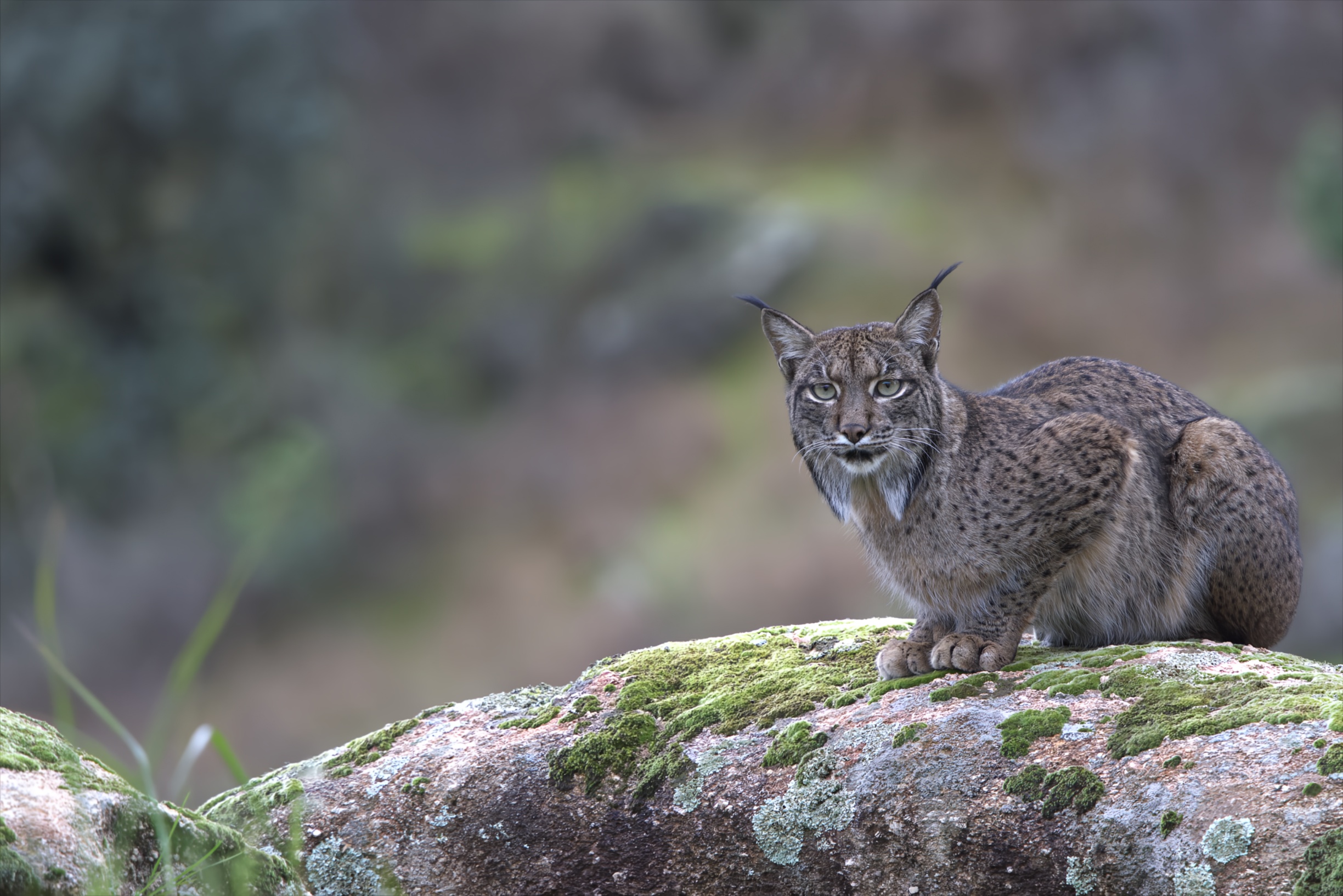
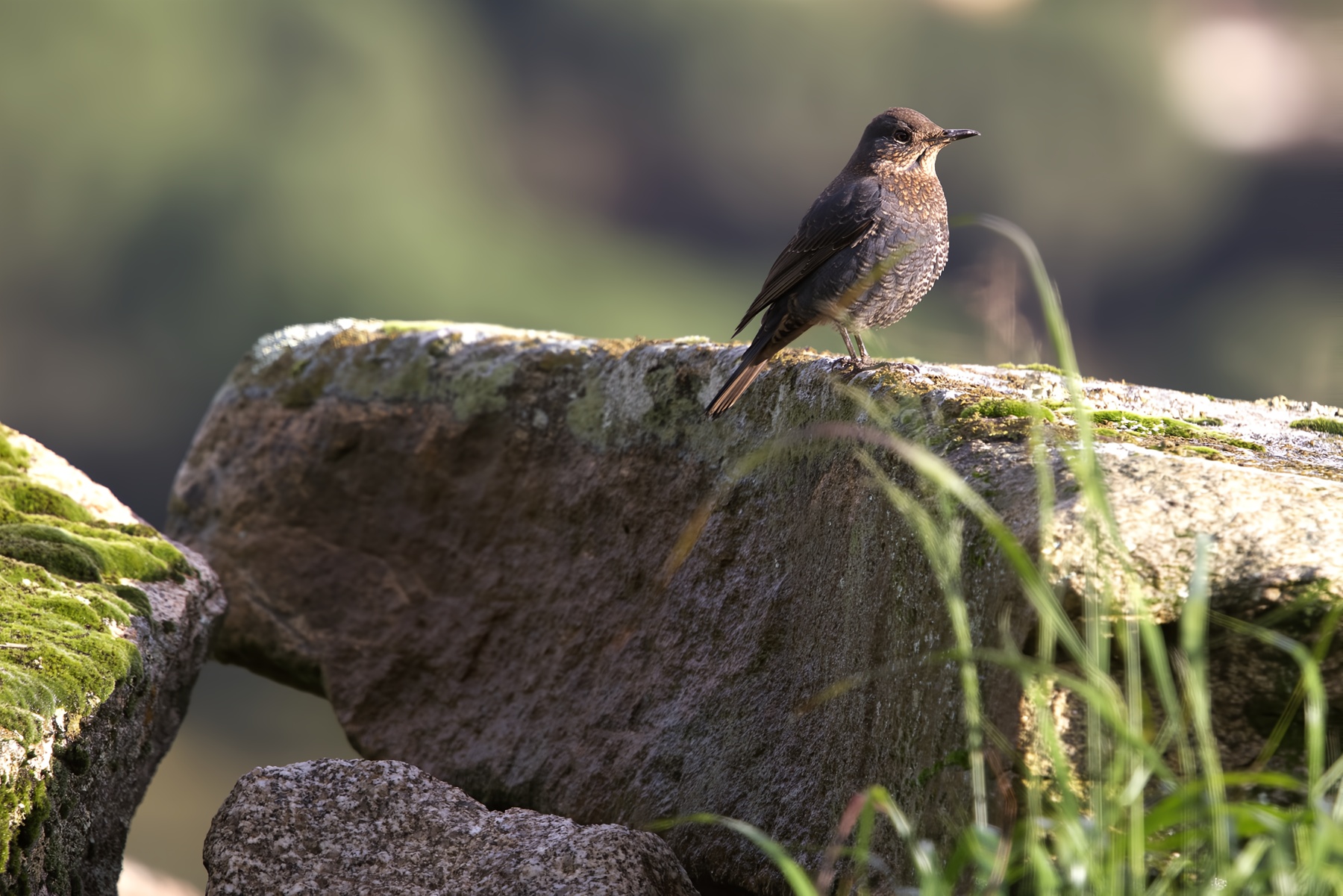
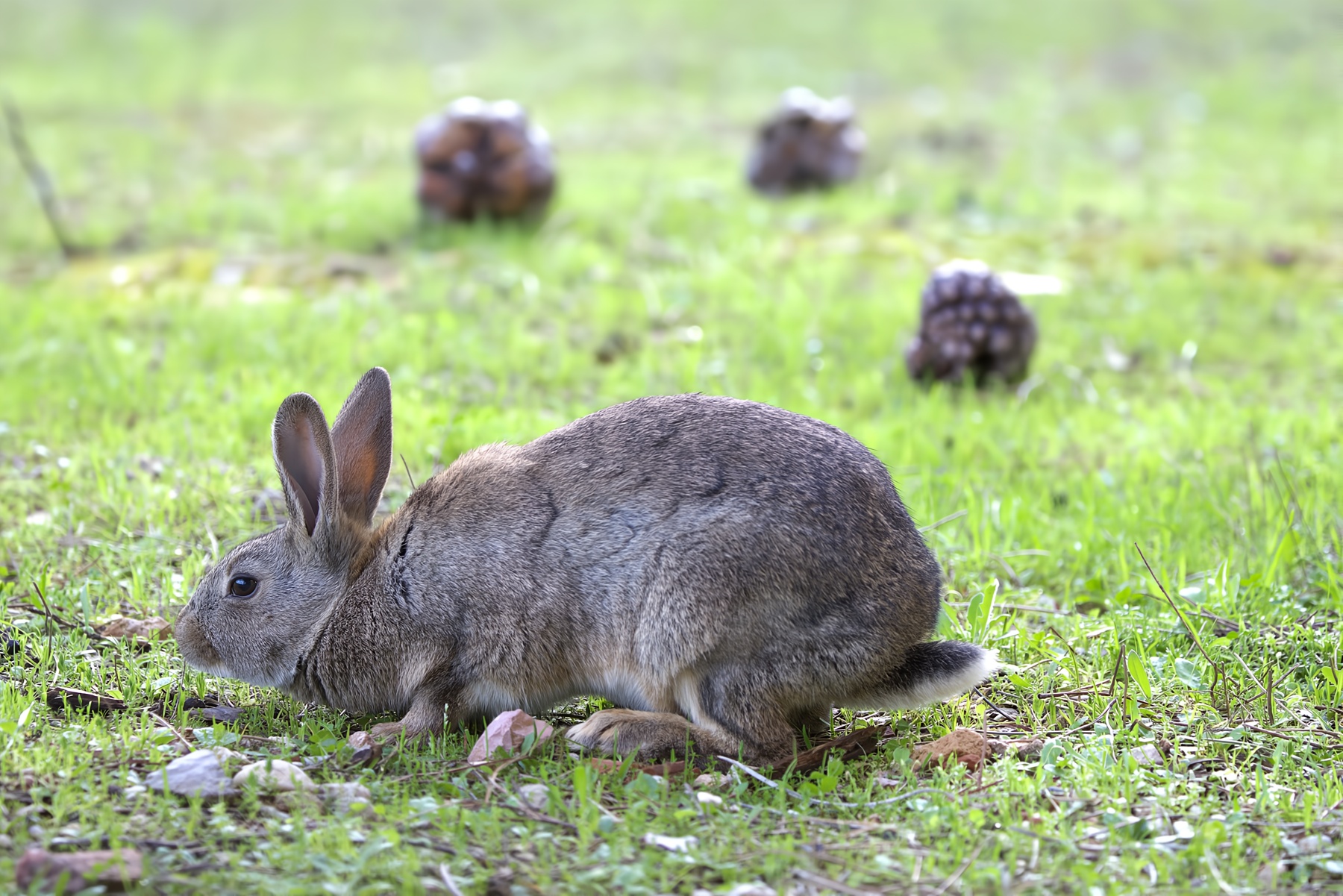
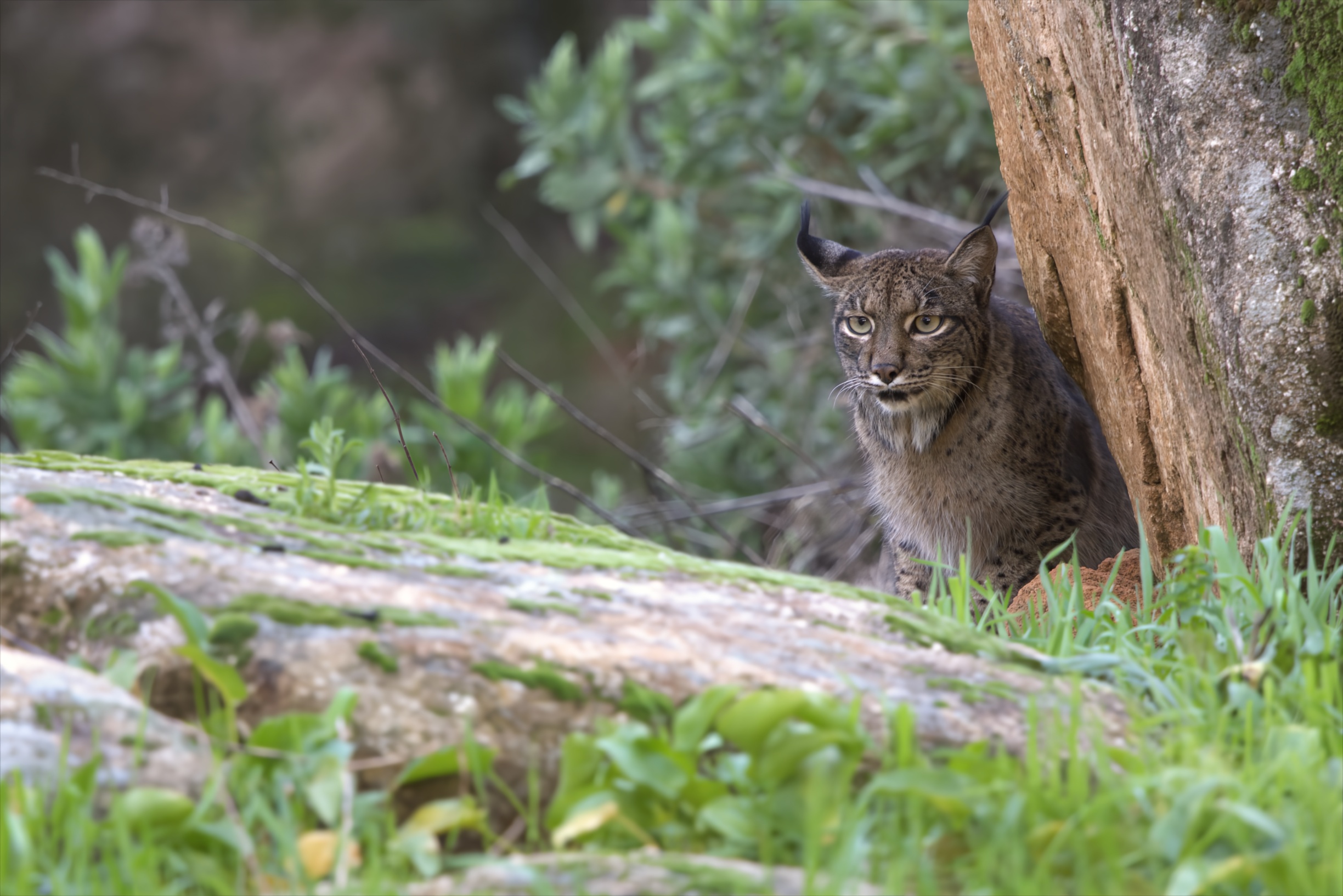
We experienced this ourselves during our second afternoon session in the hides. Out of nowhere, Tanzanita suddenly appeared among some olive trees on a slope overlooking the hides where we were sitting. It took quite some time, however, before she decided to come our way. Her appearance on the rocky outcrops in front of our hide had not gone unnoticed by the local rabbits. Suddenly, all the long-eared residents had vanished without a trace.
For the next two hours, we watched Tanzanita tirelessly trying to catch one. Her many determined attempts all ended in failure. Even as dusk began to fall, she was still hungry.
We, on the other hand, were not: our memory cards were packed full.
What an afternoon!
A Pair in Love — and Mohena with her cub
A visit to a local farmer’s dehesa is a regular part of the Starling trips. It is a place where we deliberately leave the crowds behind and enjoy the landscape in peace and quiet. The area also offers opportunities to observe other lynxes living around La Lancha, the classic and perhaps best-known public location in Spain for seeing Iberian lynxes.
At the same time, La Lancha has become a place to avoid during peak season. The popularity of the Iberian lynx has brought a huge influx of visitors in recent years. Guide Jan has witnessed this evolution first-hand. In the early days, it was mainly nature enthusiasts with binoculars and telescopes who patiently scanned the landscape. Today, in 2026, photographers with impressive telephoto lenses dominate the scene, while at weekends many local residents also head to the viewpoints, where things can become rather lively.
That is precisely why, with Starling, we prefer to visit this area on weekdays and outside the peak season. The tranquillity returns to the landscape, while the chances of seeing lynxes remain high, as they are remarkably active during the day at this time of year. By mid-February, spring is also often beginning to make its cautious appearance.
When the sun starts warming the landscape, it is simply wonderful. The first warmth hangs in the air and everywhere there is the lively cacophony of birds reclaiming their territories. The call of the great spotted cuckoo echoes across the open plains, a Spanish imperial eagle soars high above the dehesa, while a Sardinian warbler sings from the bushes. Little owls call in the distance, an Iberian green woodpecker drums somewhere against a tree trunk, and an Iberian grey shrike keeps a sharp eye on its surroundings from a thorn bush.
And then, sometimes suddenly, the animal everyone is quietly hoping for appears: a lynx. At such a moment, everything comes together and it feels as though the landscape itself holds its breath. It completes the picture. That is exactly what happened when we were on our way to Yeguas, the private dehesa. Suddenly, Kim’s voice comes from the back seat:
“A lynx… there’s a lynx!”
There is no need for a sudden brake, given the bumpy track Jan is carefully navigating with the bus. We come to a stop almost immediately.
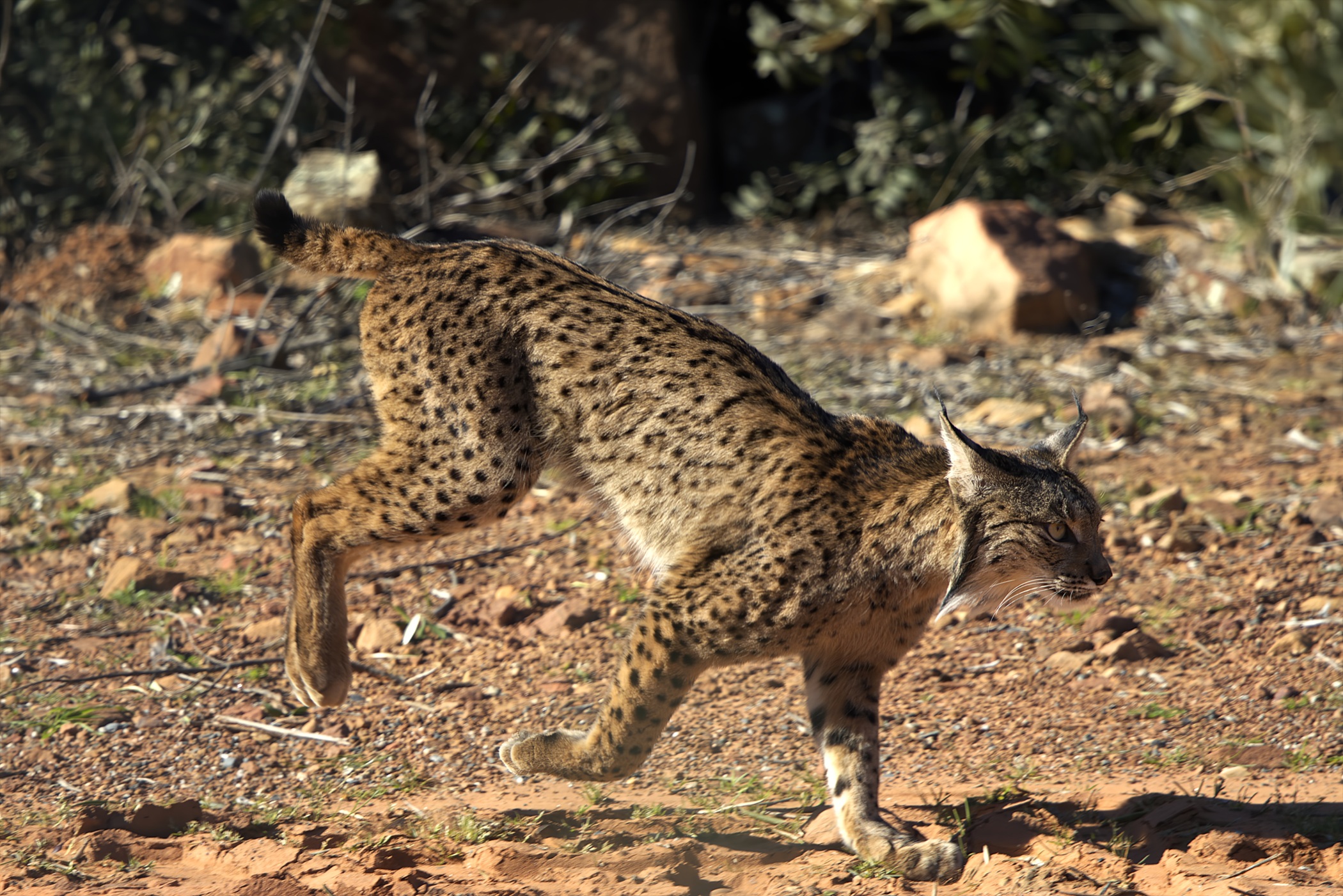
And it soon becomes clear that the lynx is not alone. There are two. Just as surprised by this unexpected encounter as we are, both animals immediately choose different directions. One darts across the front of the vehicle and crosses the track. The other silently disappears into the scrub. We get out to assess the situation, hoping to relocate both animals. We have barely stepped outside when the animal that disappeared into the bushes calls out. The raw, hoarse feline call — an elongated “miau” — sounds almost ghostly. And above all: it is close. The hairs on our arms stand up. Goosebumps. It is immediately clear that we have stumbled upon a pair displaying mating behaviour. As the sound comes closer, we hurriedly find a somewhat concealed position among the olive trees. This gives the calling lynx — presumably the male — the space he needs to find his female. We do not have to wait long. A little later, he comes walking through the olive grove where we are hiding. Moments later, the animal passes directly in front of us beneath the gnarled olive trees, heading towards higher scrub. Judging by what we hear afterwards, there is little doubt: the two animals have found each other again. We leave them to their intimate plans and return to the vehicle. Searching the scrub further would only cause unnecessary disturbance, and the terrain is too difficult to see through properly anyway. Before we even reach Yeguas, the tally is already at two lynxes.
The real scanning session has yet to begin! Once parked and settled in, Jan is the first to notice movement on the mountain we are scanning for more lynxes. A young lynx appears in his telescope. Not long afterwards, its mother appears too: Mohena. Together they descend towards the meadow at the foot of the slope we are overlooking — an open area with tamarisks and scattered holm oaks. They cautiously explore a nearby section of meadow enclosed by rusty metal sheets. The cub soon returns to a small group of trees on the opposite slope, while Mohena continues further into the meadow. She seems completely unfazed by the local hunters, who are concealed in camouflage tents on the private estate, hunting red-legged partridges. Even when a gunshot echoes through the valley, she does not change her posture for a moment. Clearly, both parties tolerate each other. Their targets are different. The hunters are after a game bird; the lynxes are after the ever-present rabbits. To take her chance, Mohena jumps over a wire fence into another section of meadow. It does not take long before she manages to catch a sizeable rabbit. With her prey firmly held in her jaws, she jumps back over the wire and heads towards her cub. The cub, meanwhile, has not been idle. In the background, we see it playing with the carcass of another rabbit. Mohena places her fresh catch between some rocks and settles down beside it. The cub continues to play tirelessly with both prey items. The previously killed rabbit is gradually eaten in the process. So we have witnessed a hunting lynx with her cub — and earlier that same day, a pair caught up in the first stirrings of spring. A rare convergence of circumstances, as it turns out. During two other visits Jan made here before and after this trip, we failed to find a single lynx. Wildlife is never guaranteed. True nature is unpredictable, fickle and always different. Fortunately!
Good Old La Lancha
Sierra de Andújar is without doubt one of the wildest areas of Spain and the place par excellence for spotting lynxes. The mountain region offers spectacular landscapes, alternating between meadows and forests. But let us be clear: the concept of a nature park here is very different from that in many other countries. Apart from one road crossing the park from north to south, the rest consists of vast private estates where access is prohibited. You therefore have to remain on the main road, where a number of observation points have been established. With Starling, this is only one part of the trip and certainly not the main focus. Nevertheless, this has been the standard itinerary offered by many agencies for years, as with a few days of patience you can spot red deer, fallow deer, Spanish ibex and countless bird species here. The same applies to the two female Iberian lynxes Granza and Margaza, which continue to defend their territories around La Lancha. Margaza has lost an eye since last year, however. And Granza, at the respectable age of sixteen, is not pregnant this year — or at least no longer is. She does, however, tolerate a female youngster from her most recent litter within her territory.
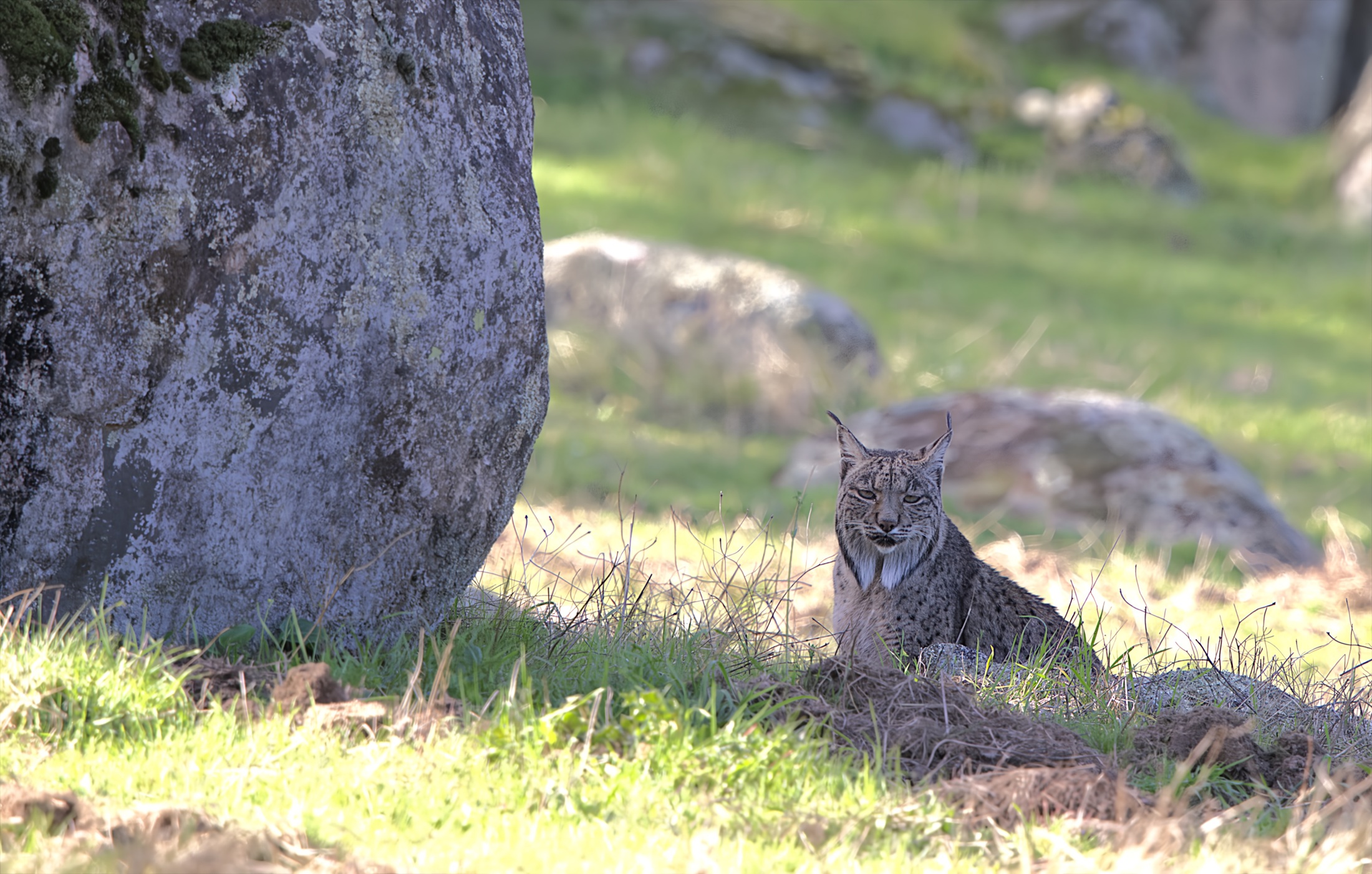
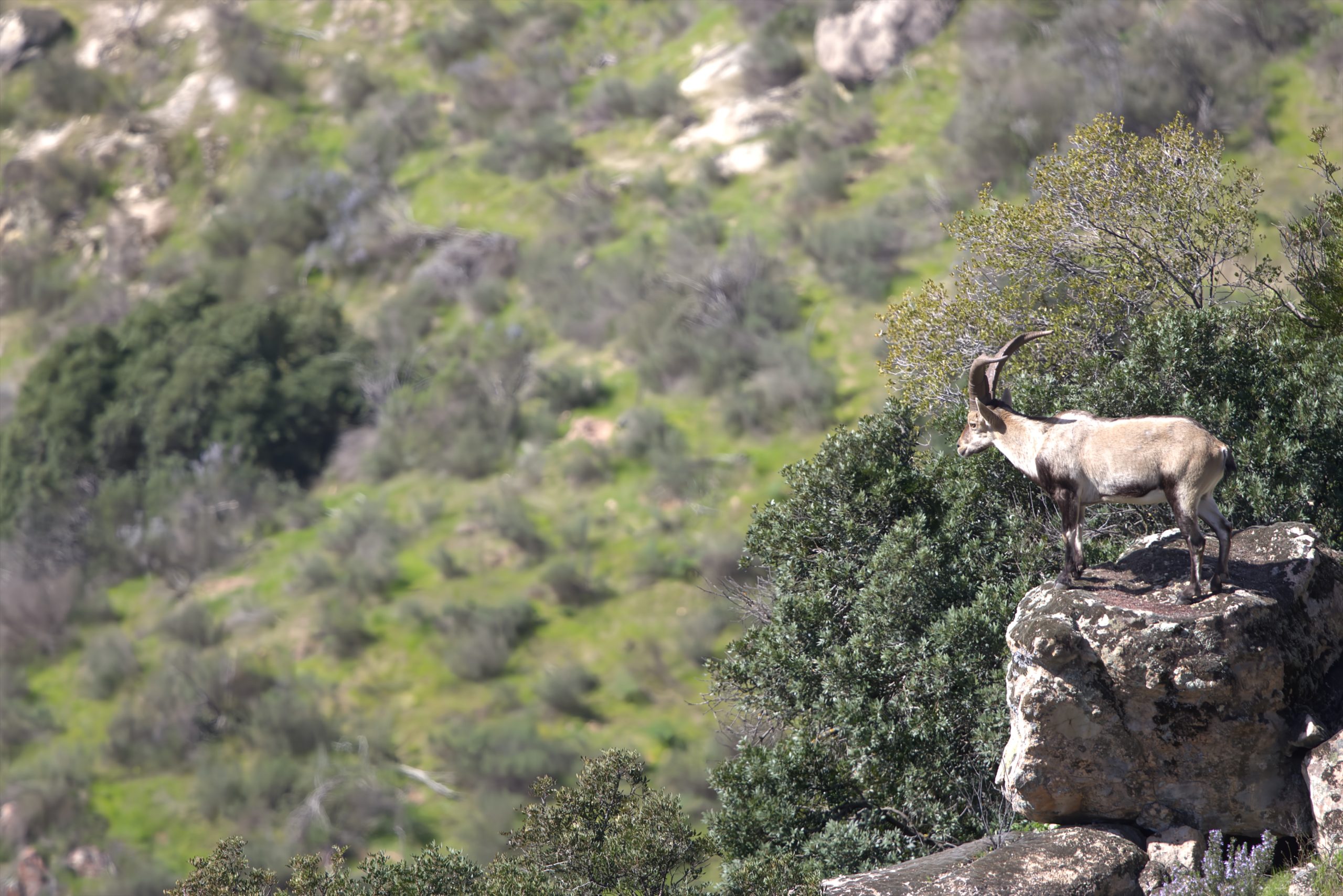
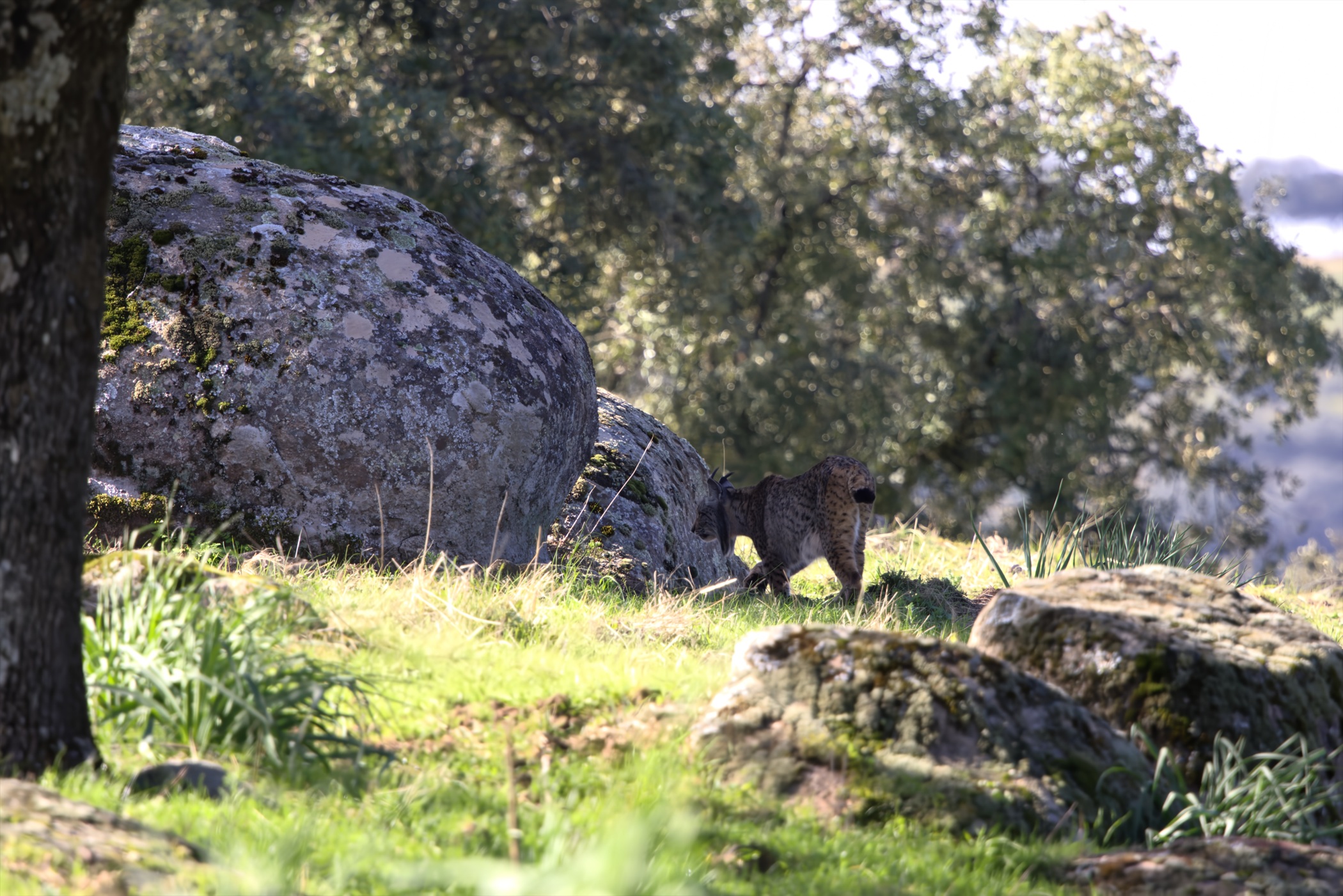
In addition to these three female lynxes, there is also a chance of seeing Odon, the local male. We saw all of these lynxes, with the exception of Granza’s last daughter. Margaza, however, chose not to show herself to everyone. Guide Jan suspects that, after the peak season, she has had more than enough of the masses of tourists — paparazzi, so to speak — who passed through here earlier in the year. Exactly two Starling participants were lucky enough to see her disappear into a bush. It was only after darkness had fallen that she emerged again. Odon was found by Jan far away in the valley. Only through his telescope could the animal be picked out — at least by participants experienced in using optical equipment — resting in the shade of a holm oak. Temperatures above 20°C meant little activity from the animals and also created shimmering heat haze that made observation more difficult. Jan’s finest sighting was the reunion with Granza, spotted during a morning walk through her territory. Her intense stare, with her eyes half narrowed, as she turned her head after Jan imitated a lynx call, gave us a genuine moment of goosebumps!
No Otter Family, but Nigeria
We saw Nigeria one morning near Encinarejo, where we had been waiting in vain for the local otter family to appear. Unfortunately, it did not happen this year. The enormous flow of the swollen Jándula River had clearly disturbed the animals at their resting and feeding sites. For the fourth consecutive year, however, the female lynx Nigeria suddenly appeared here out of nowhere, emerging from a bush! It remains an incredible experience when such an animal suddenly appears right there on the road in front of you.
I am already looking forward to the next season!
Jan Kelchtermans